
From Automation to Autonomy: How Agentic AI Will Redefine Sports Broadcasting

Here is one of the questions we asked ourselves regarding the future of sports broadcasting: What happens when AI in sports stops following instructions and starts making decisions? That question can arguably sit at the centre of an industry on the verge of reinvention.
As Agentic AI begins to emerge, sports broadcasters could face a turning point:
moving from automation to autonomy, from systems that execute tasks to systems that reason, act, and learn. But how close are we really to that future?
And what would a Sports AI Agent actually do inside a live production environment?
This article explores that transition, from today’s advanced AI workflows to tomorrow’s agentic systems, where machines collaborate with humans to create, not just compute.
From LLMs to Agents
Mapping the Layers of AI Maturity in Sports Broadcasting
Artificial intelligence has become a quiet workhorse across the sports ecosystem.
It tracks the ball, edits highlights, powers match stats, and drives fan engagement. But most of these systems, however impressive, still don’t think.
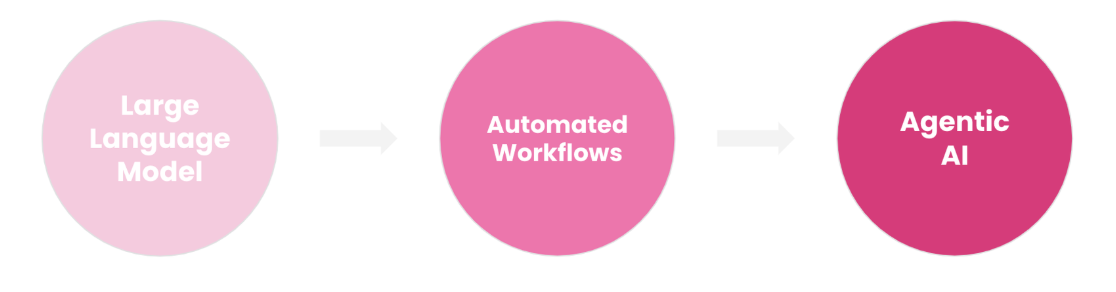
To understand what’s coming next, we need to clarify the layers of AI maturity in sports broadcasting:
LLMs (Large Language Models): They understand and generate text, great for content and summarisation, but reactive by design.
Workflows: They connect multiple AI models and tools to execute structured tasks. Example: automatically detecting goals and posting clips to social media.
Agents: The next step, systems that reason toward a goal, make decisions, act, and learn from outcomes.
If LLMs are the brain and workflows are the hands, then Agentic AI in sports is the colleague, a system that can interpret intent and take initiative within human-defined boundaries.
Why Is Agentic AI Different?
Beyond Logic Chains: AI That Understands Context and Priority
Today’s AI tools in broadcasting are workflow engines; they execute “if-this-then-that” logic extremely well. But they don’t decide why something matters, or what should happen next.
Agentic AI in sports broadcasting changes that paradigm. An agent doesn’t just process inputs; it reasons about context, intent, and priority.
It can:
Sense: Collect and interpret live feeds, commentary, and data.
Think: Plan the next best action based on objectives (e.g., engagement, coverage quality).
Act: Trigger decisions autonomously, cutting, switching, or suggesting edits.
Learn: Evaluate outcomes and improve over time.
That’s the crucial shift: from doing things right to deciding what’s right to do.
What Does This Mean for Sports Broadcasting?
A Production Ecosystem Built on Thousands of Micro-Decisions
Sports broadcasting is the perfect environment for Agentic AI in sport because it already operates like a living ecosystem of decisions: every second, producers and editors make micro-choices that shape the story. The key question is then: “Which of those decisions could be safely delegated to intelligent systems that can reason and act?”
Across the entire broadcast chain, we can imagine a growing family of sports AI agents:
The Planning Agent, which builds rundowns, schedules crews, and predicts match interest.
The Vision Agent, which acts as a live co-director, chooses the best shots in real time.
The Editing Agent, which assembles stories and highlights after the match.
The Community Agent, which senses audience sentiment and adjusts engagement triggers.
The Monetisation Agent, which optimises ad placements and sponsor activations.
Each of these agents tackles a different part of the workflow: from pre-production to fan interaction. But all share a single ambition: to bring reasoning into the production chain.
To make this vision concrete, let’s explore two areas where this shift is most tangible today: the Editing Agent, which already demonstrates agentic behaviours in post-production, and the Vision Agent, a projection of what could happen in live production when reasoning meets real-time decision-making.
The Editing Agent
The Quick Win
If there’s one area where AI already feels agentic, it’s post-production.
The Editing Agent is the most advanced and commercially viable example of how reasoning-based automation can transform sports storytelling today.
After every match, editors face a mountain of content, multi-camera feeds, commentary, replays, crowd shots, and sponsor material.
The manual process of tagging, sequencing, and cutting stories takes hours. Meanwhile, audiences expect highlights and clips within minutes of the final whistle. Automation tools like WSC Sports, Magnifi, and Runway ML already help generate clips faster. But these tools follow logic; they don’t yet understand narrative.
The Editing Agent changes the game by reasoning through story structure; not just action.
It can:
Sense: ingest raw feeds, commentary, and stats.
Think: identify emotional peaks, turning points, and thematic patterns (“the comeback,” “the rivalry,” “the hero’s moment”).
Act: assemble a coherent highlight sequence, adjusting tone and pacing to fit the platform (TikTok, YouTube, or broadcast recap).
Learn: measure engagement (views, completion, shares) and improves future edits.
In short, it’s not cutting content, it’s curating meaning. The Editing Agent delivers impact on multiple fronts. It dramatically reduces production time, turning multi-hour editing tasks into minutes. It increases content output, enabling broadcasters to cover more matches and produce more variations for social platforms. But the most important value is creative elevation. When editors no longer drown in metadata, they can focus on emotion, rhythm, and tone, the essence of storytelling that defines a broadcaster’s identity.
Today: Editing tools automate highlight creation through pre-coded logic.
Tomorrow: The Editing Agent will reason about narrative intent: asking not “what happened,” but “what story should we tell?”
This is the most mature example of Agentic AI in sport broadcasting: a “quick win” that blends existing capabilities with near-term reasoning.
The Vision Agent
The Leap Ahead
Today’s automation ensures consistency.
Tomorrow’s Vision Agent will ensure storytelling. Think about the Vision Agent as an AI co-director, capable of understanding context and intent during live broadcast.
It can:
Sense: process multiple feeds (main, sideline, aerial, crowd, bench).
Think: reason about what matters now: “Should I cut to the coach? Show the reaction? Stay wide?”
Act: suggest or execute live camera switches, replays, or overlays.
Learn: adapt its visual logic based on viewer engagement, editorial tone, and feedback.
For live production, this evolution could transform both efficiency and creativity. Producers could manage more feeds simultaneously with less cognitive load, while smaller leagues could achieve professional-level storytelling without full human crews.
The Vision Agent’s reasoning layer would allow coverage to scale without losing emotion. It’s not just a technical innovation; it’s a new creative language waiting to be written.
For live production, this evolution could transform both efficiency and creativity.
Today, Automated systems see the play, and they follow movement.
Tomorrow: The Vision Agent will understand the play and follow the meaning.
It’s a futuristic, hypothetical step, but one that feels increasingly inevitable as AI Agents in broadcast gain reasoning power and real-time awareness.
The Proto-Agent Era
Where we really are today
Despite all the progress, we’re not yet living in a world of fully autonomous agents. What we have today are what we call proto-agents: AI systems that execute multi-step tasks with limited reasoning.
They look smart, but their “thinking” is predefined by human logic. In sports broadcasting, most current systems fall into this category. Platforms like WSC Sports and Magnifi automate highlight creation, Pixellot and Veo manage auto-filming, Papercup and Whisper handle multilingual commentary, LiveLike and Sportradar trigger engagement, and Ateme, EVS, and Grass Valley optimise encoding and metadata.
They are workflows getting closer to reasoning, a crucial transition phase that bridges today’s automation and tomorrow’s autonomy. That’s why we call this moment the Proto-Agent Era, where the systems are becoming context-aware but not yet context-intentional.
Why does this evolution matter?
Because it doesn’t just make broadcasting faster, it makes it smarter, more scalable, and potentially more creative.
Operational Value: From an operational perspective, agentic systems promise to redefine efficiency. They can automate repetitive, time-critical processes, reducing human workload and production costs without compromising quality. Smaller teams will be able to deliver more content across more channels, while maintaining consistency and reliability. The future of scalable sports broadcasting depends on this layer of reasoning automation.
Creative Value: Creatively, Agentic AI in sports frees human talent to focus on what matters most: emotion, story, and authenticity. When AI handles the mechanical aspects of cutting, switching, or organising, editors and directors can concentrate on pacing, tone, and narrative coherence. It doesn’t remove artistry; it expands it, enabling more expressive storytelling and personalised narratives for different audiences.
Strategic Value: Strategically, agentic systems open new pathways for personalisation, monetisation, and accessibility. They can enable real-time content adaptation for different audiences, optimise sponsor placements dynamically, and help public broadcasters deliver localised or multilingual feeds more efficiently. Beyond economics, this is about inclusivity and reach, ensuring that the same emotional story can resonate with every fan, everywhere.
The Road Ahead
5 Years of Transformation
The next five years will redefine what’s possible in live production and post-production.
2025–2026: Smarter workflows - AI orchestrates multiple tools under human supervision.
2027–2028: Multi-agent collaboration - Editing, Vision, and Planning systems start working in sync.
2029–2030: Fully agentic operations - where reasoning systems plan, act, and adapt in real time.
But progress won’t be linear. It will depend on trust, ethics, and creative governance. Broadcasters, in particular, will face a crucial question: “How much autonomy are we comfortable giving to systems that influence what millions of viewers see in real time?”
The Human Role in an Agentic Future
As AI Agents in sport broadcasting evolve, the human role won’t disappear, it will deepen. Humans will define the objectives, tone, and boundaries of agentic systems.
Machines will handle scale, speed, and precision. The artistry will remain human.
The execution will increasingly be agentic.

The Next Revolution Will Be About Trust
As sports broadcasting will truly enter the Agentic AI era, the real revolution will be about trust. Trust between humans and systems. Trust that AI can assist without distorting editorial integrity. Trust that technology can enhance creativity without eroding authenticity. We’re moving from tools that execute to systems that understand, and soon to agents that decide. The challenge ahead isn’t whether AI can think, it’s whether we’ll trust it to.
LaSource is a sports consulting agency working closely with startups, tech innovators, and major sports organisations to accelerate growth, shape strategy, and unlock new commercial pathways