
How Can AI Help Sports Leagues Build Better Season Schedules?
A few months ahead of a new football season commencing, a league is finalising its season calendar. Plenty of matchdays to schedule, venues to coordinate, broadcast windows to comply with, and international breaks to work around. At this point, nobody knows which clubs will still be competing in Europe come March, or how far they will go. The domestic fixtures being placed in the calendar today might not move to accommodate a Champions League semi-final run six months from now.
The league’s scheduling team did its job. The broadcaster confirmed their slot. Nobody made a bad decision, and yet, somewhere in the gap between all those individually reasonable decisions, a problem was created that everyone can see and almost nobody can prevent.
This is the subtle reality of how professional sports calendars get built. The fixture calendar, renowned for shaping commercial outcomes, player welfare, competitive integrity, and fan experience from the first game to the last, has, for most of the industry's history, been put together through niche expertise, educated compromise, and an acceptance that some problems are simply too big to solve completely.
That assumption, though, is starting to be questioned. It was through our recent work with Fastbreak AI that we started looking more closely at how the industry approaches this challenge, and how much room there is to do it differently.
Why the Schedule Is One of the Most Complex Problems in Professional Sport
Staff responsible for building and maintaining schedules have too many variables to consider. Variables that are interdependent. Changing a single game’s date does not move one fixture; it triggers a domino effect of conflicts across venues, travel routes, broadcast slots, and rest calculations. And building a schedule manually means creating a single schedule. There is no ability to generate an alternative version from scratch, compare it against the original, and make an informed choice between them.
The consequences of that limitation are felt across every dimension of league operations. Travel accumulates in ways that are invisible until they are locked in. In the NHL, some clubs cover upwards of 50,000 miles in a single season, often with one rest day between games, the result of hundreds of individually reasonable decisions that nobody modelled together. Broadcast placements are made without full visibility into competing audience demands or the physical condition of the clubs involved. And when circumstances change mid-season, a venue becomes unavailable, a broadcaster renegotiates a slot, the manual effort required to adapt without creating new conflicts is substantial.
You might ask the question, “Who’s at fault?” It’s actually no one. Circumstances such as those mentioned above make even the most experienced scheduler's job difficult. Because the challenge has never been their expertise, it has been the scale of what they are being asked to manage and the tools they have been given to do it.
How AI Steps in to Solve One of Sport’s Most Complex Challenges
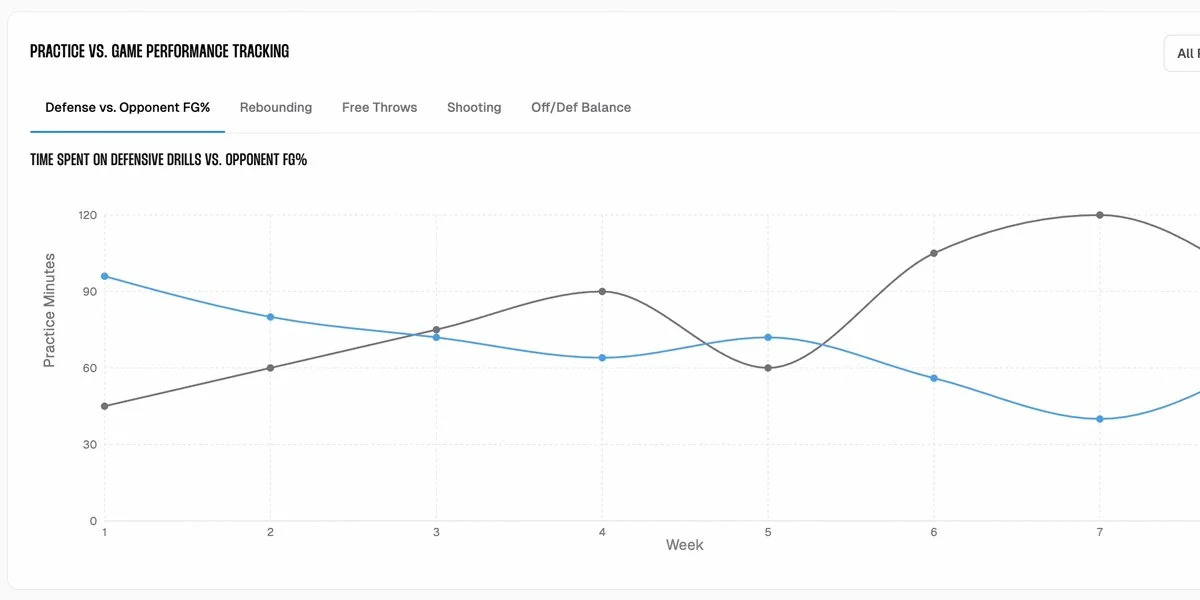
What is the most time-consuming task for a league's scheduling operator? With the right technology, that question matters a lot less than it used to. Leagues that have started using AI for scheduling will tell you the change is not what they expected. Instead of spending weeks manually building a single version of the calendar and working around its inevitable compromises, they are now reviewing and refining the best options from multiple generated combinations, each already weighted against the league's priorities.
In practice, this changes the nature of the work in several important ways. In most leagues today, team requests, historical schedules, venue availability, and broadcast preferences live across emails, spreadsheets, and separate systems. Bringing all of that into a single environment, where constraints can be defined, stress-tested, and compared across multiple alternatives, compresses decisions that previously required days of coordination into the time it takes to build just a single version.
AI’s presence in this case has a reverse domino effect on decision-makers across commercial, sporting, and operational functions. They can now see exactly what they are gaining and giving up across different schedule versions before committing to one. What does it cost in broadcast value to protect an extra rest day for travelling clubs? What is the cumulative travel burden if fixtures are sequenced differently? What happens to competitive balance if rivalry matches are concentrated in the final stretch of the season? These tradeoffs have always existed, but quantifying them before the calendar is published is what turns scheduling into a genuine strategic conversation.
That visibility also builds trust. The tools that build long-term confidence among schedulers and executives are those that show their working, where different versions can be compared, priorities examined, and every output interrogated and adjusted before anything is finalised.
And when the season is underway, that same logic extends to how leagues can handle change. A schedule rarely survives a full season intact. Venue changes, weather events, broadcast renegotiations, and fixture congestion all require real-time adjustments, and with AI-powered scheduling software, leagues can re-optimise around those changes without starting from scratch, with updates cascading automatically to those affected teams.
Sport Scheduling as a Commercial Asset
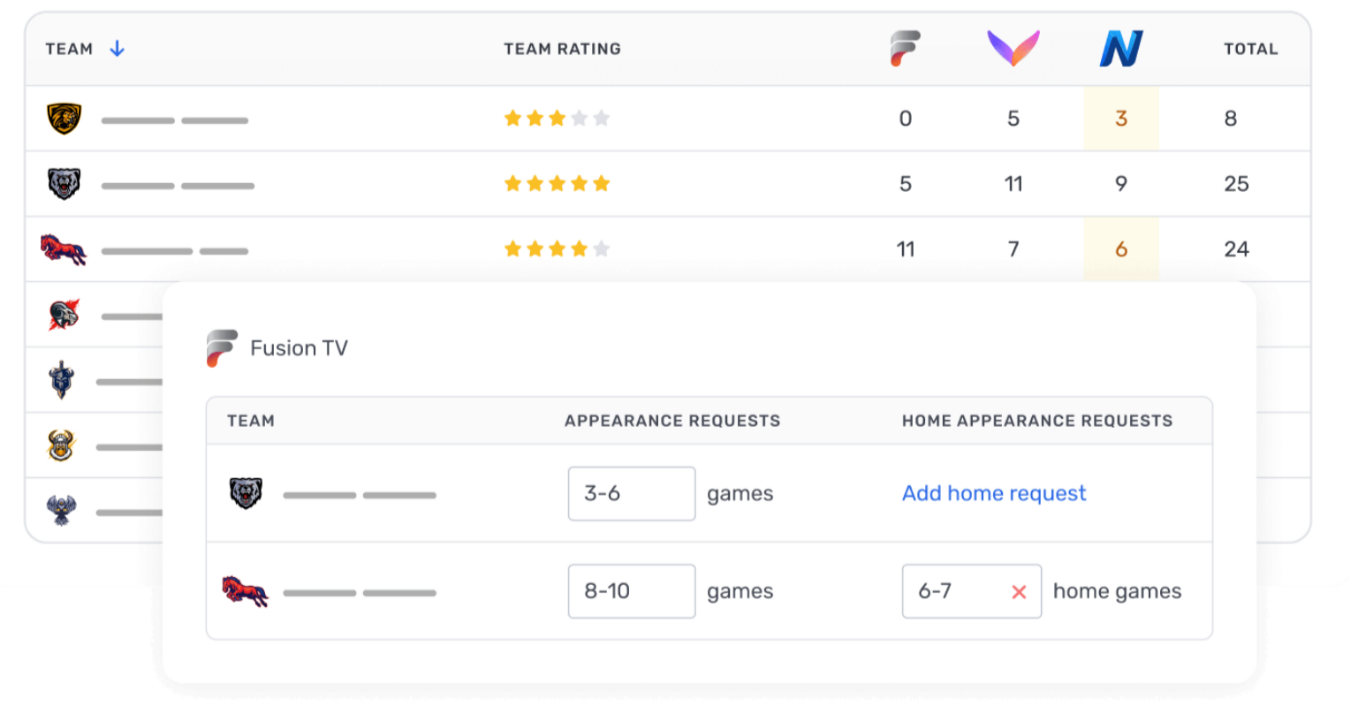
Broadcast rights remain one of the largest revenue sources for most professional leagues (compared to merchandising and ticket sales), and the fixture calendar is one of the primary levers determining how much of that value is realised.
But the commercial dimension of scheduling extends well beyond that. Which matchups land in peak viewership windows, how travel burden is distributed across clubs, how sufficient rest shapes the quality of play in marquee fixtures, how external factors like public holidays and competing sports calendars are factored in, all of these influence attendance, advertising revenue, sponsorship value, and the leverage a league carries into its next rights negotiation. When those variables are treated as inputs to the scheduling process rather than as afterthoughts, the commercial impact compounds throughout the entire season.
This is where Fastbreak Pro Schedule has established itself as the tool of choice for some of the world's leading leagues and federations, including the NBA, NHL, MLS, LaLiga, Serie A, Ligue 1, National Rugby League, and World Rugby. Rather than optimising for one dimension of value, Pro Schedule allows leagues to model the full picture, travel, rest equity, competitive fairness, broadcast value, and attendance impact, simultaneously, at the point of schedule creation, all in one platform. In markets like LaLiga and Serie A, where a single fixture placement decision carries measurable revenue consequences, that capability is a meaningful and compounding advantage.
Leagues that schedule with this level of rigour also negotiate from a stronger position when broadcast deals come up for renewal, because they can demonstrate, with data, the viewership value their fixture calendar is designed to deliver.
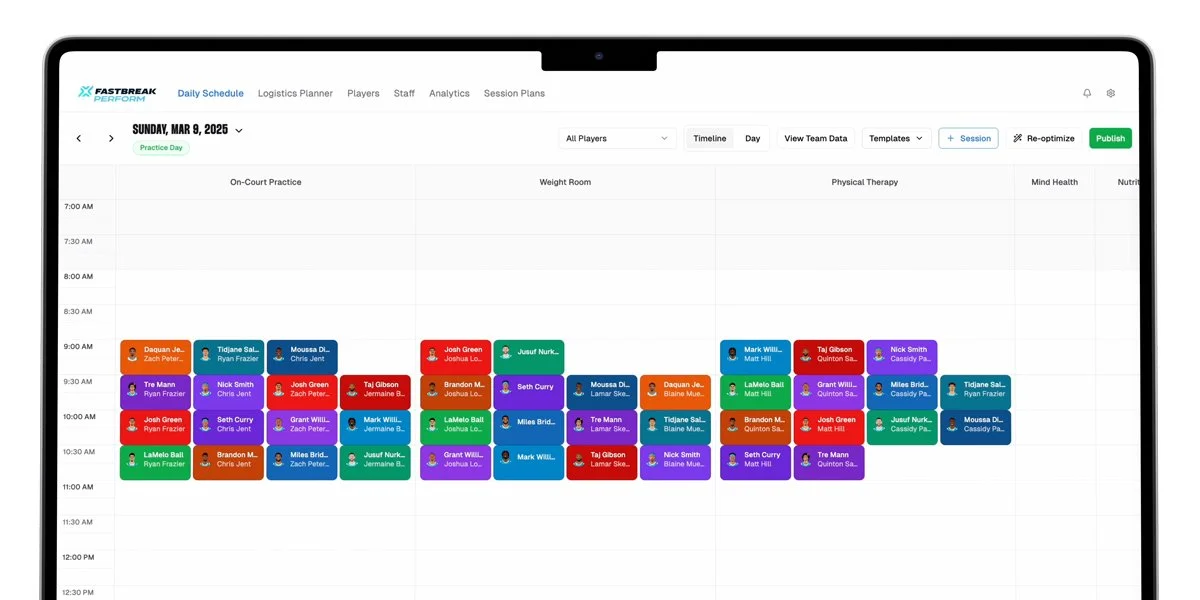
Alongside Pro Schedule, Fastbreak AI is also developing FastbreakPerform, a platform built for the day-to-day operational realities of professional clubs, integrating session planning, athlete readiness, workload management, and staff coordination into a single environment. Where Pro Schedule works at the level of the season calendar, Perform brings the same underlying logic to the training ground. It is a natural next step, and one that clubs at the highest level of European sport will be watching closely.
Beyond Elite Sport: Where Does The Wider Opportunity Lie?
The scheduling challenges that make professional league calendars so difficult to manage do not disappear as you go further down the pyramid. In many ways, they are harder to navigate at lower levels of the sport because the organisational infrastructure available to handle them is far smaller.
Youth academies, grassroots leagues, and amateur tournament operators face the same fundamental challenge: multiple teams, multiple venues, competing constraints, and very limited administrative resources. Most are still working from spreadsheets or basic tools that were never built for this kind of demand. A regional youth tournament with 40 teams across 6 venues on a single weekend is a genuinely hard scheduling problem, and when it goes wrong, the consequences fall directly on the families, volunteers, and athletes who show up.
This is the gap that Fastbreak's recent partnership with P32 Sports begins to address. P32, a basketball association running some of the most competitive youth basketball in the country, will now adopt Fastbreak AI’s Pro Scheduling solution and digital infrastructure in its operations, a capability that it has historically lacked. The technology that helps some of the world's biggest leagues manage their most complex planning challenges is now being applied to organisations that most often run on goodwill and limited budgets, not as a scaled-down version of the same tool, but as the same underlying approach to a problem that exists at every level of organised sport.
The opportunity here is not just commercial. It is about making better-run competitions available to more athletes at more levels, with fewer administrative failures that quietly erode the experience of playing and watching sport below the professional tier.
Conclusion
The fact that the same scheduling challenges exist from grassroots associations to professional federations says something about how the industry is changing. Scheduling technology is no longer a nice-to-have for the biggest leagues; it is becoming a baseline capability at every level. The question organisations are asking has shifted, too. It is no longer about which tool produces the best output. It is about how quickly they are willing to adapt and adopt.
For organisations already working with similar technology, the change has been tangible. Schedules that used to take months to build are now analysed, compared, and refined in a fraction of the time. Tradeoffs that were previously invisible are now explicit. And value that used to be left on the table, commercial, competitive, and operational, is now built into the process from the start.
The fixture calendar has always been one of the most consequential decisions a league makes. Treating it that way, with the right tools, is what separates the organisations that are ahead from those that are catching up.
Key takeaways
AI is changing how schedules get built. Instead of one manual calendar with unavoidable compromises, leagues now generate and compare multiple versions at once, each weighted against their priorities, with the tradeoffs visible before anything is published.
Fastbreak AI covers the full picture across verticals: Pro Schedule models travel, rest, fairness, broadcast value and attendance at season level, while FastbreakPerform brings the same logic to clubs through session planning, athlete readiness and workload management.
Scheduling technology is now a baseline capability at every level, from top leagues and federations down to youth and grassroots. The question is no longer which tool is best, only how fast an organisation adopts.
FAQ
How can a league use AI scheduling?
Generate and compare multiple calendar versions weighted against your priorities, and see the tradeoffs before publishing. When a venue or broadcast slot changes mid-season, re-optimise without starting from scratch.
How can a federation use AI scheduling?
Model travel, rest, fairness, broadcast value and attendance in one place with Fastbreak.AI’s Pro Schedule. Then negotiate rights renewals from a stronger position by showing the calendar's viewership value with data.
How can a club use AI scheduling?
Clubs can use FastbreakPerform to manage the day-to-day at the training ground, covering session planning, athlete readiness, workload management and staff coordination in one platform.
LaSource exists to help those shaping the next era of sport. The agency helps sports organisations, technology companies, and investors grow their business in sport through strategy, digital transformation and ecosystem partnerships. By combining strategic foresight with hands-on execution, they turn long-term ambition into initiatives that can actually be deployed and scaled.