
The Sports Industry in 2026
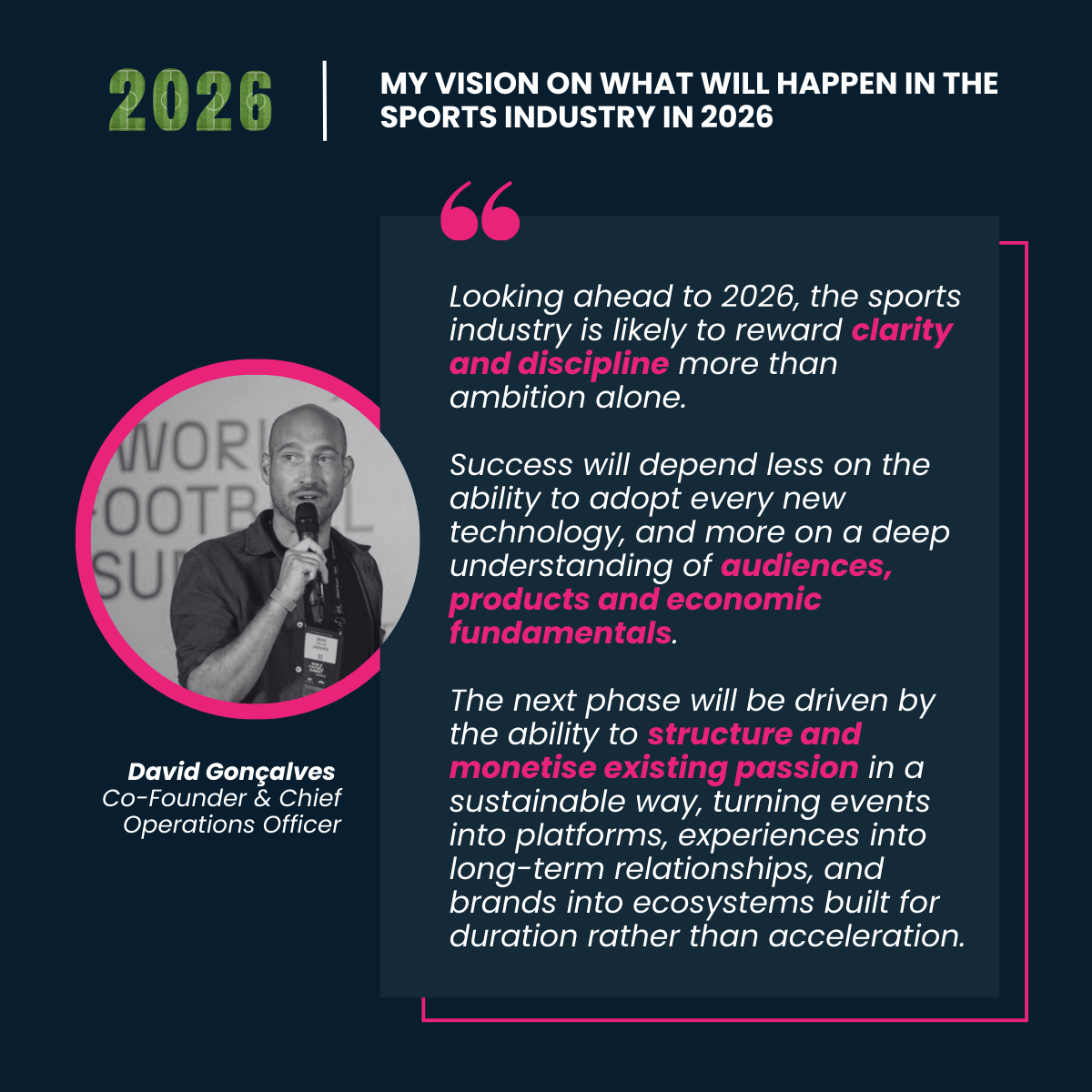
Looking ahead to 2026, it is clear that the sports industry is accelerating into a more mature and demanding era. Across organisations, markets, and disciplines, the direction of travel is broadly agreed. What is truly changing is the pace, the discipline, and the gap between those who execute and those who hesitate.
An Industry Moving From Expansion to Selectivity
After years of growth driven by expansion, experimentation, and new revenue streams, sports organisations are now operating in a more selective environment. The fundamentals remain strong: live sport continues to attract audiences, emotional engagement is high, and sport remains an attractive long-term asset class for investors.
But growth is no longer evenly distributed. The strongest properties are increasingly optimised, while others face pressure to professionalise or risk being left behind. This is leading to a more uneven landscape, where clarity of strategy and operational excellence matter more than ambition alone.
By 2026, success will depend less on launching more initiatives and more on capturing value more effectively from existing audiences, assets, and infrastructures.
Consolidation as a Structural Reality
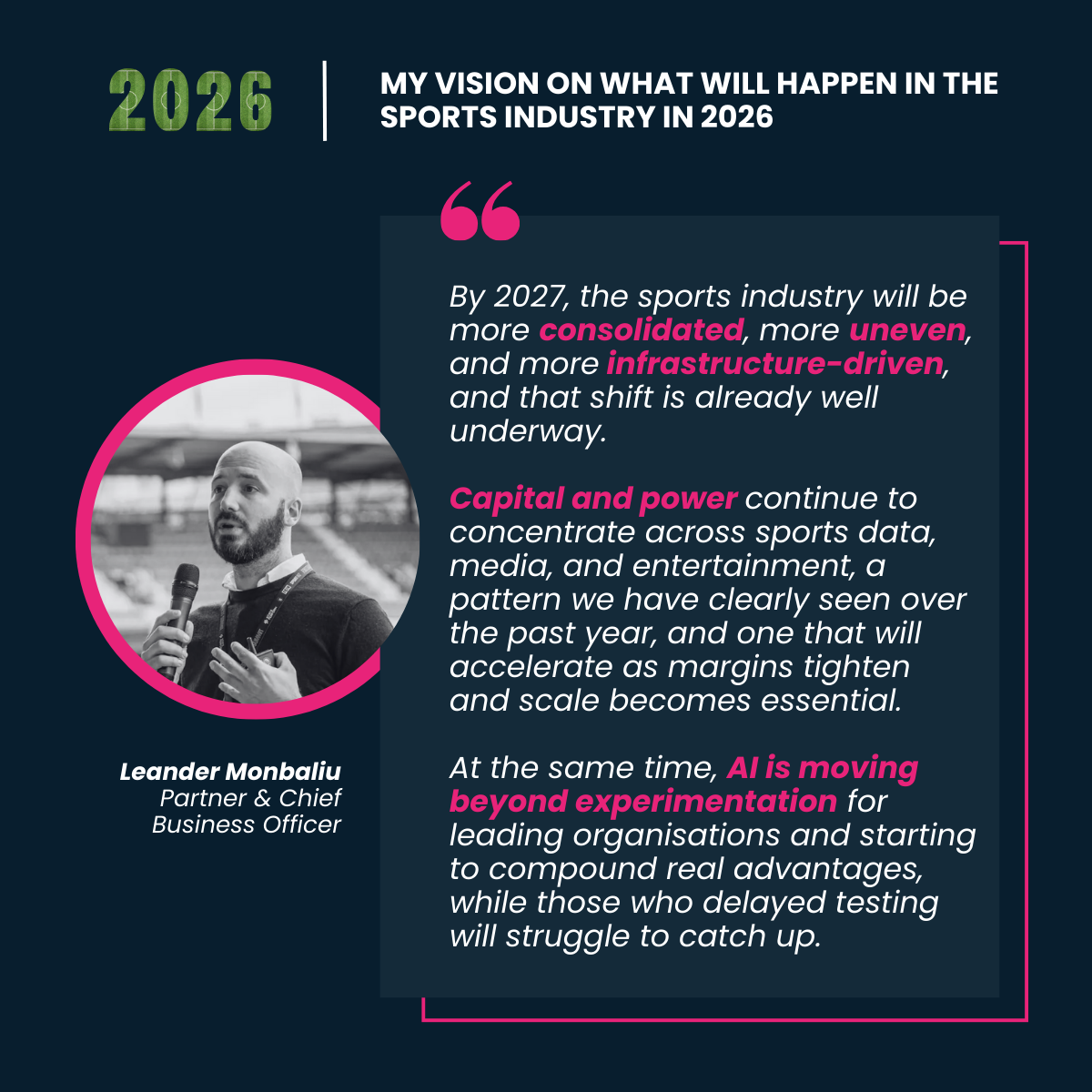
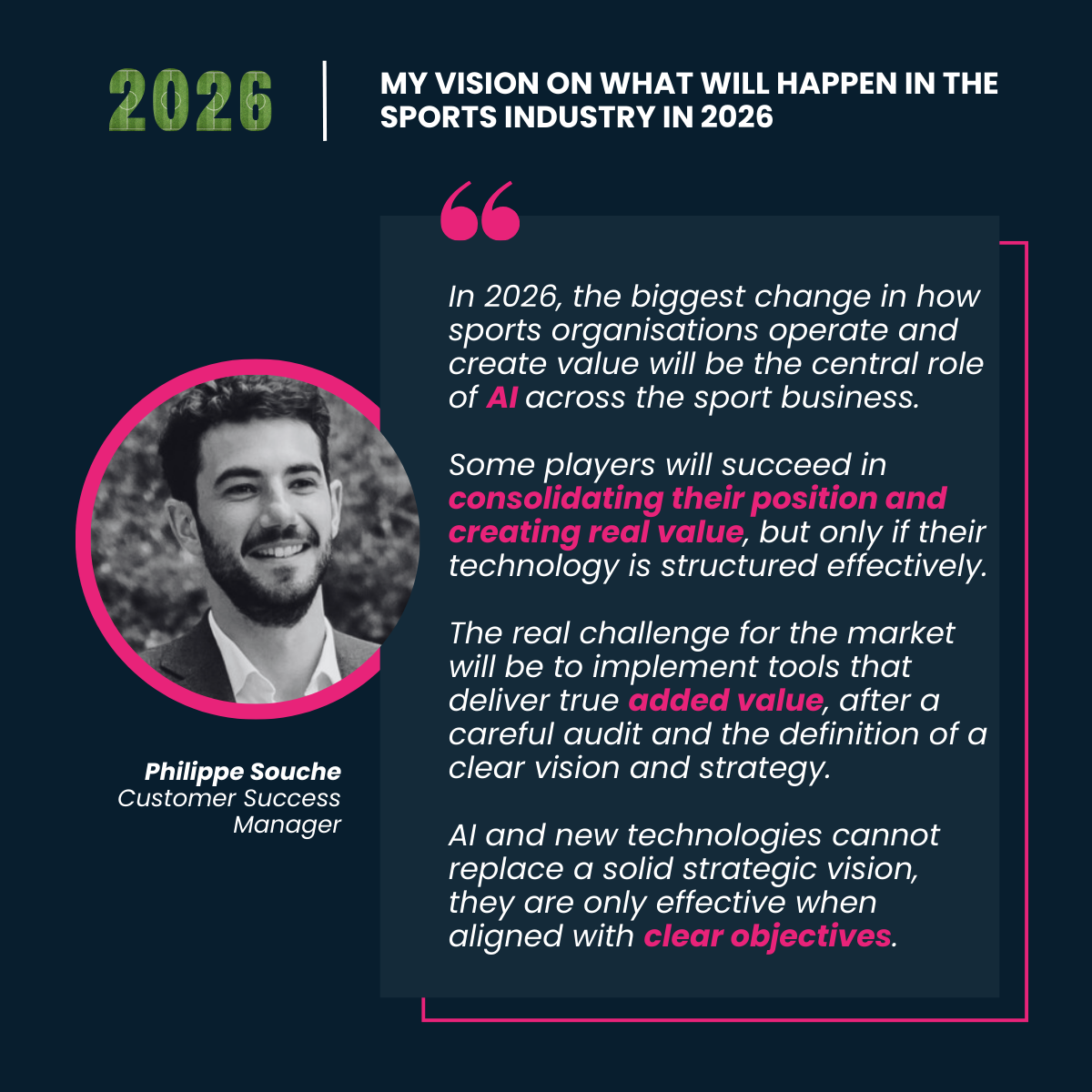
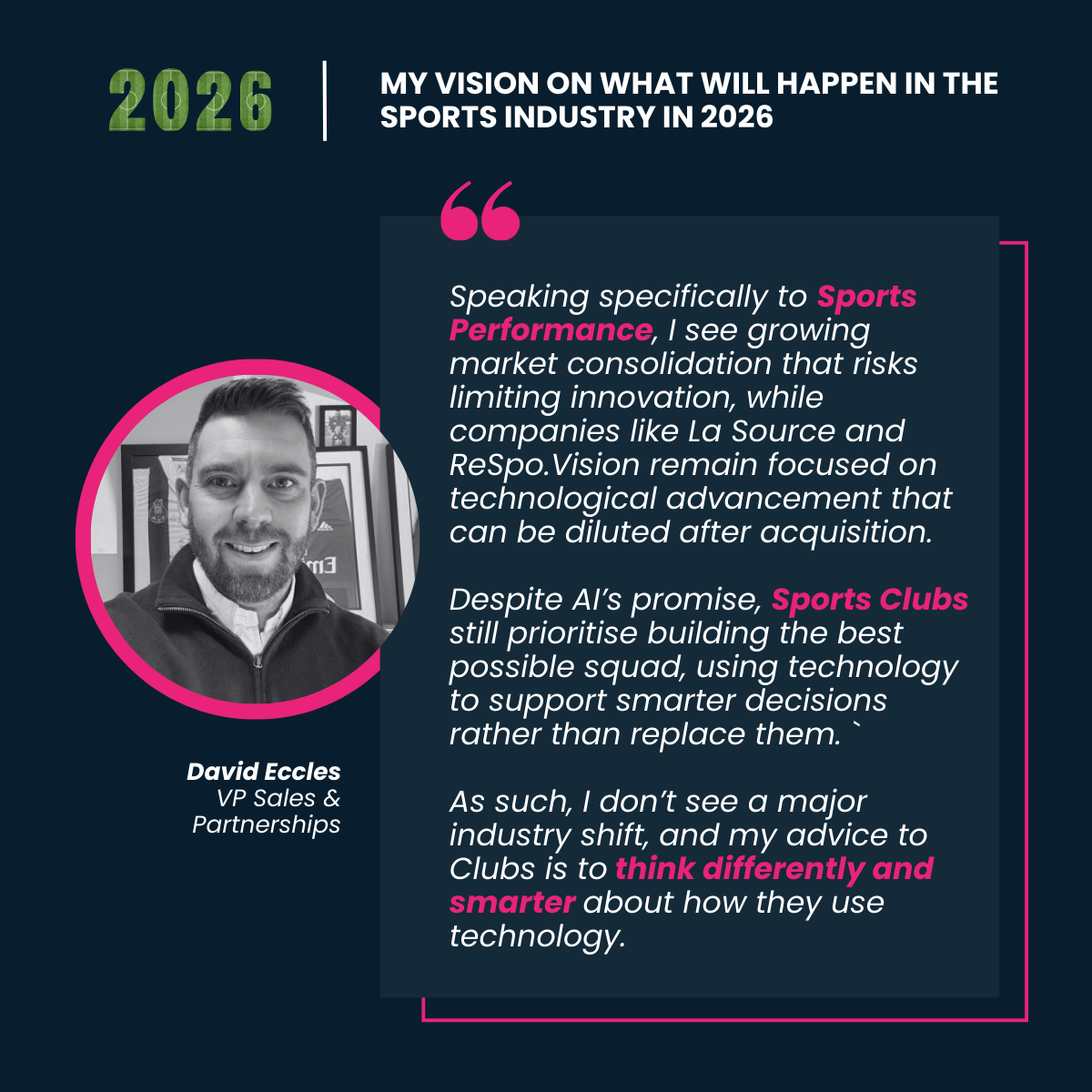
Consolidation is now becoming a structural reality across sports, media, and technology. From sports tech acquisitions to multi-club ownership models and media infrastructure mergers, scale is becoming essential to remain competitive.
This consolidation reflects two parallel dynamics. On one side, organisations are looking to simplify fragmented ecosystems, reduce duplication, and build integrated platforms rather than isolated tools. On the other hand, capital is concentrating around assets that offer control over data, distribution, and intellectual property.
The implication is clear: by 2026, fewer platforms, partners, and vendors will dominate the landscape, but those relationships will be deeper, more strategic, and more embedded in day-to-day operations.
AI Moves From Experimentation to Infrastructure
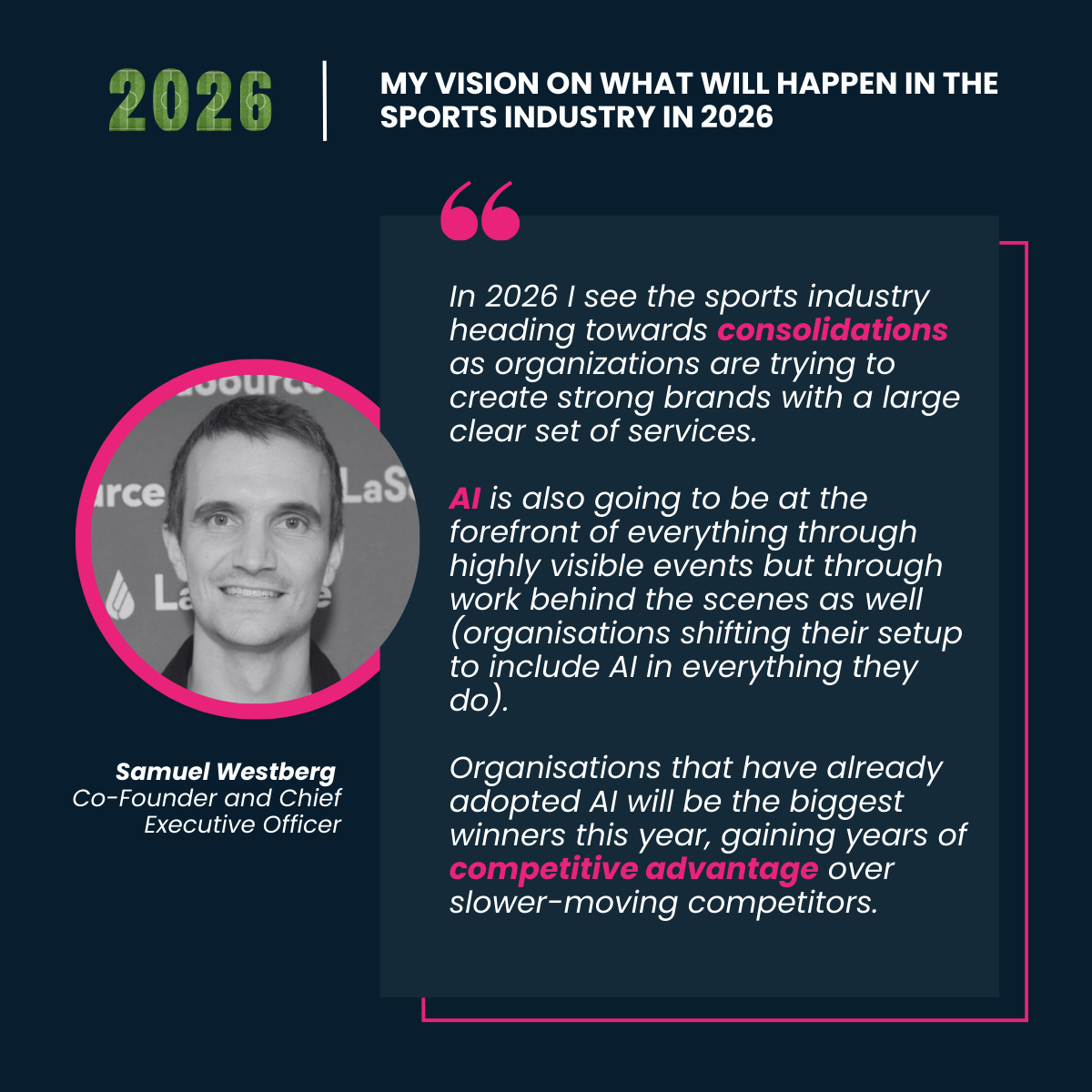
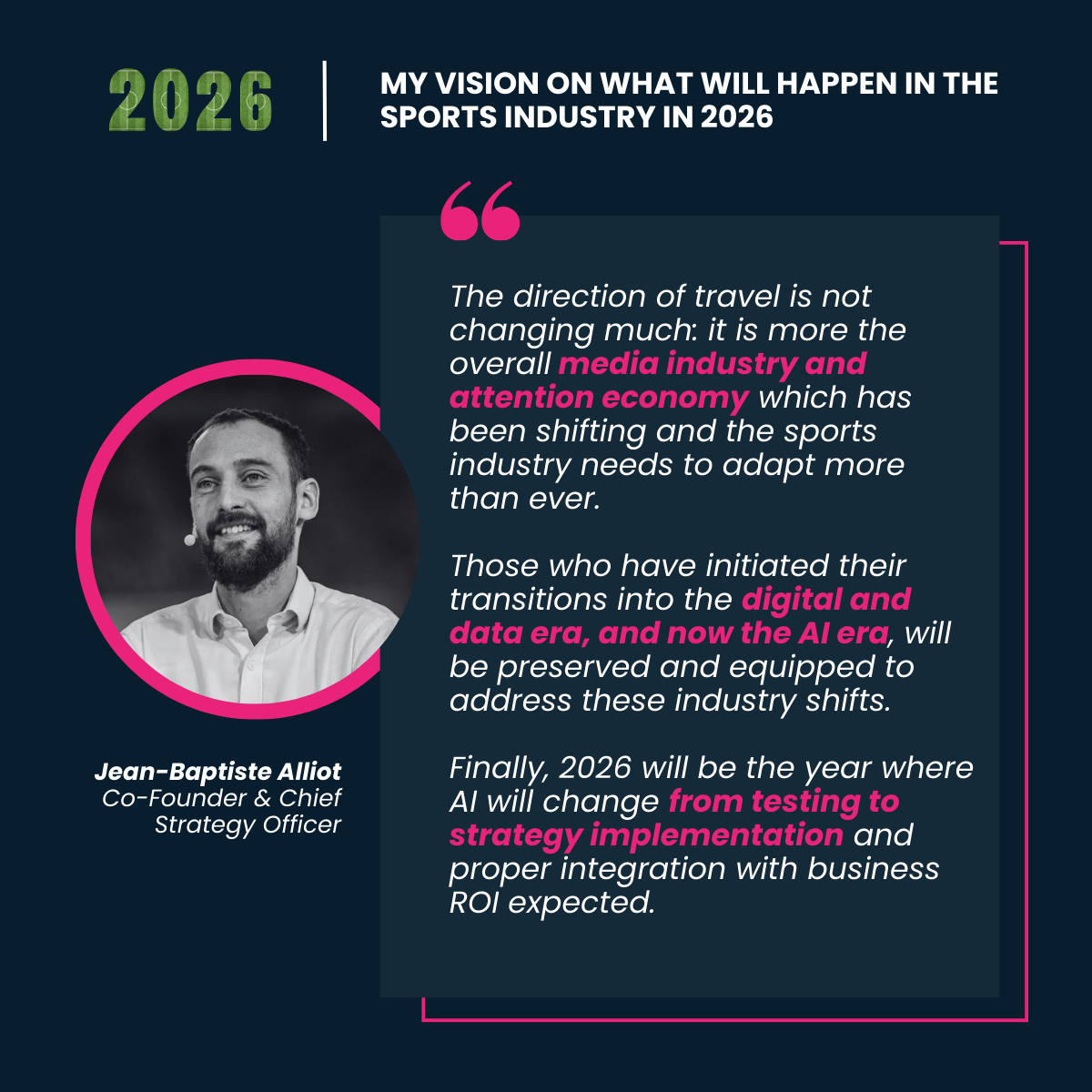
If 2024 and 2025 were years of testing, 2026 will be the year where AI becomes infrastructure.
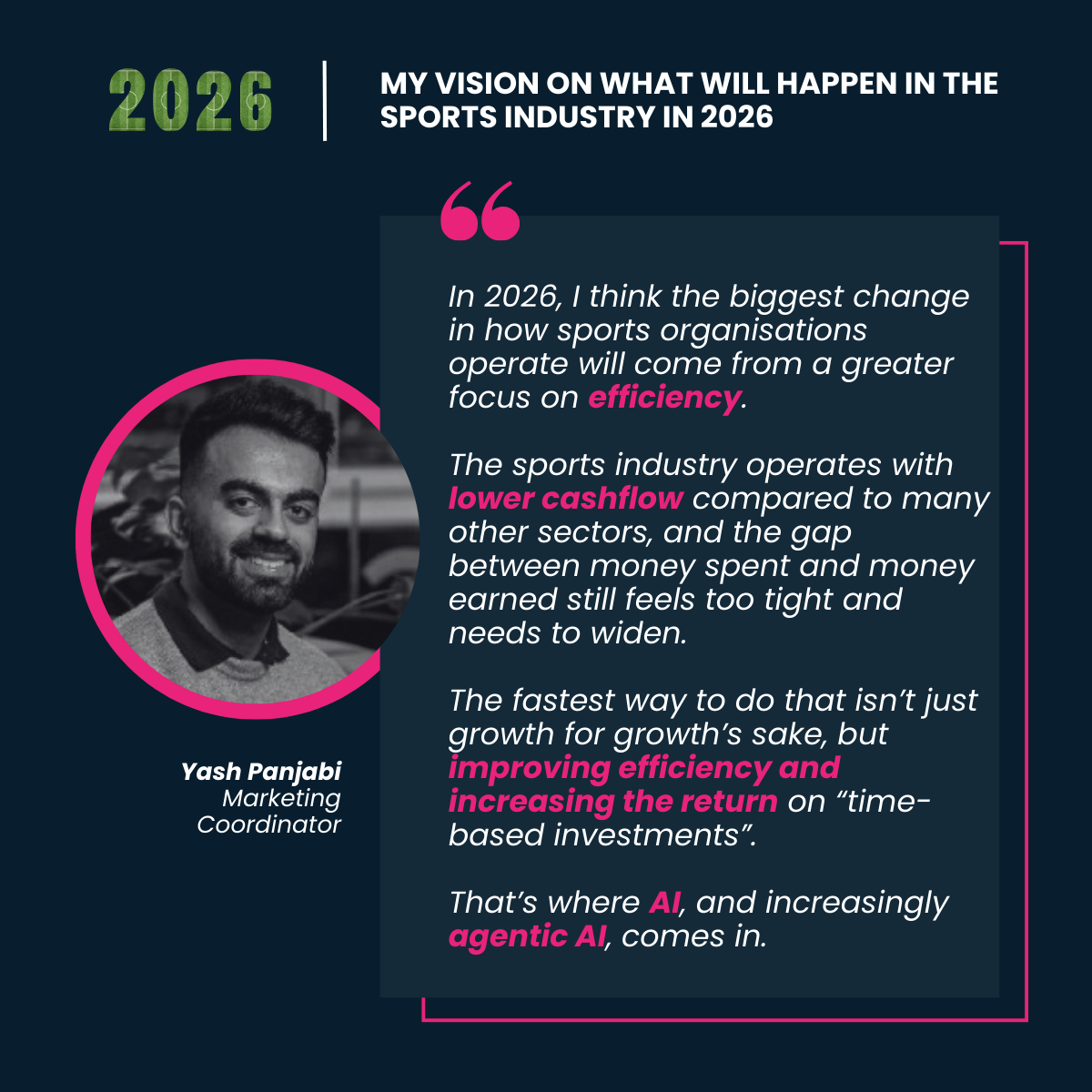
Across the industry, artificial intelligence is moving beyond experimentation into real operational deployment. The focus is shifting from “what is possible” to “what creates value”. Leading organisations are embedding AI across workflows: content production, localisation, scheduling, performance analysis, fan intelligence, and internal operations.
Crucially, the competitive advantage will not come from using AI everywhere, but from using it deliberately. The organisations that win will be those that invest early in the right data foundations, align AI tools with clear business objectives, and ensure internal teams are capable of deploying and iterating on these technologies.
By 2026, AI will not replace people, but it will increasingly separate organisations that operate efficiently and coherently from those that don’t.
Discover more on how artificial intelligence is reshaping how sports organisations create, operate, and connect in our dedicated AI environment.
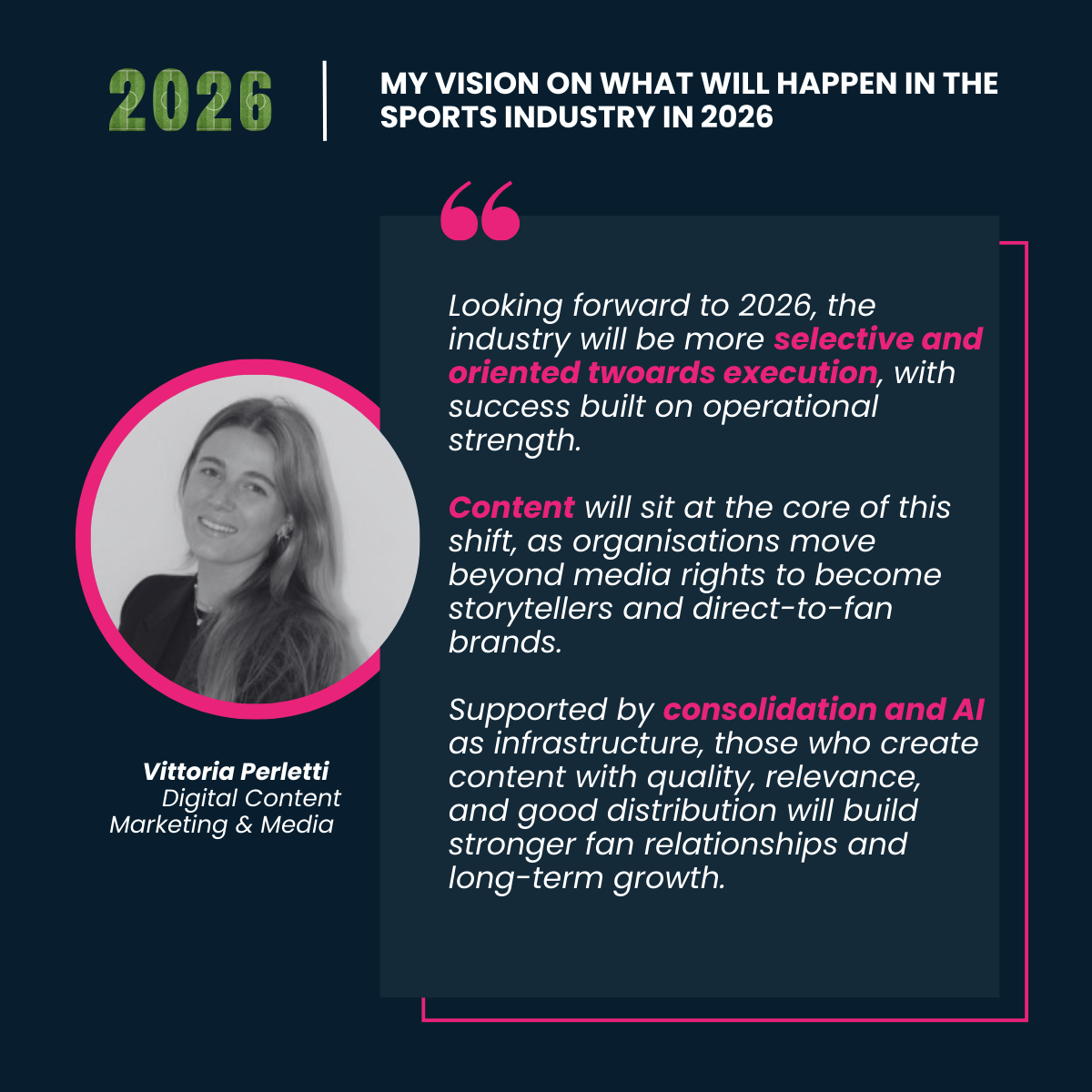
From Media Rights to Direct Fan Relationships
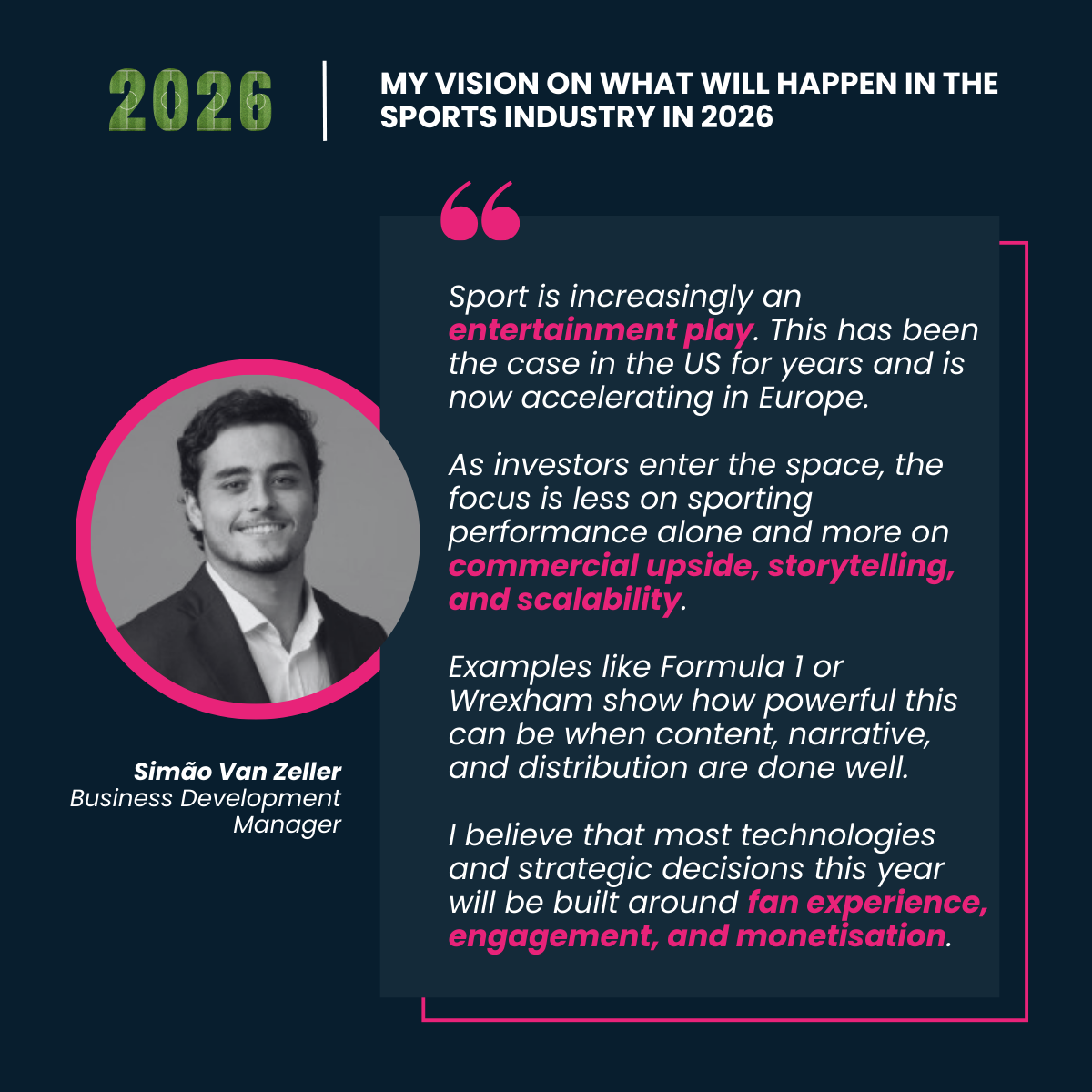
Another shared observation is the continued shift away from a pure media licensing model toward brand-led, direct-to-consumer strategies.
While media rights remain central, they are increasingly managed as part of a broader portfolio strategy rather than a single transaction. Leagues and clubs are looking to balance wholesale revenue stability with direct relationships that provide data, flexibility, and long-term fan value.
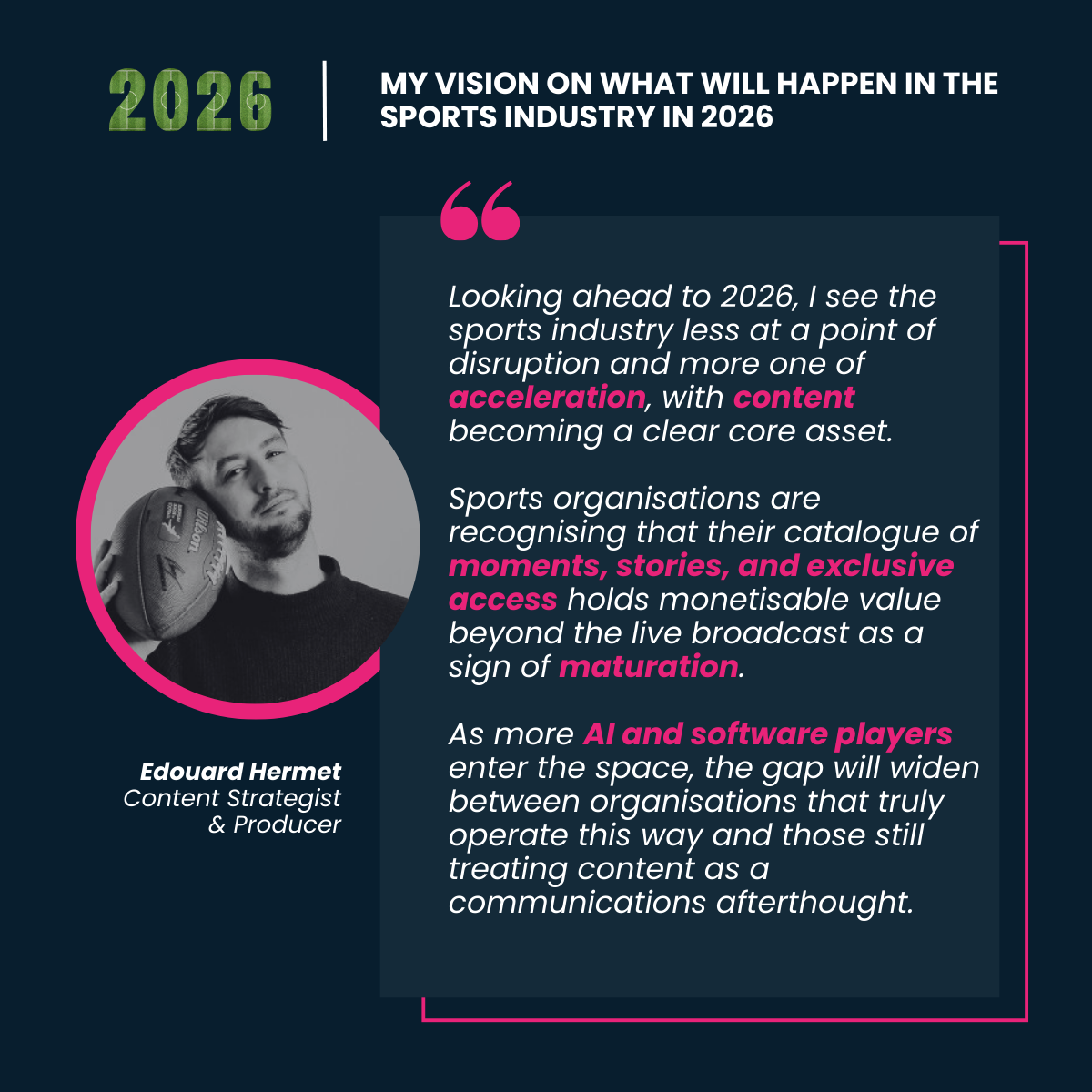
This transition is forcing sports organisations to rethink their role. They are no longer just competition organisers, but content owners, narrative builders, and experience designers. By 2026, value will be created not only through the live game, but through everything that surrounds it: anticipation, access, storytelling, community, and continuity.
Learn more on Media Rights in our recent deep-dive into the evolving sports media landscape: Beyond Broadcast: How Leagues Build Power Before Platforms.
Fan Engagement: Less Noise, More Meaning
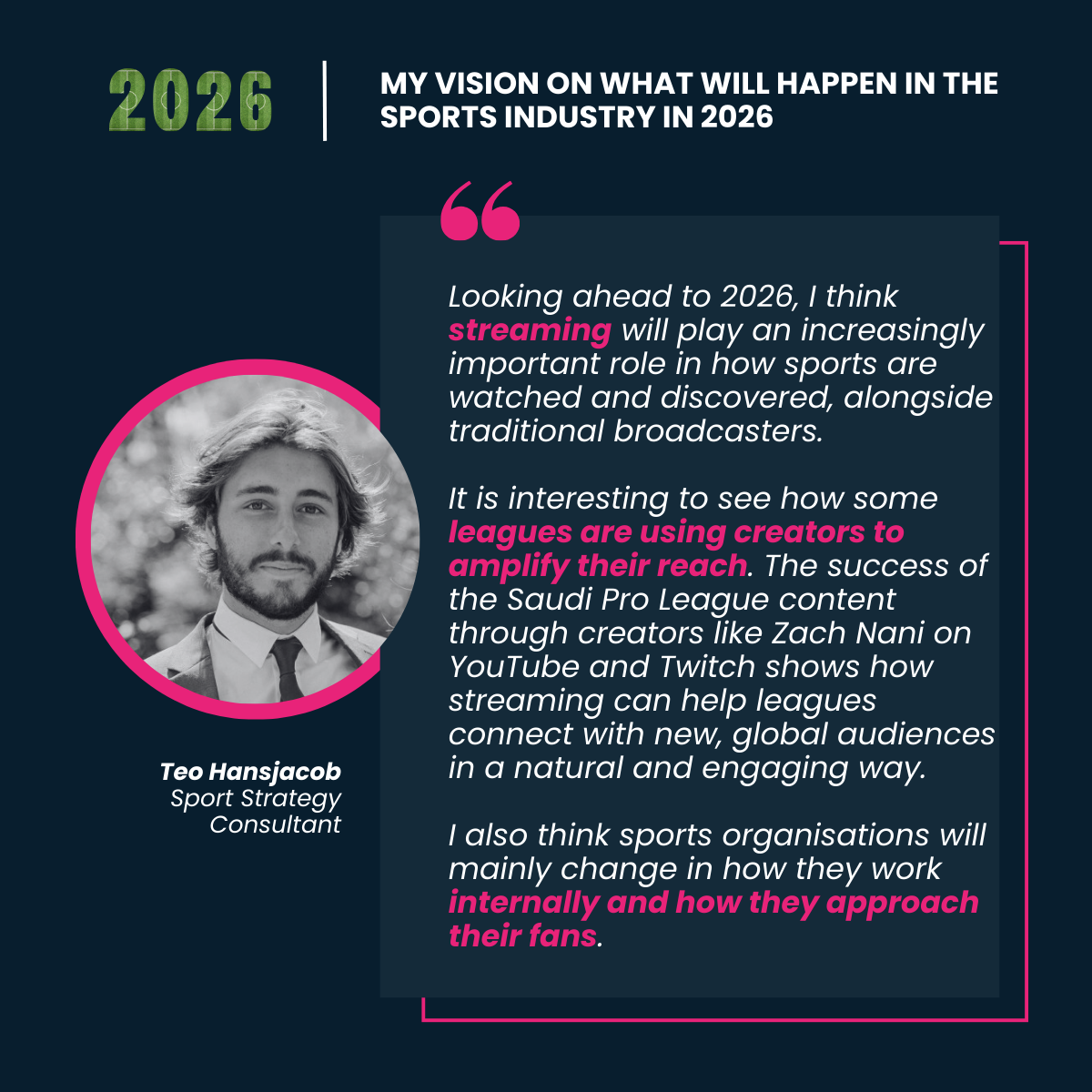
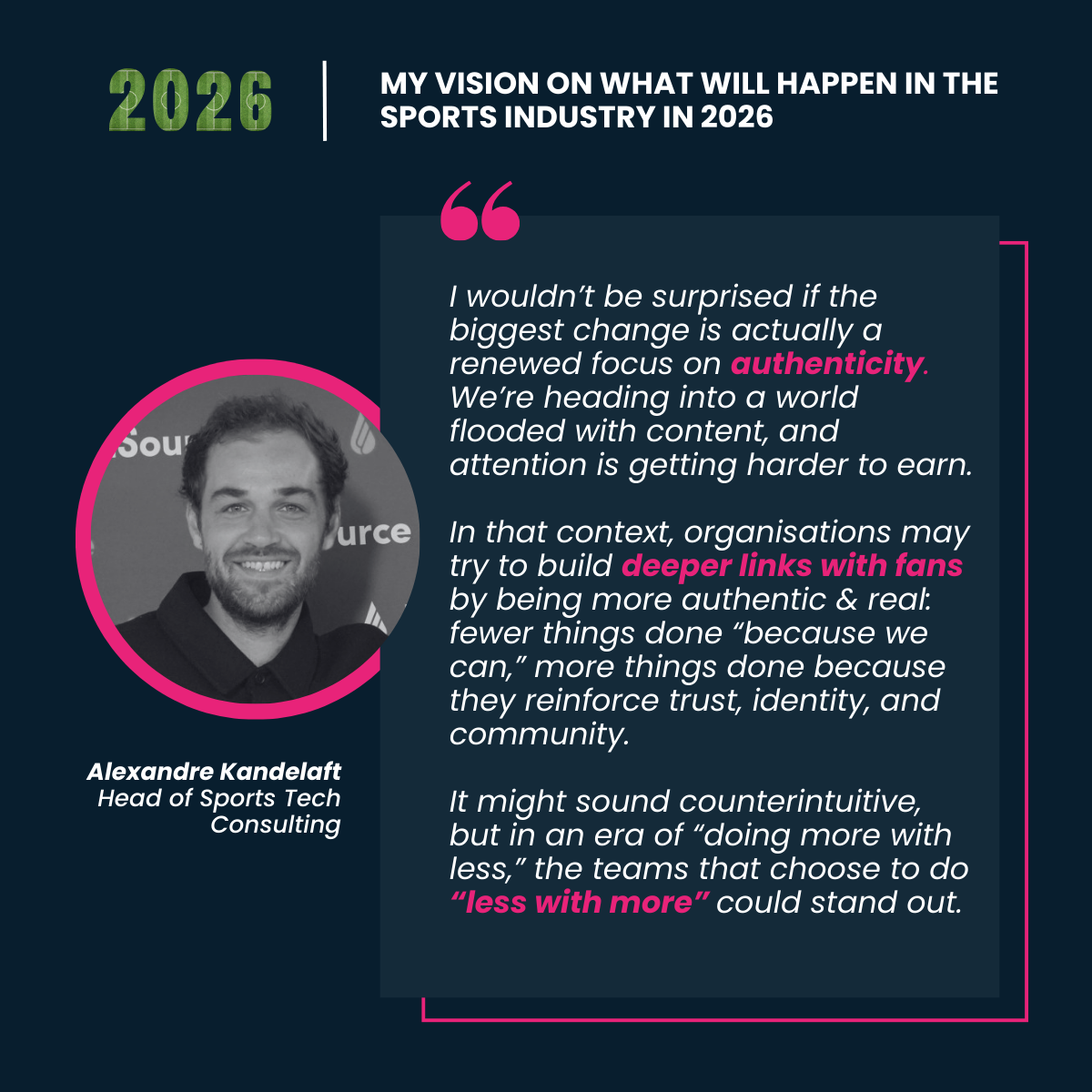
As content production becomes easier and cheaper, attention becomes scarcer, making relevance a key aspect to consider.
Across the industry, engagement strategies are shifting from scale to precision. Fans are asking for better and more authentic experiences. Live events remain the emotional anchor, while digital tools are increasingly used to extend value around them rather than replace them.
By 2026, the organisations that stand out will be those that prioritise quality over quantity, authenticity over gimmicks, and long-term trust over short-term monetisation.
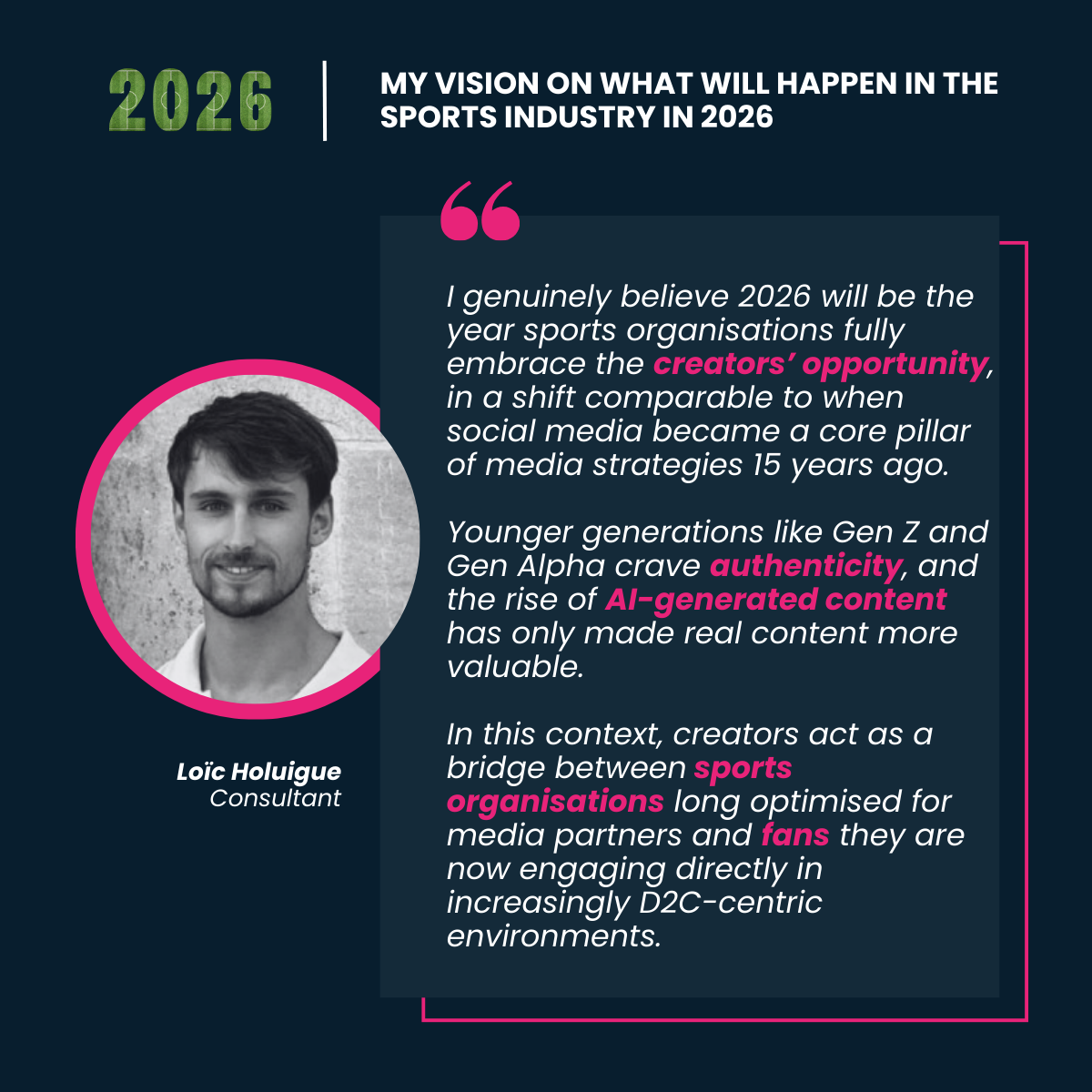
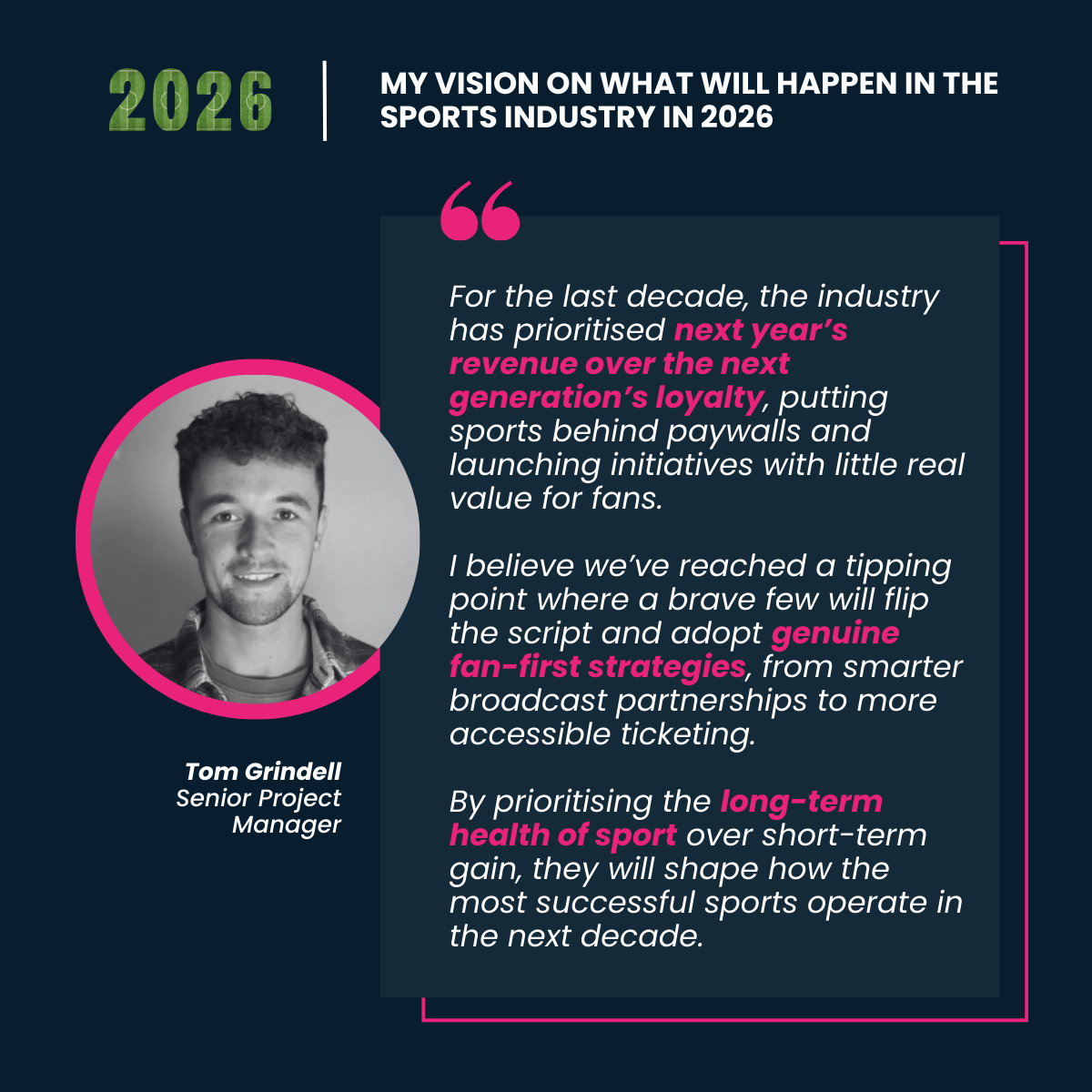
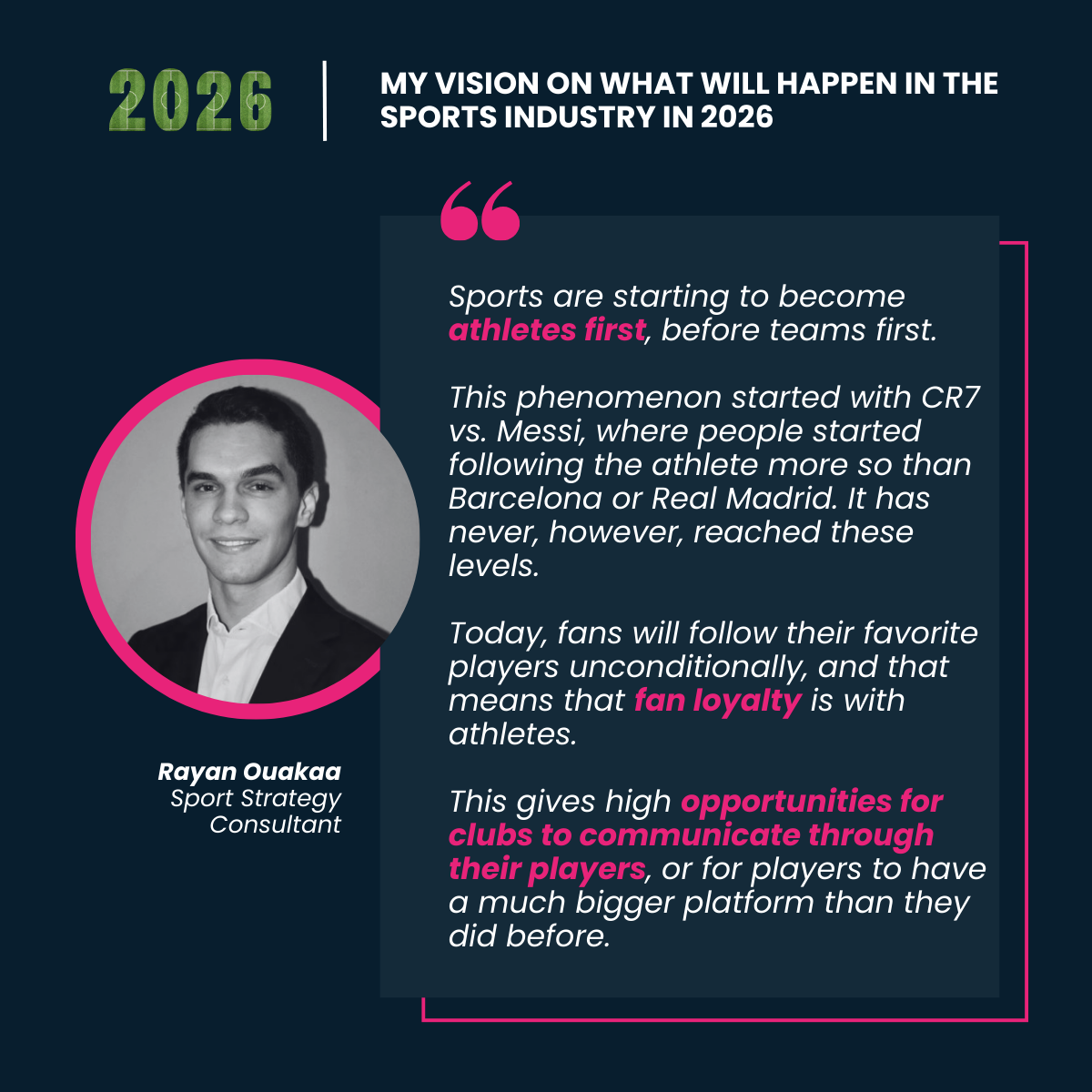
Sports Organisations as Product Companies
Operationally, one of the most significant shifts underway is the transformation of sports organisations into product-led businesses.
Rather than treating media, digital platforms, memberships, or competitions as isolated outputs, leading organisations are managing them as long-term products with clear lifecycles, ownership, and performance metrics. This requires stronger governance, clearer P&L responsibility, and deeper collaboration across traditionally siloed teams.
In parallel, talent and expertise are becoming critical differentiators. Owning infrastructure, data, and distribution only creates value if organisations have the internal capability to design, deploy, and evolve them.
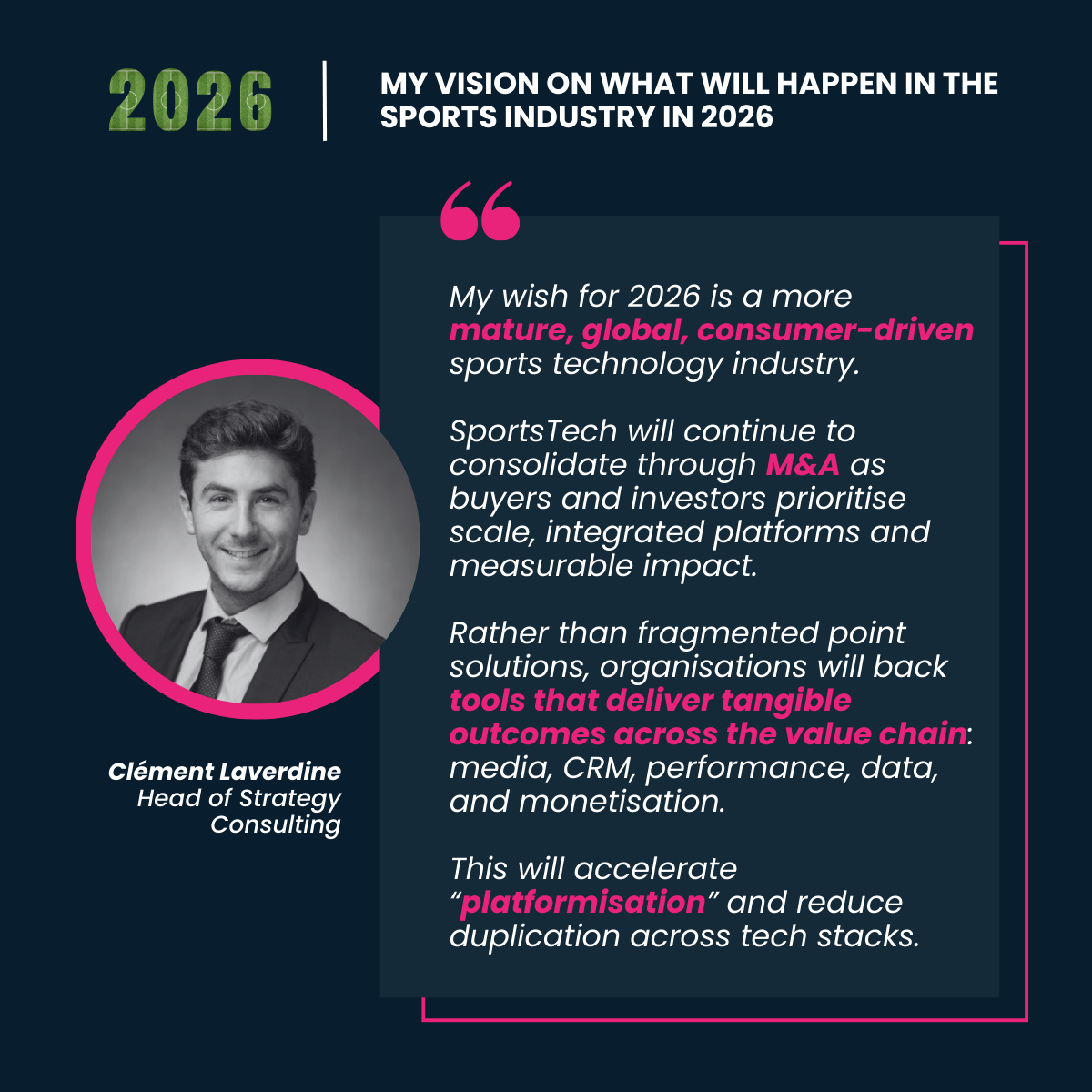
The Next Phase of Sport
The sports industry is entering a phase defined by complexity, competition, and interdependence. Technological acceleration, evolving media models, and rising expectations around efficiency and sustainability are reshaping how organisations operate. At the same time, leagues, rights holders, technology providers, and capital are more connected than ever, yet too often still working in silos.
At LaSource, we built the agency precisely for this moment.
Our conviction that sport’s future will be shaped by those who can connect vision with infrastructure. Real value is created when strategy is grounded in operational reality, when collaboration replaces fragmentation, and when ambition is matched with the ability to execute at scale.
Our role is to act as a connector and translator across the sports ecosystem. We work at the intersection of sports organisations, technology, and capital, helping each understand the constraints, incentives, and opportunities of the others. This is how strategic intent becomes concrete progress.
In practice, our goal is to help organisations make clear strategic choices, design the right governance models and partnerships, and deploy initiatives that are not just innovative, but executable, scalable, and sustainable. As the industry moves from experimentation to discipline, from expansion to selectivity, this ability to turn clarity into action will be the real differentiator.
LaSource is a sports consulting agency working closely with startups, tech innovators, and major sports organisations to accelerate growth, shape strategy, and unlock new commercial pathways