
Our take on F1 Coming to Fortnite as Part of New Collaboration, and DAZN & Pro League Ending TV Rights Domestic Deals
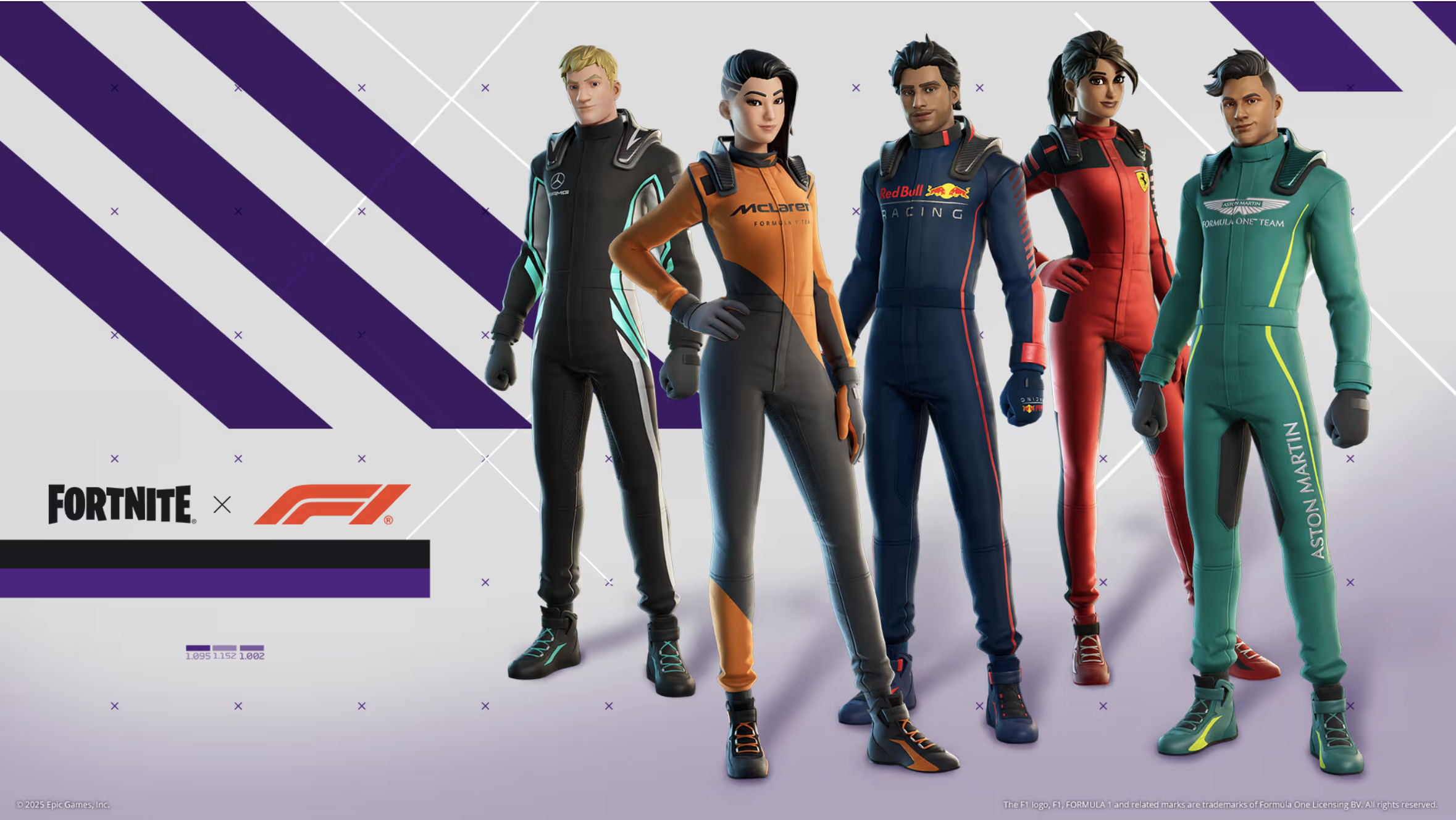
F1 Comes to Fortnite as Part of New Collaboration
Last weekend’s Las Vegas Grand Prix was a very exciting and competitive one, going towards the end of the season. But what actually caught our attention happened outside the circuit. Alex, our Head of Marketing & Sports Tech Services (and a long-time Fortnite player), took a closer look at F1’s new partnership with the game.
Our Take:
Bringing F1 to Fortnite has nothing crazy or new, but it's still another good example of how Epic strengthens the game’s long-term strategy as a multi-genre entertainment universe on top of the game itself. In the past, Fortnite has already integrated sports IPs through NBA skins, Super Bowl tie-ins, and athlete-driven drops. But the F1 partnership shows that sport is still a strong pillar in its cultural footprint expansion, sitting alongside big entertainment collaborations in music (Daft Punk) or animations (The Simpsons). And these collaborations are essential as the game is already 8 years old. Having premium global sports IP like Formula 1 enables Fortnite to keep evolving while being attractive & engaging. And it seems to be paying off. Fortnite might be old, but it is still considered one of the most influential gaming platforms with millions of monthly players in 2025.
Now think about it for Formula 1. Having its brand within the game is a huge coverage opportunity for the sport. It’s also a big step toward extending the fan journey into other channels & digital spaces. Fortnite’s audience is young, with 36.9% of users aged 18-24. Then showing up the F1 brand in it enables it to reach younger audiences in environments where they spend plenty of time, ensuring a connection with new generations while strengthening its current fanbase. Globally, this is a strategic move to support F1’s positioning as one of the biggest IPs in sport.
At LaSource, we see this partnership as part of a wider transformation in which sports organisations are increasingly behaving like entertainment ecosystems. And this reinforces a key industry trend that we have been noticing for some time: sports IPs moving into gaming and virtual worlds is a shift toward new engagement models that keep fans continuously engaged in their everyday lives. It expands the surface area of fandom beyond event days and gives them new entry points into the sport’s universe.
The convergence of sport, gaming, and entertainment might continue to accelerate as rights holders rethink and reshape how they distribute their brands beyond traditional channels, where culture continues to grow and where new audiences remain untapped.

DAZN & Pro League Ending TV Rights Domestic Deals
DAZN’s early termination of its €84m-per-year deal with the Pro League - after just half a season - is more than a contractual clash.
Clément, our Head of Strategy Consulting, believes this is a perfect snapshot of the deeper shifts shaping the sports media landscape since some time now. The kind of moment that forces an industry to ask uncomfortable questions, the same ones we explore every day at LaSource. And crucially, it exposes the pressures of a global market where premium international rights inflate, while mid-tier domestic leagues face tighter economics, saturated audiences and higher operational risk.
Our take:
Let’s look at what really happened… and what it actually means for leagues.
DAZN and the Pro League had agreed on a five-year partnership starting in 2025/26. That deal is now gone before it even really began, mainly because DAZN couldn’t secure distribution deals with major Belgian telcos.This is not surprising when seen through the domestic lens: Belgium is not a typical European media market and not naturally conducive to pure OTT models.
First, Belgium is a telco-driven rights market.For over 15 years, Belgian football has lived inside telco bundles (Proximus, Telenet, VOO/Orange). Fans have been trained to watch football through their operator, not standalone OTT apps or broadcast channels. Telcos also subsidise subscriptions, handle billing, and offer unified access across linguistic regions. Any OTT-only entrant starts with structural disadvantage.
Second, Belgium is both streaming-mature and streaming-fatigued. According to IMEC Digimeter 2024, streaming adoption in Flanders is near-universal, with 57% of Belgians subscribed to at least one SVOD service and Netflix enjoying strong penetration in Belgium, by far the leading streamer, with ~47% of households using it. Instead, live TV still reaches 74% of Belgians weekly (CIM 2024), reinforcing the expectation of bundled access.
Third, DAZN walked into a commercial catch-22. As in the previous cycle, they needed telcos to reach scale, but for this cycle, where telcos showed less appetite for various reasons, they couldn’t push aggressive D2C marketing without undermining those negotiations. Push too hard, and telcos walk. Push too little, and OTT scale never arrives. This Belgium-specific deadlock leaves OTT-only reach flat and economics unworkable for a €400m+ rights cycle.
Beyond the different statements quoted in the article, something bigger is happening: platforms are no longer just buying rights - they need leagues to bring audiences, data, content and commercial activation opportunities - and leagues, in turn, remain highly dependent on intermediaries to reach their own fans, and moments like this expose that dependency brutally.
The natural question now is: what should the Pro League do? Should the Pro League build its own D2C platform? Not so fast.
At LaSource, we believe that a full league-operated D2C platform isn’t something you spin up “because things went wrong.” To maximise the platform - and ultimately the league - value, leagues should build leverage before they need it. The journey towards D2C capability strengthens a league, whether or not a platform is ever launched. It builds negotiating power, prepares a new revenue architecture and reduces reliance on a single market outcome.
D2C is not a decision. It is a test of readiness. It acknowledges the true capabilities of your league or federation beyond sports competitions.
Of course there are options for the Pro League, but only if they are approached pragmatically. The solution isn’t a rushed D2C pivot or a hasty redistribution of rights, but a smart, phased plan: stabilise reach, rebuild fan confidence, and reopen controlled negotiations with telcos, broadcasters and digital partners. Several interim models remain viable: hybrid carriage, modular D2C bridges, temporary sublicensing or phased content tiers, but they must be built on clear economics, adjusted expectations, aligned clubs and the right data foundations.
This is exactly where structured decision-making matters: understanding what can be deployed in 60–120 days, what creates negotiating leverage, and what prepares the league for the next rights cycle. And this is where we at LaSource can add immediate value; turning uncertainty into a roadmap rather than a reaction.
The Belgian Pro League will find a short-term solution: DAZN continuing until the end of the season, a temporary broadcaster, a D2C bridge, or a renegotiated model. But the real work will have to happen behind the the scenes: building the backbone, the data, the content, and the club alignment, that ensures this situation doesn’t repeat itself. And if they do that, the blackout scare will become what it should be: a necessary catalyst for long-term resilience. Because the leagues that thrive won’t be the ones that react fastest when something breaks, but the ones that prepare earliest, build real capability, and negotiate their future from a position of strength.
At LaSource, this is exactly the journey we help leagues structure - not just to survive the next crisis, but to take control of the next decade.
To learn more about how we approach this topic, explore our Beyond Broadcast: How Leagues Build Power Before Platforms report.
If you’re following the Pro League situation closely, or living something similar in your own market, happy to discuss!
LaSource is a sports consulting agency working closely with startups, tech innovators, and major sports organisations to accelerate growth, shape strategy, and unlock new commercial pathways