
Our take on TikTok and FIFA reaching first-of-its-kind Preferred Platform agreement, and NBA sharing financial plans with potential backers of European basketball
TikTok and FIFA reach first-of-its-kind Preferred Platform agreement
Tom Grindell, our Senior Project Manager, shares his perspective on TikTok becoming FIFA’s first-ever Preferred Platform. He explores why the partnership represents a major step in TikTok’s sports strategy, enabling deeper collaboration and integration ahead of the FIFA World Cup 2026. Through this agreement, TikTok will deliver expanded tournament coverage, more original content, and position itself as a primary destination for fans and creators throughout the competition.
Our Take:
FIFA’s decision to name TikTok its first-ever Preferred Platform ahead of the 2026 World Cup showcases a structural shift in how global events are designed to live in today’s attention economy, particularly in how rightsholders are innovating their partnership approach.
With the agreement in place, it’s crucial to understand that TikTok won’t necessarily become a distribution platform, but it will certainly become a fundamental part of the fan infrastructure. From a custom World Cup hub to exclusive creator access and archival remixing, the deal pushes the tournament into everyday feed culture rather than just primetime windows.
We have seen similar versions of this before. During the 2024 Olympics, Snapchat partnered with Warner Bros. Discovery to create daily highlights, behind-the-scenes access, and interactive content that lived natively inside the platform. Formats were short, authentic, and tuned to the rhythm of how younger audiences consume content. Another clear example of this shift is FIFA’s decision to launch a football simulation game on Netflix Games, part of a broader push to stay culturally relevant in the attention economy
FIFA seems to be applying the same principle but doubling down on it. By turning TikTok into a launchpad for everything from real-time training footage to archive storytelling, FIFA is turning creators into media collaborators, ensuring the World Cup doesn’t just appear on feeds but becomes embedded in them 24/7.
With the tournament hosted across North America, and considering TikTok’s prominence in the region, this partnership leverages the platform’s reach to spark local, bottom-up momentum. It’s a playbook built for scale: global content + local creators + constant access = distributed hype.
What’s strategic about this move is that by unlocking its archive and giving creators permission to remix and reframe, FIFA is actively tackling a global broadcasting problem in Piracy by converting content into structured distribution. By extending rights, FIFA aims to position creators as engines of visibility, with archive footage serving as the raw material for engagement.
From our lens at LaSource, this reinforces a broader truth: fan engagement and distribution of content has evolved from traditional broadcasts. Today, it’s shaped by the thousands of adjacent voices that carry the narrative forward. Rightsholders who embrace that dynamic, rather than resist it, are the ones who will sustain relevance.
The bottom line? The modern broadcast funnel isn’t linear; it starts earlier and lives across multiple platforms concurrently. It begins with a 12-second clip in someone’s ‘For You’ feed, travels through a creator-led commentary, and ends in full-match tune-in or long-term fandom. FIFA is building for that funnel, and this TikTok deal is its most direct acknowledgement yet.
Key takeaways
Major events now compete for attention inside everyday feeds, not only in primetime windows. Turning creators into media collaborators and opening the archive spreads a tournament across feeds continuously.
Giving creators permission to remix official footage turns a piracy problem into structured distribution. Content that would leak anyway becomes a controlled engine of visibility.
The modern broadcast funnel is not linear. It starts earlier and runs across platforms at once, from a short clip in a feed through creator commentary to full-match tune-in.
FAQs
Why did FIFA make TikTok its first Preferred Platform for the 2026 World Cup?
To embed the tournament in everyday feed culture through a custom hub, creator access and archive remixing, so the event lives across feeds continuously rather than only in scheduled broadcasts.How does opening an archive to creators help a rightsholder tackle piracy?
By giving creators permission to remix and reframe official footage, the rightsholder converts content that would otherwise leak into structured, trackable distribution.What does the TikTok and FIFA deal mean for leagues and federations?
It shows fan engagement now runs through thousands of adjacent creator voices, so rightsholders who let creators carry the narrative, rather than resist them, are the ones who keep relevance.
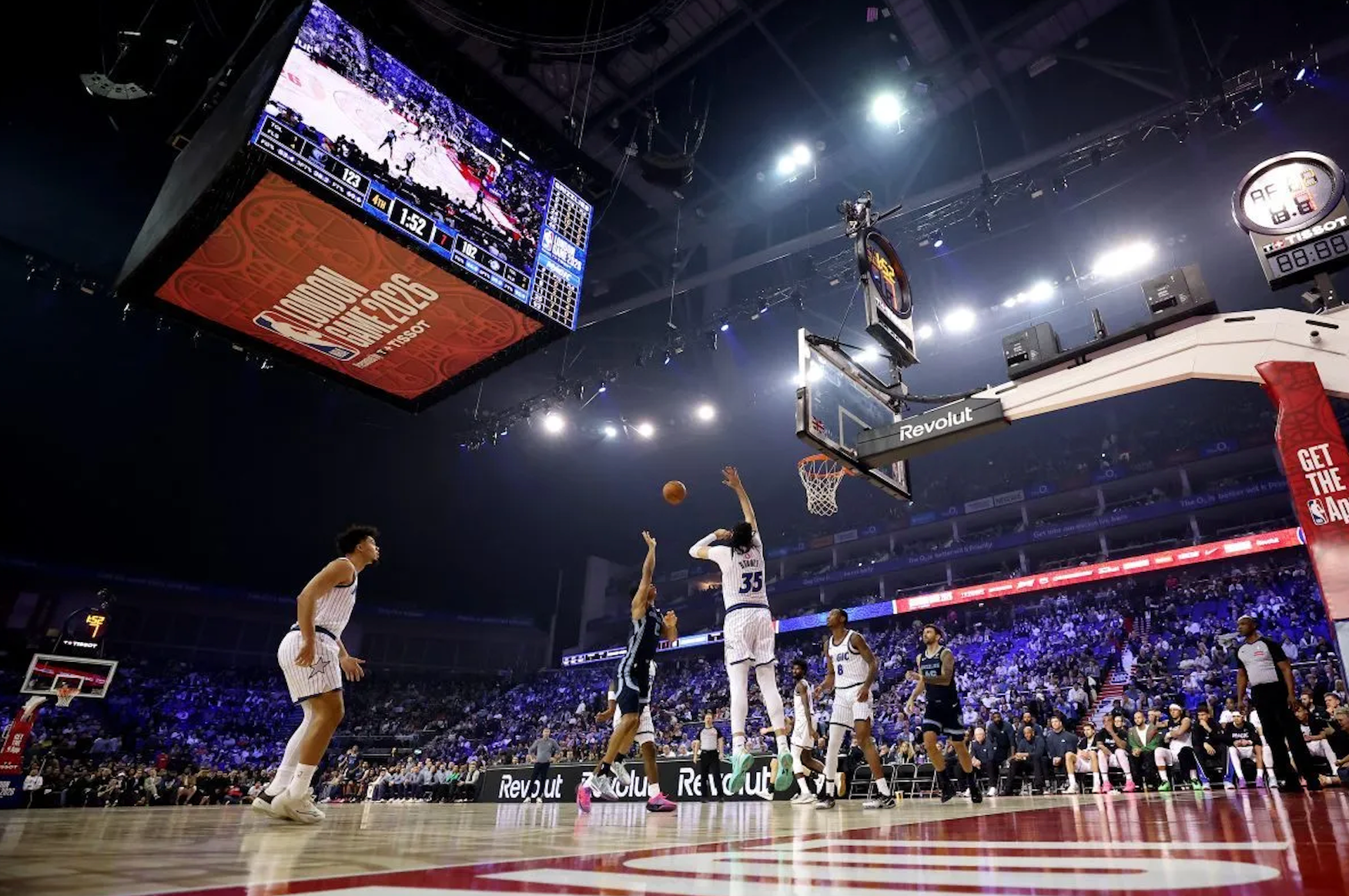
NBA to share financial plans with potential backers of European basketball
Simão Van Zeller, our Business Development Manager, offers his perspective on the NBA’s decision to open its financial roadmap to potential investors. As the league explores new opportunities to expand and support European basketball, he highlights how this initiative represents a clear step toward strengthening the sport’s long-term presence across the region.
Our take:
On paper, the announcement of a planned NBA European League looks bold, fast and potentially transformative. But when you unpack it, it’s clear that the impact (whether positive or negative ) will ripple across the entire European basketball landscape.
Genuine Disruption: There’s no denying that Europe’s basketball ecosystem has been growing. The EuroLeague is posting record-breaking numbers across viewership, attendance and digital engagement, for example, over 450 million TV viewers through the end of 2024 and early 2025, and double-digit growth across many metrics.
And yet, successful as it has become, the EuroLeague operates on a completely different scale to the NBA.
Introducing an NBA-branded league with franchise valuations reportedly between $500 million and $1 billion instantly elevates expectations and investor interest. The speed with which the NBA has moved from concept to investor data rooms, narrowing down 300 expressions of interest into a shortlist, shows this is far from a theoretical exercise.
EuroLeague’s Response: What’s fascinating is how EuroLeague leadership has publicly downplayed the NBA’s challenge in the short term. They talk about growth and stable contracts, including renewing with clubs like Barcelona, while still positioning themselves as Europe’s premier competition, which is true... for now.
But Barcelona’s messaging is telling. They signed a renewal underlining that they want to “compete in the best league there is,” which implicitly leaves the door open if the NBA alternative becomes materially better, economically or globally. That nuance is important.
EuroLeague has a heritage and a growing commercial footprint. But it does not have the same global brand power or investment depth.
Why Investors Are Paying Attention:
A. Brand & Scale
The NBA is the premier basketball brand on the planet. Aligning with that instantly shifts investor risk-reward calculations compared to traditional European investments.
B. Franchise Model
Unlike the European club model, NBA Europe is being positioned as a franchise ecosystem that welcomes institutional and sovereign capital as principal owners, a stark contrast to the NBA’s own ownership constraints but completely aligned with European investor norms.
C. Strategic Capital
Groups like QSI, CVC, RedBird and other global investors make strategic sense: existing sports portfolios, media relationships, fan engagement expertise and the ability to activate cross-brand strategies. Those kinds of investors are not here to just inject capital in an opportunistic play.
D. Ownership Rules in the US
Perhaps the most underappreciated part of this play is the possibility that NBA Europe could force a rethink of team-ownership rules within the NBA itself. Commissioner Adam Silver has openly suggested that what happens in Europe could influence U.S. constraints on investor participation, something nearly unthinkable a few years ago but in line with what's been happening with the U.S. major leagues landscape. Could it be a door for European franchise owners into the "big league"?
Two Big Questions:
1. Will EuroLeague Remain Europe’s Top Basketball Competition?
EuroLeague’s media and digital engagement growth is impressive. But next to the NBA brand power and franchise capital pouring into NBA Europe, it risks being seen as the second tier in perception if not in reality.
The question is about the narrative: global versus regional, capital intensity versus organic growth, long-range media deals versus local markets.
2. Will NBA Europe Deliver the Outcomes Investors Expect?
Right now, there’s a ton of optimism. But optimism doesn’t equal execution.
• Will the league attract established teams, or will they choose to stay in EuroLeague?
• Will new franchises instantly have meaningful fan bases, or will legacy clubs continue to command loyalty?
• And critically, how will broadcasters, sponsors and domestic leagues react?
There’s real potential here. The NBA has the model, the credibility and the experience to execute, but we're in Europe, and things are very different.
So What Does This All Mean?
This could redefine how professional basketball operates on both sides of the Atlantic.
Europe leaves the status of a secondary market for basketball and we can say confidently that it is one of the sport’s most passionate regions, with massive talent and engaged audiences. But the coming years are going to be a story of strategic choices: who adapts, who doubles down on tradition and who gets left behind.
Is it a matter of when the NBA takes a real slice of Europe? Maybe it’s not that simple. Timing, strategy, local partnerships and how EuroLeague evolves will be just as significant as the NBA’s brand power.
What’s clear is this: European basketball is entering a new era.
Key takeaways
Brand power and franchise capital can reset a market's expectations quickly. A strong incumbent like EuroLeague can grow impressively and still be reframed as second tier by perception alone.
The franchise model changes who can invest. Positioning NBA Europe to welcome institutional and sovereign capital as principal owners fits European investor norms and widens the pool of backers.
A move like this can reshape both sides of the Atlantic. NBA Europe could even push a rethink of team-ownership rules inside the NBA itself, not only change European basketball.
FAQs
Why are investors interested in the NBA's planned European league?
The NBA brand shifts the risk-reward calculation versus traditional European investment, and a franchise model with valuations reportedly between $500m and $1bn invites institutional and sovereign capital as principal owners.What does the NBA's planned European league mean for existing leagues like EuroLeague?
It raises investor expectations and franchise valuations quickly, and even a growing incumbent risks being seen as second tier unless it can match the NBA's brand power and capital depth.Will NBA Europe succeed just because the NBA is behind it?
Optimism is not execution: success depends on attracting established teams, building real fan bases, and how broadcasters, sponsors and domestic leagues react.
LaSource is a sports consulting agency working closely with startups, tech innovators, and major sports organisations to accelerate growth, shape strategy, and unlock new commercial pathways