
Our take on Arsenal launch Facebook and WhatsApp partnership & Gary Neville’s The Overlap buys Mark Goldbridge’s YouTube channels in a seven-figure deal
Arsenal launch Facebook & WhatsApp partnership: A New Step in D2F (Direct to Fan) Distribution
Arsenal’s new partnership with Meta - leveraging Facebook and WhatsApp as key distribution channels - might look like a simple digital activation on the surface, but it is way more than that.
Clément Laverdine, our Head of Strategy Consulting, sees this as another clear signal of a deeper structural shift: clubs are no longer just content creators within someone else’s ecosystem - they are actively rebuilding their own distribution architecture, one platform at a time.
And importantly, this move reflects a broader industry dynamic we’ve been tracking at LaSource for a while now: the gradual convergence of media, community and commercial uplift into a single, owned fan relationship.
Our Take:
Let’s look at what’s really happening here… and why it matters far beyond Arsenal.
At its core, this partnership is about meeting fans where they already are - but doing so with more control, more data and more continuity than traditional social media allows.
First, WhatsApp changes the nature of reach
Unlike open social platforms (feeds, algorithms, discoverability), WhatsApp operates in a more direct, opt-in environment. This means Arsenal is not just “posting content” but is building a persistent communication channel with its fans. Messages land directly in a user’s inbox, bypassing algorithmic volatility and significantly increasing visibility and engagement rates.
Second, this is a step toward owned distribution without owning the platform
Clubs have long depended on broadcasters and, more recently, social platforms for reach. But both come with trade-offs: limited data access, shifting algorithms, and monetisation constraints.
WhatsApp channels sit in an interesting middle ground: Arsenal doesn’t own the infrastructure, but they gain a more stable and direct relationship with their audience than on traditional social media.
Third, this reflects a broader shift from content to community
The real value is not in pushing highlights or news - that’s commoditised. The value is in building a habitual touchpoint: a place where fans return daily, engage consistently, and eventually can be monetised through multiple layers (e.g., tickets, memberships, merchandise, partners).
Beyond this specific announcement, something bigger is unfolding: clubs are now rebuilding their entire fan operating system.
We are moving away from a linear model - broadcasters delivered reach, social amplified visibility, and monetisation sat downstream - toward a more fragmented landscape that clubs are now actively restructuring.
Today, clubs like Arsenal are assembling a more modular distribution stack: social platforms to attract, messaging platforms to retain, and proprietary platforms (i.e., apps, websites) to monetise. WhatsApp fits squarely into the retention and engagement layer - the missing link between mass reach and direct monetisation.
This evolution goes beyond channels and extends to how clubs organise themselves internally.
A layered distribution model forces a rethink of business operations:
Content teams need to produce for different contexts (discovery vs. retention vs. conversion)
CRM and data teams need to structure and activate fan data across touchpoints
Commercial teams need to integrate partners into these new environments
Digital teams need to orchestrate the full journey, not just individual platforms.
Distribution is no longer a marketing output and becomes a cross-functional operating system with direct commercial implications.
From a revenue perspective, this doesn’t create new income streams overnight, but it significantly improves the efficiency and scalability of existing ones.
A stronger retention layer means: higher conversion rates across ticketing and merchandising, better monetisation of existing audiences, more valuable sponsorship inventory (targeted, measurable, integrated), and ultimately, more predictable and recurring fan-driven revenues.
Over time, it also creates optionality: membership models, premium content tiers, direct partner activations, or new forms of digital products.
These benefits come with important constraints though. Relying on third-party ecosystems like Meta still comes with limitations: data access remains partial, monetisation is mediated, and platform dependency doesn’t disappear but simply evolves.
The most advanced organisations are sequencing channels. They define the role of each layer, align teams around fan journeys, and connect engagement directly to commercial outcomes.
At LaSource, we believe that more clubs will formalise their distribution stacks, messaging platforms will become standard components of fan engagement, there will be tighter integration between content, CRM and commercial operations, and there will be a gradual shift toward more data-driven, lifecycle-based monetisation.
Arsenal’s move is a sign that distribution is becoming intentional, structured, and operationally embedded. And in a fragmented media environment, where reach is volatile and attention is scarce, the organisations that win will not be those with the most channels but those that know exactly what each channel is for, and how it drives value.
This is exactly the journey we help clubs and leagues structure - turning fragmented digital initiatives into coherent distribution systems, aligned operations, and scalable monetisation strategies.
If you’re navigating similar questions around fan engagement, organisational design or commercial performance, happy to discuss.
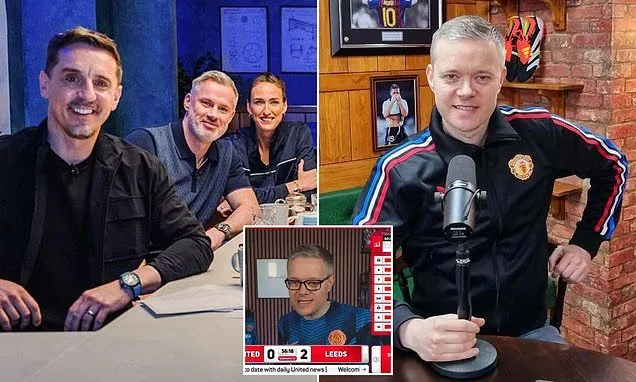
Gary Neville’s The Overlap buys Mark Goldbridge’s YouTube channels in seven-figure deal
Gary Neville’s latest move signals something deeper than a headline-grabbing creator deal. As The Overlap brings Mark Goldbridge’s YouTube empire into its fold, it reflects a broader shift in how sports media is structured and where value is really being created.
Loïc Holuigue, our Consulting Project Manager, explores why this is less about acquiring content and more about consolidating attention. From ritualised fan engagement to the growing institutionalisation of the creator economy, he unpacks how the boundaries between fan media and traditional broadcasters are being redrawn and what it means for the future of football media.
Our take:
Sports media is being absorbed into a wider creator-platform economy. There is a certain irony in that. For years, consolidation was the instinctive logic of traditional media: assemble audiences, strengthen distribution, improve advertising leverage, and build portfolios large enough to matter. Now the same logic is taking hold in a corner of the market that once appeared to sit outside those structures altogether. Gary Neville’s The Overlap acquiring Mark Goldbridge’s two YouTube channels is therefore more than a striking football media deal: it is a sign that the creator economy, long associated with informality and disruption, is beginning to institutionalise itself.
On paper, the transaction is pretty straightforward. The Overlap has paid a seven-figure sum for The United Stand and That’s Football, two channels with a combined 3.7 million subscribers. Goldbridge will remain the frontman, while the editorial offer expands into new Manchester United formats, a daily news strand and, in time, broader football coverage. Yet the real significance of the deal lies elsewhere. The Overlap has not acquired rights, proprietary technology or even production infrastructure in the traditional sense. It has developed a relationship with an audience that returns repeatedly and habitually for a specific voice.
That distinction has become commercially decisive. Goldbridge’s value is not merely that he is large, but that he is recurrent. His watchalongs for Manchester United matches reportedly attract between 30,000 and 50,000 live viewers, while major streams can generate around 500,000 views. These impressions point to something more valuable: ritualised attention. For a football industry still conditioned to think that rights ownership is the ultimate source of media power, this kind of repeat, personality-led engagement is increasingly difficult to ignore.
The economics around the deal sharpen the point. Goldbridge’s parent company, Soccerbox, recently reported cash reserves of around £735,000, up nearly £300,000 year-on-year. The Overlap, meanwhile, now sits inside a far more powerful commercial machine following Global’s acquisition of a majority stake earlier this year, which reported revenues of £898 million in the year to March 2025. If we break it down, Goldbridge brings the audience; The Overlap brings football-native editorial formats; Global brings distribution muscle, advertising sales, data capabilities, and the ability to commercialise attention across a broader portfolio. Creator media, once celebrated for its independence from institutional structures, is increasingly finding its next phase of growth through them.
The wider market is moving in the same direction. In the United States, Fixated’s acquisition of Studio71 points to a parallel form of consolidation. The combined business now spans more than 1,000 creators and billions of monthly views, bringing together talent representation, production, distribution, monetisation tools and direct-to-fan subscription capabilities. The comparison with old media is difficult to miss, even if the assets have changed. The new prize is not simply ownership of inventory but control of the creator value chain. Football, in that sense, is not developing on a separate path. It is simply experiencing the same structural reorganisation.
This is what makes the Goldbridge deal particularly revealing. For years, fan media sat in an ambiguous category: large enough to matter, yet often dismissed as unruly, partisan or somehow secondary to the “real” business of football broadcasting. That distinction is becoming harder to sustain. What mainstream operators once looked down upon, they now recognise as highly valuable. Goldbridge built his audience by standing outside conventional football media; Neville, one of the clearest products of that very system, has now brought him inside a more organised commercial framework. The symbolism is hard to miss. In a way, the boundary between fan-led media and institutional media has not disappeared, but it is being redrawn.
There is a deeper implication here for leagues and broadcasters. They may still control the live match, which remains the premium asset, but they no longer control the surrounding conversation with the same authority. That conversation now unfolds across YouTube, podcasts, daily news formats, short-form clips and creator-led communities. It is shaped by people whose power comes less from access than from trust, familiarity and cadence. The real battle is no longer confined to kick-off and full-time. It increasingly concerns everything in between.
What makes this shift even more significant is that it no longer belongs solely to sport. Gary Lineker’s The Rest Is Football moving onto Netflix during the 2026 World Cup, alongside the platform’s push into video podcasts and vertical video, points to something larger: the boundaries between television, social video, podcasting and creator media are becoming increasingly porous. The old categories are still useful for describing the past, but much less so for understanding where attention is going. Entertainment is being reorganised around formats that travel easily across screens, rhythms that suit mobile consumption, and personalities capable of sustaining relevance beyond any single channel.
That is why Neville’s move should be read carefully. More than an acquisition-motivated, or merely an acknowledgement that fan-led content has commercial value. It is part of a wider transition in which media businesses are being rebuilt around voice, habit, portability and community. Traditional media spent decades consolidating around distribution. The next phase may belong to those able to consolidate attention itself.
LaSource exists to help those shaping the next era of sport. We help sports organisations, technology companies and investors grow their business in sport through strategy, digital transformation and ecosystem partnerships. By combining strategic foresight with hands-on execution, we turn long-term ambition into initiatives that can actually be deployed and scaled.