
What are the sports trends leading into 2027?

September is the month when the sports industry picks up speed again. Seasons are back underway, conversations restart after the summer break and events are happening all at once.
We spent this time in Amsterdam, Madrid, Lisbon and London attending conferences, panels, and having conversations with other industry professionals about the future of the sports industry. In this article, our team who attended now share the key trends they saw and what stood out to them, bringing you a first-hand view of where sport-tech is heading into 2027 through the lens of the work we do with leagues, clubs, federations and start-ups.
Automation is making more live sport possible
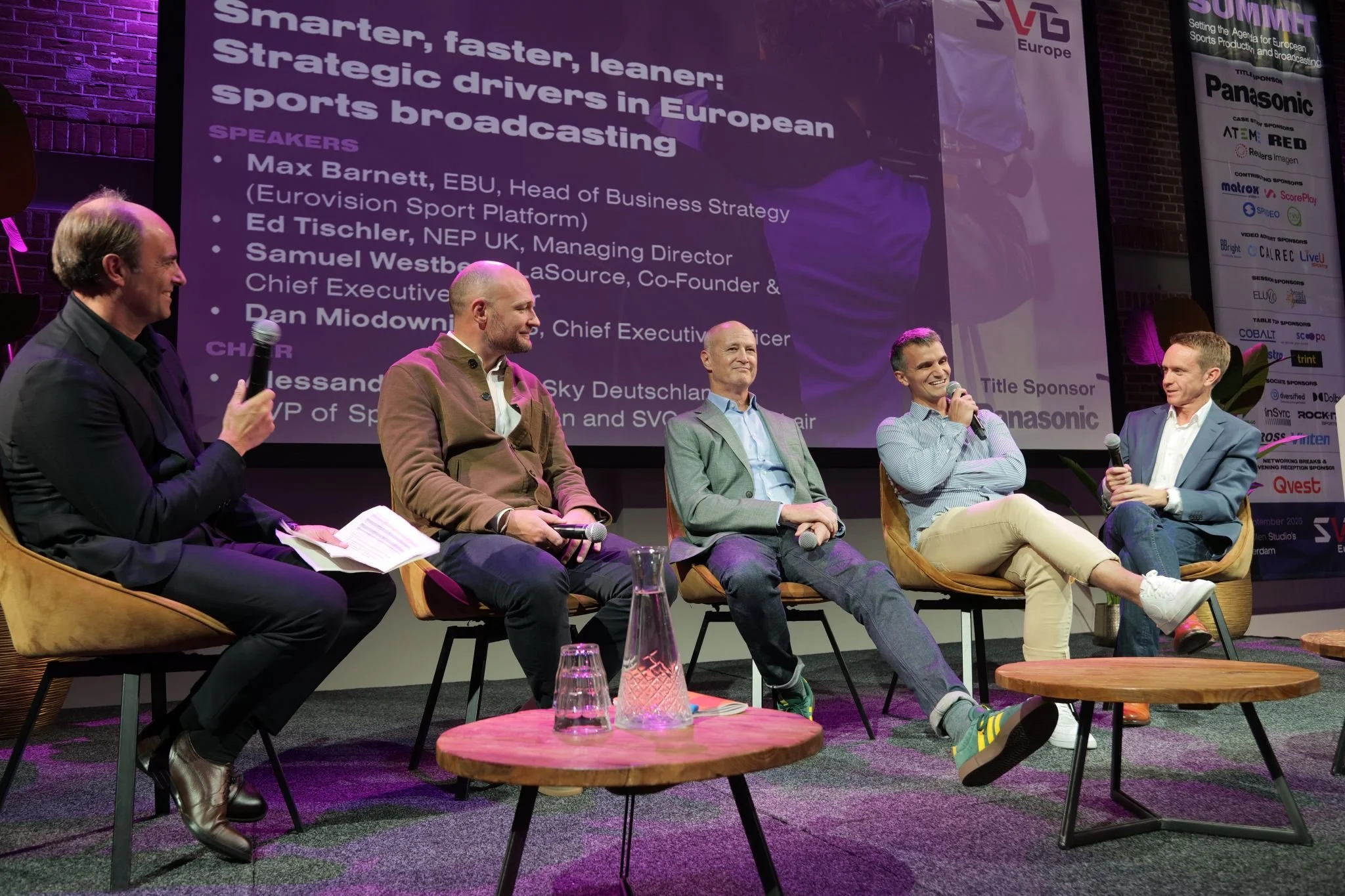
IBC Amsterdam is one of the biggest annual shows for the media, entertainment and broadcast technology industry. Every September it brings broadcasters, rights holders and tech companies to Amsterdam to see where production and distribution are heading.
Windsor Roberts - VP Sales for Sports & Media Tech
IBC showed that the media industry is moving toward more flexible, automated and cost-effective ways of working. Technology is now expected to improve production quality and create clear commercial value. For LaSource, this creates an opportunity to help sports organisations understand new technologies, choose the right partners and turn new ideas into practical business solutions.
Automation and scalable production are still important. Rights holders want to show more live content on more platforms and across more competitions. Tools such as LIGR can help reduce production costs while keeping a professional broadcast standard. This is useful for leagues and federations that want to earn more from smaller competitions and reach more people online.
AI, data and connected workflows are also changing the industry. The key is not only to use new technology, but to make it work well within existing teams and processes. This can help organisations work faster, personalise content and engage audiences better. This fits well with LaSource’s role in technology consultancy and partnerships.
Making more money from content and growing audiences are still big challenges. Rights holders need to get more value from their rights by using digital channels, new content formats and better sponsorship opportunities.
Every club has a story, few have the layer underneath
World Football Summit brings together clubs, leagues, federations and the companies that work with them to discuss the business of football. The Madrid edition covered everything from commercial strategy and media rights to fan engagement and technology.
Simao Van Zeller - Business Development Manager
The storytelling panel with Wrexham and Dagenham and Redbridge was the one session I took something real from. Everyone reads Wrexham as a Hollywood story, which conveniently lets every other club off the hook. Most clubs already have a story, usually something local they have stopped noticing.
Wrexham turned attention into shirt sales, sponsors, pre-season tours and a US audience that did not exist before. Dagenham have KSI's following, which is enormous, and a creative team who know how to make things for it. Converting that into people who care about a fourth-tier English club week to week is a different job, and at that budget the tools to do it are not obvious.
That gap is where we exist. Plenty of clubs can produce content now. What they lack is the layer underneath: somewhere to put the audience, a way to know who those people are, and something to sell them.
Leagues are taking ownership of their own growth
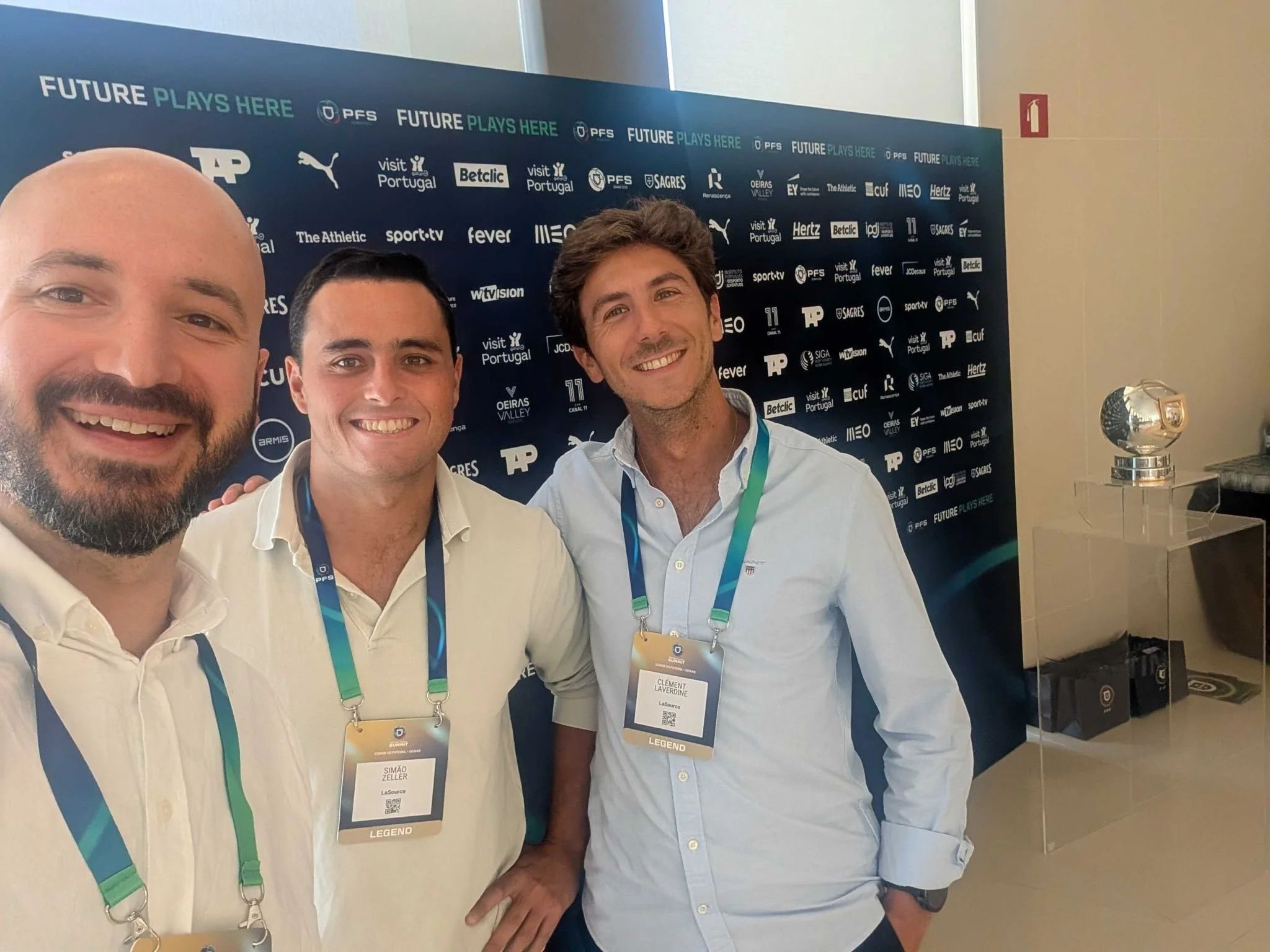
The Portugal Football Summit, organised by the Portuguese Football Federation, gathers people from across the game to talk about the future of football in Portugal and beyond. It covers governance, commercial growth, technology and how the sport reaches its fans.
Clement Laverdine - Head of Strategy Consulting
At the Portugal Football Summit, the three layers of Portuguese football were on stage in the same week: the league, the federation and the clubs. Each is working on a different piece. What struck me is how much those pieces depend on each other.
Liga Portugal will sell media rights collectively from 2028/29, and the session on centralisation with Liga Portugal made a point I fully share: the central sale is where the work begins. It creates competition between buyers, but infrastructure, production quality and the product on the pitch decide what those buyers will pay. Club voices said the same from the other side: centralisation narrows the gap between clubs, but on its own it does not sell Portuguese football abroad.
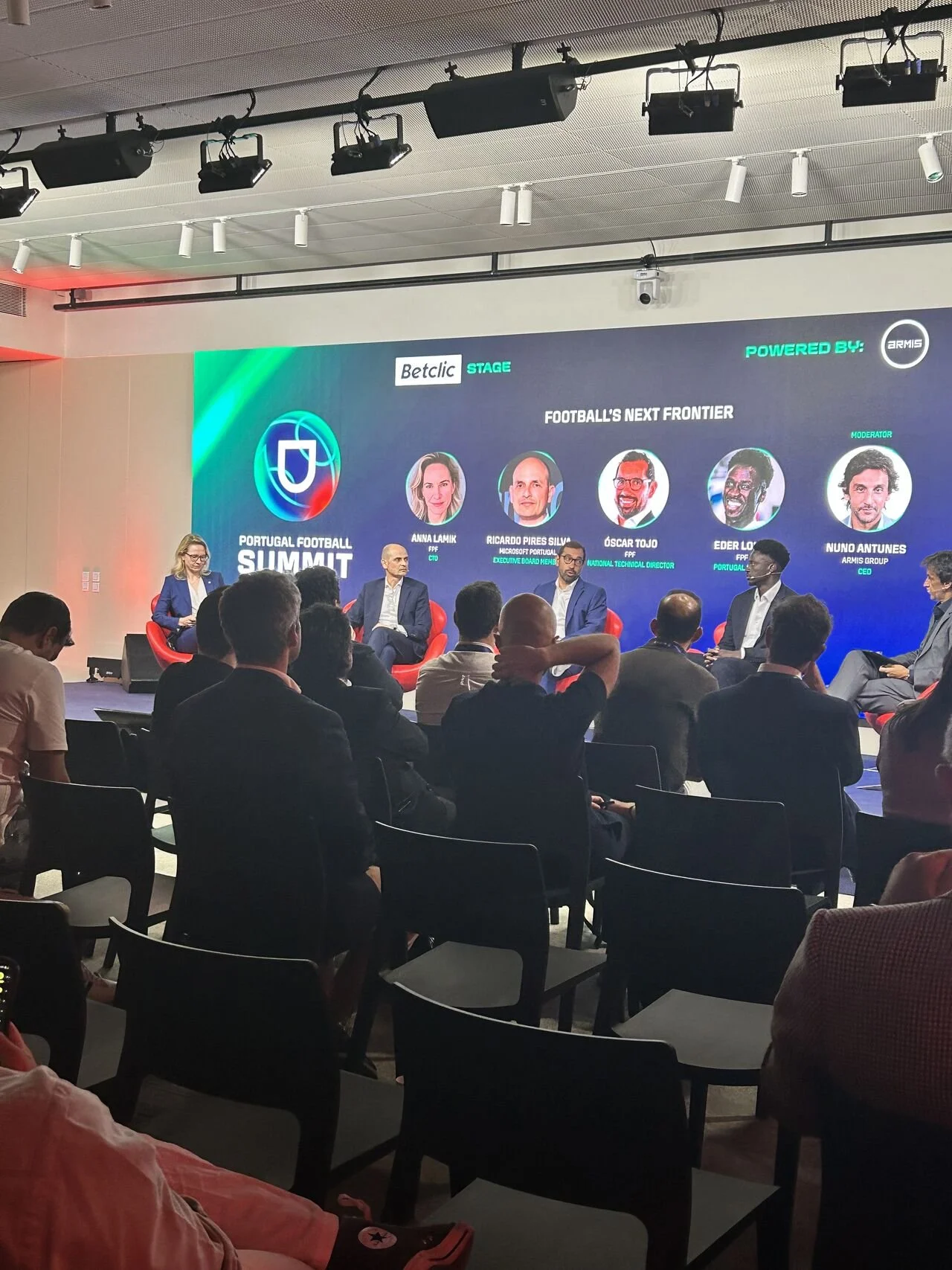
The federation is looking at tech across the whole game: how it is run, how fans live it and how it grows. The session on football's next frontier with the Portuguese Football Federation started with the organisation rather than the tool. That is the right order, and the one most tech projects in sport skip.
For clubs, the challenge is finding the right equation. Most Portuguese clubs still balance their books by selling players, and every sale weakens the team that is supposed to compete. The way out is to grow every other revenue pool at the same time: sponsorship, media rights, ticketing, merchandising, hospitality, content... The more each of them brings in, the less the club depends on the next transfer. Part of the answer can be found abroad. Como 1907 is a good example of a club widening that base: by selling more than 90 minutes, the lake, the lifestyle and the content around the team become part of what partners buy. Few Portuguese clubs can match Como's investment, but the method travels well: work out what the club stands for beyond the result, and build every revenue line on it.
The link between the three is the next rights cycle. A central deal will be worth what the clubs bring to it: a product worth watching, an audience worth reaching and data worth sharing. The federation can set the digital standards that make this possible across the game. For us, this is where media rights, fan engagement and digital stop being three separate topics. Portugal already exports talent. The next two years will show whether it can export the product.
Simao Van Zeller - Business Development Manager
The key takeaway was seeing how Portuguese football is actually structured, and what the league is trying to do with the clubs rather than to them. Centralisation of media rights is moving forward, and the reasoning behind it makes sense when you set it against the rest of Europe. Portugal has a small domestic audience. Selling club by club into that audience caps what anyone can earn, and it leaves the smaller clubs negotiating from nothing.
What grabbed my attention was the second half of the argument. The league is trying to build a support system so the clubs grow as a league rather than as a group of individuals. That is harder to sell internally and slower to deliver, but it is the right direction.
It is also the conversation we want to be in. Rights strategy, what a league holds centrally, and how that value gets distributed and then turned into something clubs can use is exactly where our work sits.
AI only works when the organisation is built for it
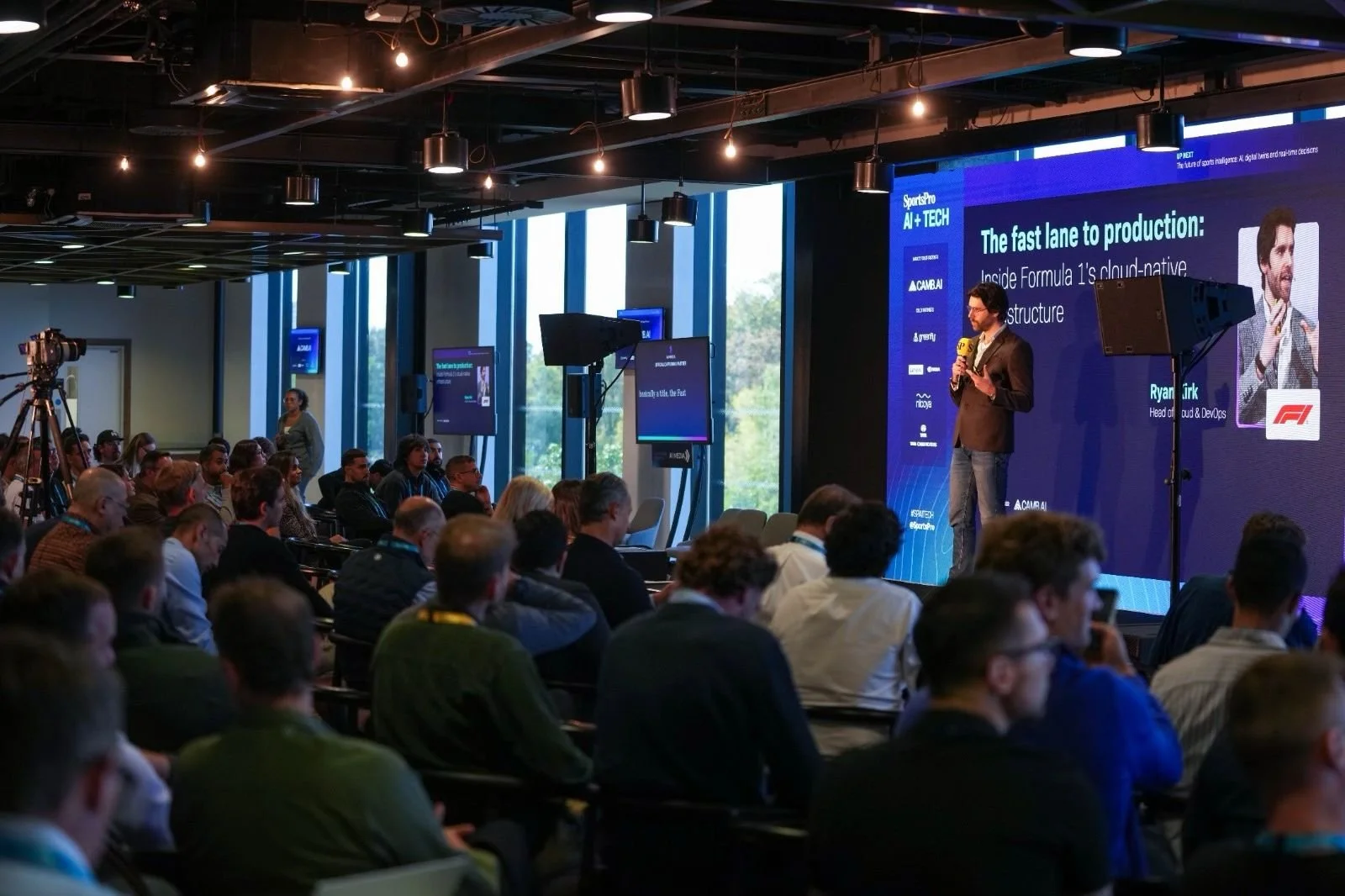
SportsPro AI + Tech is a London event focused on how sports organisations use AI and technology. It brings rights holders, tech companies and industry leaders together to share what is working in practice.
Windsor Roberts - VP Sales for Sports & Media Tech
The key takeaway from SportsPro AI is a simple one - AI is moving from being a buzzword to a practical tool, however it is only as good as the data behind it.
AI can't deliver real business value, streamline operations, or drive revenue if the underlying data is incomplete or inaccurate.
At LaSource, we help sports organisations fix their data foundations before they put money into new AI tools. And our clients LIGR and Fastbreak show why it matters: reliable, structured, real-time data is what makes automated graphics, live production and commercial analytics work.
Adopting AI isn't the win. Having clean, connected data that makes AI usable is.
Clement Laverdine - Head of Strategy Consulting
At SportsPro AI + Tech in London, one question came back in every session: how do you organise yourself to get the most out of tech and AI? Three answers stood out.
Hearing how the Professional Triathletes Organisation builds its tech partnerships brought back a point I see in many of our projects. A good partnership balances the tech value a partner brings with the commercial value it creates. To get that balance, the CTO and the CCO need to be in the room from the first conversations, before the deal takes shape.
This works for organisations of every size. Smaller federations, leagues and clubs often make the best test cases for big sponsors and tech companies: they decide faster, adapt faster and let a partner test and learn at a lower cost. Every organisation has something to offer a partner. The work is identifying all of it, from audience and data to content and the flexibility to try new things.
The masterclasses from FC Schalke 04 and the BBC showed that AI is already everywhere, but it is rarely structured across the whole organisation yet. That creates pressure to move fast, and the risk is moving fast in the wrong direction. Winning the AI race means finding the right direction as early as possible: knowing which use cases matter, in what order and with which resources. A clear roadmap is what lets an organisation go quickly without having to go back.
Vibe coding is a good example. With the right frame set by the tech team, business teams can build and run some of their own tools where it makes sense. Without that frame, teams end up with tools nobody else can maintain.
What stood out across the day is that the difference comes from how the organisation works around the tools. The ones getting real value set priorities together across tech, commercial and operations, give each project a clear owner with the skills to run it, and choose partners for how they fit the whole, building in-house when that makes more sense. When teams buy and run tools on their own, the value stays in their silo. When they work together, tech becomes part of how the whole organisation runs every day.
Simao Van Zeller - Business Development Manager
The organisations getting value from AI are redesigning.
Every rights holder in the room is using AI in some form, and most are still working out where it belongs. The line that stayed with me came from one of the tech talks: sprinkling AI into existing systems gets you very little, because those systems were built around processes that assumed the technology did not exist. The better test is to ask what you would build if you started today with AI available from day one, then work backwards to what you actually have.
That is uncomfortable for an established organisation. It means touching workflows that work well enough, and it is slower than buying a tool and announcing it. But it is the difference between a pilot that impresses the board and a change that shows up in productivity and in the numbers at the end of the year.
It is also where we are useful. The AI work we do with clubs, leagues and federations is less about picking tools and more about deciding which processes are worth rebuilding, and in what order.
LaSource exists to help those shaping the next era of sport. The agency helps sports organisations, technology companies, and investors grow their business in sport through strategy, digital transformation and ecosystem partnerships. By combining strategic foresight with hands-on execution, they turn long-term ambition into initiatives that can actually be deployed and scaled.