
Analysis on Jamie Vardy winning live rights for the Bundesliga & Footballers start licensing their AI likenesses
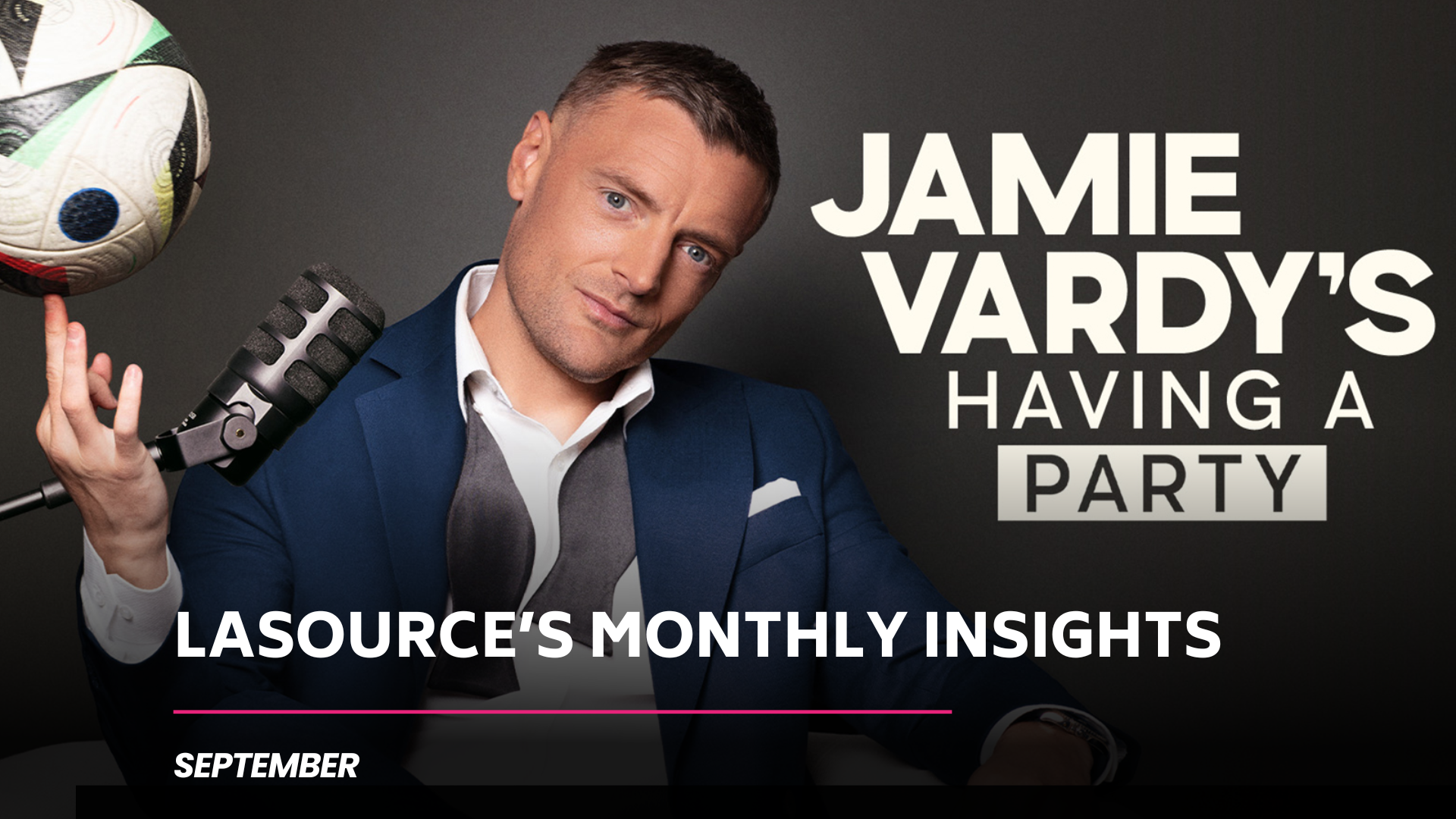
Jamie Vardy wins live rights for the Bundesliga in the United Kingdom and Ireland
Why is Jamie Vardy suddenly part of the Bundesliga’s broadcast strategy? Leander Monbaliu, our Chief Business Officer looks at what the deal reveals about reaching fans in foreign markets and the changing way they consume football.
Leander’s analysis: How creators are moving closer to the centre of sports broadcasting
The Bundesliga is taking creator lead distribution the next level. Earlier this year, we looked at Mark Goldbridge and the growing commercial value of audiences built around personalities and habitual consumption. After testing live matches with Goldbridge last season, the league has renewed that relationship and added Jamie Vardy as another official distribution partner in the UK and Ireland.
For the 2026/27 season, the Jamie Vardy’s Having A Party YouTube channel will show seven Friday night Bundesliga matches live. Banijay Entertainment, which owns and produces the channel, secured the rights package alongside exclusive digital and social rights around those games and access to selected Bundesliga archive footage. Since launching in June, the channel and its related content have already generated 18 million views across platforms, giving the Bundesliga an established audience to tap into.
The interesting part is the market in which the league is doing this. Because in the UK and Ireland, German football competes for attention against the dominance of the Premier League, supported by an enormous volume of domestic football media. Growing consumption therefore requires finding relevant entry points into an audience whose existing habits are already well established. Creators offer one of those entry points because fans already spend time with them, and Jamie Vardy is a particularly relevant choice given his profile and personality in English football. His recognisable style gives the Bundesliga a familiar and entertaining voice to reach an audience.
Because the choice of creator also matters. Speaking to creators at the Portugal Football Summit one thing came through clearly. Partnerships cannot be based purely on reach. They have to be a conscious choice around the connection with the audience and the personality and style of the creator. Too often, creators are weighed against each other on simplistic reach metrics, while brands and sports organisations do not go deep enough into understanding the creator’s identity and why that person is relevant for a specific audience.
Bundesliga Media’s Peer Naubert explains the thinking clearly: “Our job is to understand each market, work with the right partners and build a distribution model around how fans actually consume football there.” This connects closely with the thinking behind our Beyond Broadcast report. Rights distribution increasingly works as a portfolio of channels, formats and relationships adapted to individual markets, and stronger distribution optionality comes from understanding these different routes to the fan and developing the capabilities to activate them.
This flexibility matters particularly for leagues building their position outside their strongest domestic markets. A creator partnership can combine reach, local relevance and direct digital consumption while giving the rights holder additional information about which personalities, formats and fixtures actually generate engagement.
There is also a wider media trend taking shape. Creators are becoming part of formal sports media distribution. For leagues this opens up another way to think about international rights. The value of a market can come from choosing the distribution model that matches how fans consume sport there. In some territories that can mean a major broadcaster. In others, it can be a streaming platform or even a YouTube creator - in this case one of England’s most well known striker - or a combination of these channels working alongside each other. So as sports consumption continues to fragment across platforms and personalities, the strongest distribution strategies will increasingly be built around flexibility: understanding where audiences are, choosing the right routes to reach them and developing the capabilities to take the lead across an increasingly fragmented media landscape.
Key takeaways
Creators are moving from marketing add-on to formal distribution partners. Handing live rights to a personality's channel treats an existing, habitual audience as a genuine route to market for the league.
In a market someone else dominates, the entry point matters more than raw reach. Reaching UK fans in a Premier League-saturated market means meeting them inside habits they already have, which a familiar creator provides.
Creator choice should turn on fit with the audience rather than follower count. The value comes from the connection between a creator's identity and a specific set of fans, so reach alone is the wrong way to pick a partner.
FAQs
Why is Jamie Vardy part of the Bundesliga's UK broadcast strategy? The league is using his YouTube channel as an official distribution partner to reach fans in the UK and Ireland through a familiar personality, meeting them inside viewing habits they already have rather than competing head-on with Premier League coverage.
What does creator-led distribution mean for leagues expanding outside their home market? It offers a route that combines reach, local relevance and direct digital consumption, plus data on which personalities, formats and fixtures actually drive engagement. In a crowded foreign market, the right creator can be a stronger entry point than a traditional broadcaster.
How should sports organisations choose which creator to partner with? By fit rather than follower count: the connection between a creator's identity, style and a specific audience matters more than raw reach. Judging creators on simple reach metrics misses why a particular person is relevant to the fans a league wants to grow.
Footballers start licensing their AI likenesses as a separate commercial asset
Players are starting to put a price on their digital identity. Gabriel Lopes Witiuk, our Sports and Innovation Consultant, looks at how AI likeness licensing could create new commercial opportunities for athletes and the questions that come with them.
Gabriel’s analysis: Footballers are licensing their AI likenesses in the new era for commercialisation
That’s the proposition behind Callandor’s new partnership with Cristian Volpato, the 22-year-old Sassuolo winger. The company describes itself as a sports AI intellectual property business and has created a registry that records what an athlete allows brands and platforms to do with their “Digital DNA” including their likeness, voice, biometric profile and performance data. This means establishing clear permissions and licensing terms around approved AI uses and creating an official version of the players digital identity that can be commercialised.
Volpato is already the second interesting football example. Callandor signed Jorginho earlier this summer with a similar model. The need to protect athlete identities is becoming increasingly visible. For example previously AI-generated content using Vinícius Júnior’s likeness appeared online without his involvement on accounts promoting betting sites. As synthetic content becomes easier to produce, controlling who can use an athlete’s face and voice is quickly becoming a commercial question as much as a protection issue.
The commercial opportunity comes from scaling. One licensed version of an athlete can potentially produce campaigns in several languages, create personalised fan messages, appear in local market activations and generate different social, video and advertising assets without requiring another shoot. Callandor is already positioning Jorginho in this way, offering everything from localised campaign films and social cut-downs to personalised messages and always-on brand content. This creates a new layer of inventory around an athlete. A sponsor could activate the same player across several markets at a lower production cost, while the athlete can take part in more commercial opportunities without adding the same demands on their time. The interesting opportunity here is therefore less about replacing traditional endorsements and more about extending them into something much more scalable.
There is still an important distinction between scale and value. The commercial power of an athlete ultimately starts with the real person. Fans follow the player they watch every weekend on the field and whom they would genuinely want to meet in real life. For premium campaigns, appearances and major brand moments that connection will continue to carry the most value. An AI twin can extend that presence but the real athlete would remain the core asset. The strongest use case therefore sits around high-volume, repeatable and localisable content which can become a meaningful additional revenue layer because it simply can operate at a scale the athlete physically cannot.
Then comes the more complicated part: rights. Athlete identity already operates in a very regulated environment spanning image rights, contracts, data, advertising and intellectual property, and AI is adding further complications. On top of this, sport adds another layer because the rights around a player are already divided depending on the context.
In Serie A, individual image use can sit with the player, while clubs have rights around player imagery in defined team and competition contexts. Player Unions also control certain collectives, while Serie A has separately licensed official match data, including access to tracking data. That distinction becomes important for AI. Callandor’s deal with Volpato individually may clear his face, voice and other agreed parts of his personal identity. It does not automatically clear every piece of content or data that could be used to build an AI experience around him.
So the opportunity is real, but so is the fragmentation. For now, registries such as Callandor can give athletes another layer of protection against unauthorised AI use while opening a new commercial asset that can be activated at significant scale. Although it is unlikely to become the main prize in an athlete’s commercial portfolio, it could become a highly repeatable extension of it.
For clubs and leagues the question is how AI and digital twins fit into their commercial rights structure. Which new assets they can create themselves and which assets sit with the athlete. And ultimately how they can package and sell, and at what value share.
Key takeaways
Controlling an athlete's AI likeness has become as much a commercial question as a protection one. A registry of approved uses for a player's face, voice and data guards against unauthorised deepfakes while turning that identity into a licensable asset.
The value of an AI twin lies in scale. One licensed version can run campaigns in several languages, personalised fan messages and local activations without another shoot, extending endorsements rather than replacing the real athlete.
Clearing an athlete's personal identity does not clear everything needed to build an AI experience around them. Image rights, club and competition rights, union collectives and licensed match data all sit in different hands, so the rights picture stays fragmented.
FAQs
What is an athlete "Digital DNA" registry? It is a record of what an athlete allows brands and platforms to do with their likeness, voice, biometric profile and performance data, with clear permissions and licensing terms for approved AI uses. It creates an official, commercialisable version of the player's digital identity.
Why are footballers like Cristian Volpato and Jorginho licensing their AI likenesses? To protect against unauthorised synthetic content, such as deepfakes promoting betting sites, while opening a new revenue layer. One licensed version can run localised campaigns and personalised content at a scale the athlete physically cannot match.
What does the rise of athlete AI twins mean for clubs and leagues? They need to work out how digital twins fit their commercial rights structure: which AI assets they can create themselves, which sit with the athlete, and how to package, sell and share the value. Player image rights, club and competition rights and licensed match data all overlap, so clarity on ownership comes first.
LaSource exists to help those shaping the next era of sport. We help sports organisations, technology companies and investors grow their business in sport through strategy, digital transformation and ecosystem partnerships. By combining strategic foresight with hands-on execution, we turn long-term ambition into initiatives that can actually be deployed and scaled.