
The countdown for the FIFA World Cup 2026 is almost over: 48 nations, 3 host countries, 104 matches across 16 stadiums. It will be a historic edition of the tournament, not only because of its scale but also because the FIFA World Cup has, in many recent editions, been the birthplace of innovations we have become so accustomed to seeing in the game nowadays. In 2014, FIFA introduced goal line technology, followed by the VAR four years later, elevated to the next level for 2022 by the semi-automated offside technology, and the 2026 edition is no exception. We dive deeper into the most exciting new technologies and solutions introduced for this year, both on and off the pitch, with our take on the implications these could have on the industry going forward
On the pitch
Digital Player Avatars - Refereeing
What do all participating players have in common in this year’s tournament? They will all be digitally scanned to create a precise 3D model of them.
FIFA will build digital avatars of all 1,248 players to provide a clearer picture of on-pitch actions, helping referees make faster decisions. Before the competition gets underway, players will undergo an approximately “one-second” AI-enabled scan to create an accurate model of them.
With this technology, FIFA’s main goal is to make referees' lives easier by allowing them to track players more reliably during fast or obstructed movements. The model will complement FIFA’s existing semi-automated offside technologythat tracks the positions of the players and the ball. For example, when the ball is played to a potentially offside attacker, officials in the control room will receive an automatic alert. Combined with data from the official match ball, which contains a rechargeable sensor that tracks every touch, they can validate the player's position more accurately and faster before informing the on-pitch referee.
This 3D scanning was successfully tested at last year’s FIFA Intercontinental Cup, with players from CR Flamengo and Pyramids FC scanned ahead of their match.
In addition, the model will also be incorporated into live replays during the official broadcasts of the games for both fans at home and in the stadium.
LaSource take
By creating digital avatars of every player, FIFA is adding a new level of precision to officiating. As we highlighted in a recent article on the evolution of 3D data in football, one of the earliest and most practical use cases for this technology was always likely to be officiating. FIFA's adoption of digital player models for referee decision-making is therefore not a surprise, but rather an indication that the technology is maturing and ready for deployment on football's biggest stage.
But the significance of this development goes far beyond refereeing.
Football is entering an era where data is everywhere. Cameras, wearables, and tracking systems generate massive amounts of information. The real challenge is turning this data into meaningful insights that improve decision-making. This is where 3D data becomes particularly powerful.
This type of data provides a much richer understanding of the game than traditional metrics. Teams can analyse player positioning and movement patterns in ways that were previously impossible. Instead of simply knowing what happened, they can better understand why it happened.
The broadcast opportunity is even more significant from a commercial point of view, as it can be monetised on a larger scale. FIFA's decision to integrate these digital player models into live match replays represents one of the first large-scale tests of 3D visualisation on the biggest stage. If successful, it could accelerate the adoption of different viewing experiences, unlocking new commercial opportunities, and ultimately creating entirely new ways for fans to engage with the game.
The technology itself is impressive, but the broader trend is even more important: football is steadily becoming a 3D data-driven sport. Refereeing may be the latest and most noticeable application during this World Cup, but it is unlikely to be the last.
Football AI Pro - Analytics
One of FIFA's biggest projects during the tournament will be “Football AI Pro”, an AI assistant created for all the competing teams. Developed with strategic partner Lenovo, it embodies FIFA's innovation and democratisation ambitions through digital technology and AI.
In today's modern and data-driven era of football, competitive advantage usually depends on financial and technical resources. Football AI Pro seeks to address this imbalance by giving all 48 competing national teams access to the tool to help level the playing field.
With this, FIFA aims to give managers and coaches an extra hand by translating raw match data into actionable recommendations. Using 3D data and AI, the tool sets to enhance pre- and post-match analytical capabilities for preparation and performance review. With Football AI Pro, teams could get more accurate analysis and tactical insights in the form of text summaries, video breakdowns, and graphical representations.
And Football AI Pro will not only use the World Cup matches for its knowledge base, but also millions of FIFA-owned football data points to generate validated insights. The interface will also support prompts in many languages. Teams will be able to use it before and after matches, but not during live play, which can become the next frontier.
LaSource take
Knowing more always means having a competitive advantage in sport.
In the early era of data and analytics, clubs with more resources could collect more data, hire larger analytics departments, and turn insights into results on the pitch. Over time, however, teams with shallower pockets have caught up and now use the same metrics and tools.
Football AI Pro is FIFA's latest step into democratising data, trying to make advanced performance insights available to everyone, regardless of resources. This certainly helps level the playing field, but probably not for long.
The next frontier in football analytics is not access to data or AI. It is customisation through them. As more teams gain access to the same tools, competitive advantage will increasingly come from how clubs interpret information and build analysis around their own football philosophy. Understanding the game won't stop here. Actions that have not taken place could be analysed in a way that no one has done before, based on where the opportunity was.
That is why solutions like Gamecode.ai are particularly interesting. Rather than providing a single view of the game, they allow organisations to build models around their own style of play, tactical principles, and decision-making processes with different scenarios.
The future of football analytics will not be about giving everyone the same answers. It will be about helping every team ask different questions.
Off the pitch
DAZN Football Creators - Content Strategy
.
It is not just FIFA turning the tables. Earlier this year, broadcaster DAZN announced that it is looking for 48 creators from each competing nation to help tell the story of the FIFA World Cup.
The DAZN48 programme aimed to identify creators who could produce social-first content about the tournament for a worldwide audience, but with a strong focus on their nationality. The programme also includes the potential for them to join the broader on-the-ground coverage later in the competition, alongside pundits and presenters, to add another perspective.
DAZN described its initiative as reflecting a wider shift across sports media, where creators are no longer used only to promote events but are increasingly becoming part of the product itself. The broadcaster has previously said it sees creator-led programming as a way to get more value from expensive sports rights.
"Creator‑first content brings an authenticity, immediacy, and cultural relevance that resonates deeply with our users”, said Quim Domenech, DAZN's EVP of Global Content and Editorial.
The results? Thousands of creators applied, and DAZN has now begun revealing its selections, starting with the first six.
LaSource take
The way sports is consumed is changing. Especially among younger audiences. Fans from Generation Z and Alpha are no longer consuming sport how it used to with traditional studio shows, long pre-match build-ups, and 90-minute broadcasts.
They are looking for authenticity, personality, and content that fits naturally into the platforms they use every day. DAZN has clearly recognised this. Through initiatives like DAZN48, creators can serve as an entry point into the fan journey, reaching audiences that the broadcaster alone would struggle to engage.
By bringing creators closer to the tournament coverage itself, DAZN can build a pathway in which a fan discovers a 30-second TikTok or Instagram video and later watches the live broadcast. The creator is no longer just promoting the product. They are becoming part of it.
What DAZN understands is that success today is not only about owning rights. It is about identifying the content formats and distribution channels that capture attention, and then building a scalable content model around them. At the centre of that model is storytelling, delivered by voices that audiences already trust.
FIFA Fan ID - Fan Experience
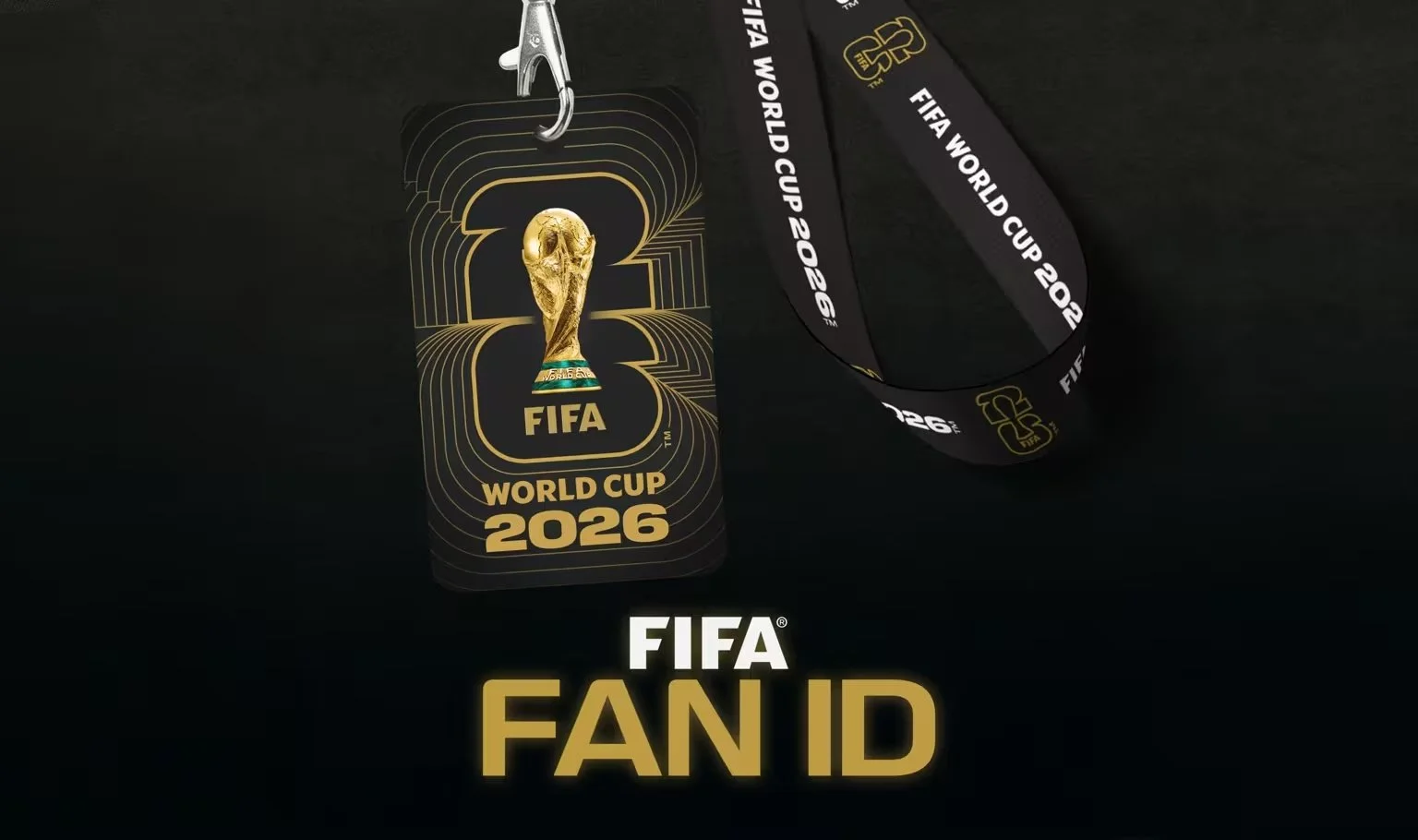
FIFA is not only innovating on the pitch but also rethinking what it means to be a fan off it. With the creation of the FIFA Fan ID, the organisation elevates the fan experience to the next level in almost every aspect, from pre-match to merchandise customisation, across both physical and digital spaces.
The FIFA Fan ID - available to ticket holders - is a free, physical card and fan memento that can be fully customised, offering exclusive access to plenty of opportunities. Fans can enter a digital environment where official tournament content, rewards, and activations await, such as augmented-reality video messages or stadium information paired with insights.
The card also turns fans into part of the story themselves. Supporters can upload their own photos and memories from the tournament and create personalised merchandise based on their experiences. With the card, they can also access official tournament images for the same use, creating a whole new perspective.
And the experience will start well before kick-off. Fan ID holders will have access to exclusive content and activations at stadium venues, with FIFA promising live entertainment, giveaways, and special experiences starting at least 3 hours before the starting whistle.
LaSource take
Sport is no longer competing only with other sports. It is competing with every form of entertainment for attention.
This means fan engagement can no longer start at kick-off and end at the final whistle. Fans nowadays expect experiences that are personalised, interactive, and always available with being involved as part of the story.
The FIFA Fan ID reflects this shift. Beyond being a ticketing or access tool, it creates opportunities for fans to customise their experience, interact with exclusive content, capture memories, and engage with the tournament before, during, and after matches. In many ways, it transforms the fan journey from a one-time event into an ongoing experience.
What is particularly interesting is how FIFA is combining physical and digital touchpoints into a single ecosystem, bringing two words that, at first glance, seem far apart together, but in the end are very much connected.
Fan engagement is no longer achieved in either the physical or the digital experience alone, but through the synergy between both. The stadium experience fuels digital engagement, while digital interactions enhance the matchday experience. The strongest fan engagement strategies are built around this continuous loop, where every touchpoint reinforces the next and keeps fans connected 24/7. This is a similar approach to what we are building with LiveLike where the goal is to turn isolated fan interactions into a continuous and connected engagement journey.
YouTube to stream the first 10 minutes - Media Platforms

The way fans can watch the World Cup is changing, too. Not so long ago, FIFA announced a landmark partnership with YouTube, naming the platform an official Preferred Platform.
But what does this mean in practice? FIFA’s media partners can now stream the first 10 minutes of every match on their YouTube channel, providing audiences with more ways to consume the tournament. Additionally, in some cases, even full matches could be streamed with the goal of engaging global audiences.
And this partnership is not just about live match broadcasting. Extended highlights, behind-the-scenes footage, shorts, and video-on-demand content can also be published on the platform, further extending the tournament's overall reach and engagement.
To get audiences warmed up for the tournament, FIFA plans to unlock its own YouTube channel with full length past matches and many more iconic moments from the tournament”s history.
LaSource take
The World Cup is not just expanding on the pitch. It's expanding across platforms too. And with this, FIFA is making one thing clear: audience reach is the priority.
The logic is straightforward. More distribution means greater visibility, more engagement, and ultimately a stronger case for broadcasters and sponsors to invest in the tournament. In a competition featuring a record number of matches, every additional touchpoint matters.
But there is an interesting trade-off behind this strategy.
While FIFA owns the content, platforms like YouTube own the relationship with the audience. However, FIFA's decision makes sense. The goal is not to build a direct relationship with every fan, but to maximise the reach of one of the world's biggest sporting tournaments. And platforms like YouTube are unmatched in scale.
The risk is that other sports organisations look at deals like this and see a blueprint. They copy the distribution strategy without having FIFA's objectives, leverage, or global appeal. Reach and ownership are not the same thing. FIFA can afford to prioritise the former. For most organisations, building and understanding their own audience remains the most valuable long-term asset. At LNB, that's exactly what we are focused on: turning content into audience intelligence that the organisation actually owns, not just reach they temporarily borrow from platforms.
LaSource exists to help those shaping the next era of sport. The agency helps sports organisations, technology companies, and investors grow their business in sport through strategy, digital transformation and ecosystem partnerships. By combining strategic foresight with hands-on execution, they turn long-term ambition into initiatives that can actually be deployed and scaled.