
How are sports organisations modernising through technology, data and new capabilities?
Over the last year, the sports industry has continued to prove its willingness to adapt and match the ever-changing era of fandom. Change has accelerated across performance, media, content, and operations, fuelled by technological breakthroughs, new economic dynamics, and a growing need to rethink how sport is produced, shared, and consumed.
At LaSource, we had the privilege to be in the front row of this transformation. Throughout the year, we worked closely with sports organisations, leagues, federations, and tech companies as they navigated this increasingly complex ecosystem, helping turn innovation into something tangible, scalable, and valuable.
To close out 2025, we’ve gathered key topics, projects, and shifts that shaped our year, and that we believe are redefining the foundations of the sports industry. From sport performance & data to centralisation services, content powerhouse and AI adoption, these are the signals that matter as we look ahead.
And with that, we turn our focus forward toward what’s next in 2026.
How did on-pitch performance data translate to off-pitch commercial success?
In 2025, performance data really placed itself more than ever at the intersection of performance, media, and business. It truly became ecosystem intelligence, being a shared layer that improves how sport is played, analysed, and experienced. At LaSource, it has been quite a hot topic in 2025.
Our work with ReSpo.Vision focused on supporting their European expansion by translating advanced AI and computer vision into clear, practical value for clubs, leagues, and media organisations. Beyond the technology itself, the focus was on positioning, go-to-market strategy, and adoption: helping stakeholders understand how 2D and live 2D data tracking from a video feed can enhance performance analysis, scouting, elite player pathway, alongside storytelling, and decision-making at scale.
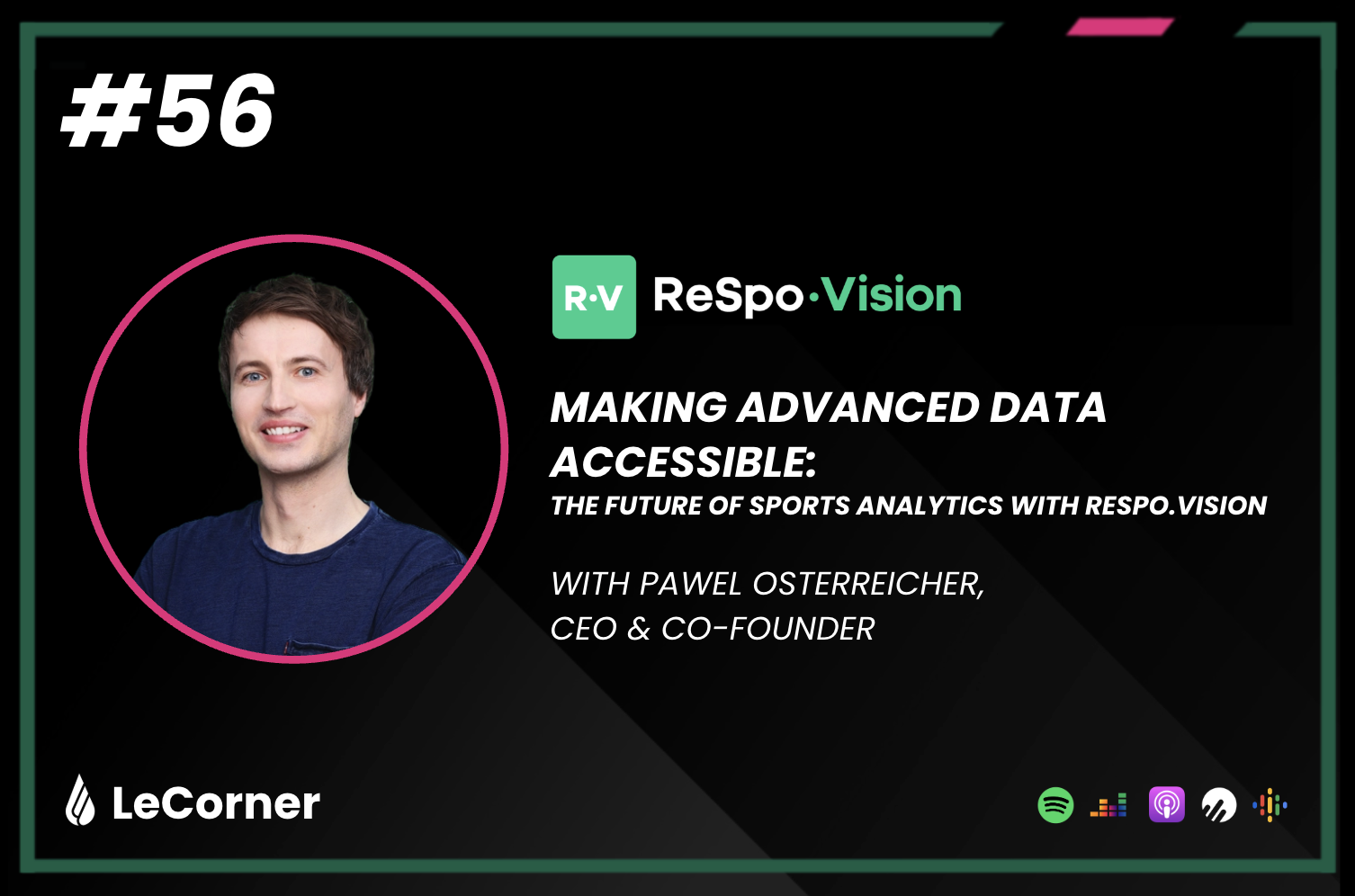
This thinking also shaped our content and conversations. Through LeCorner, we explored these shifts with ReSpo.Vision’s co-founder and CEO, Paweł Osterreicher, discusses how AI-driven performance data is becoming accessible far beyond elite environments and what that means for coaches, analysts, and clubs.
We also investigated some of the latest innovations in that space with the DFL, developing a 3D Data Report that maps the current state of 3D and human-motion data in football, and how it translates into concrete media, innovation, and commercial use cases. The objective was to understand how 3D data creates new metrics and new visualisation opportunities. For each of those, we developed concrete business cases with regard to performance, officiating, media and betting verticals. This was supported by a phased roadmap from early prototypes to live broadcasts and digital products across Bundesliga platforms.
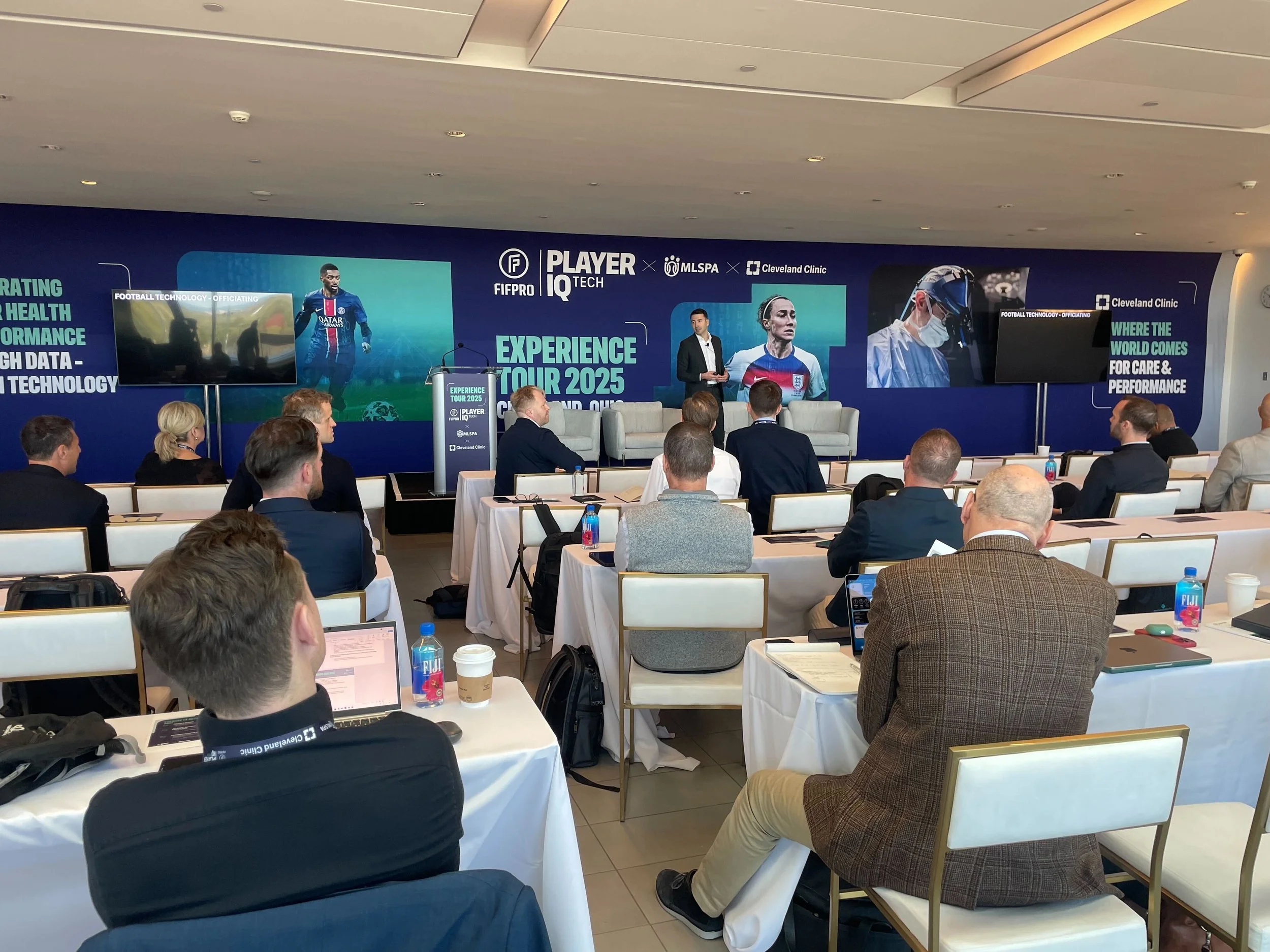
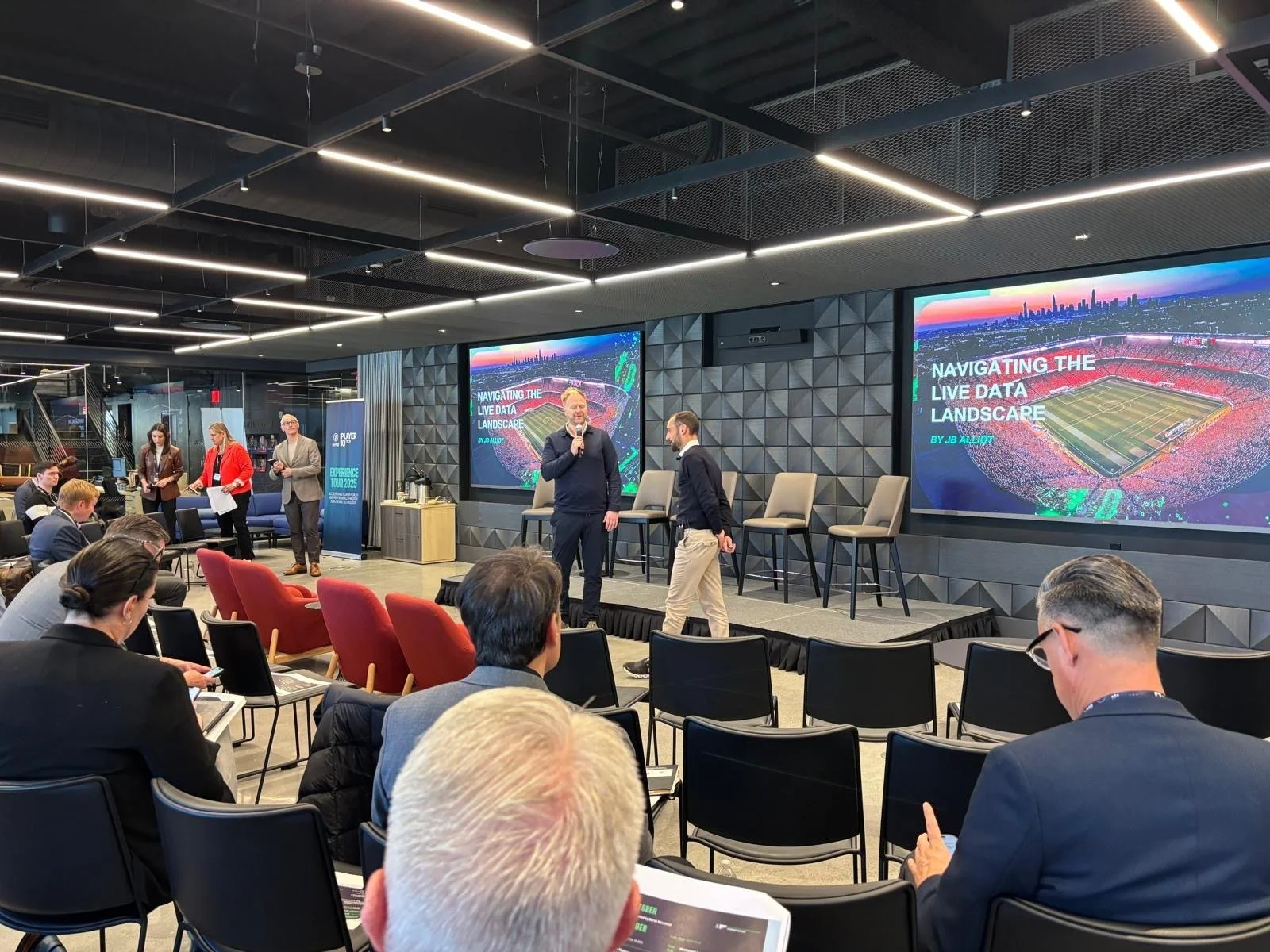
The conversation also extended beyond Europe. Our Chief Strategy Officer, Jean-Baptiste Alliot, joined the Player IQ Tech Experience Tour with FIFPRO and Sports Data Labs in Cleveland and New York, contributing to some of the most insightful discussions of the year on live athlete monitoring, data innovation, and the future role of performance data in sport and off-pitch commercial growth.
As performance data continues to reshape the sports tech ecosystem, we had to strengthen our own capabilities. And that’s why we welcomed David Eccles as VP of Sales & Partnerships at LaSource. With more than 15 years of experience across sports tech, from TRACAB to Teamworks, David brings deep expertise in driving real market adoption from complex technology. So far, his focus has been twofold: driving commercial growth for ReSpo.Vision, and strengthening how we support startups and sports organisations across sales, go-to-market strategy, and data-led decision-making.
In many ways, this chapter reflects 2025 as a whole, as our role is increasingly focused on helping the ecosystem turn innovation into real-world value and performance data that is more accessible, connected, and impactful. This is what we witness firsthand with plenty of acquisitions: a consolidation phase in which key stakeholders aggregate multiple data sources to unlock context and narratives, creating new commercial opportunities.

What was the role of centralisation in scaling long-term growth for rightsholders?
For a long time, centralisation has been a challenge to articulate in Europe for traditional sports organisations. Sometimes perceived as a loss of autonomy for clubs and often complex to drive within a league with diverse and fragmented members, its full value has not yet been realised, as is the case in North America. When we published our League Role report in 2023, this tension was already visible across European leagues. However, by 2025, the conversation has clearly moved forward, with the concept of centralisation gaining more momentum than ever before.
Leagues are more and more stepping into the role of connector. Rather than dictating decisions, they are building shared infrastructure, data layers, and services that allow clubs to move faster, reduce duplication, and operate with more flexibility. The objective is to scale, increase optionality, and strengthen the ecosystem as a whole.
We saw this evolution play out across much of our work during the year.
Our partnership with the Swiss Football League and the work we delivered for the Austrian league reflects this long-term view of centralisation. Instead of quick fixes, the focus has been on foundations. Together in 2024, we designed a multi-year digital strategy, with the roadmap extending through 2028. We started with a deep audit of the existing ecosystem and a shared vision for where the league wants to go. In 2025, this collaboration expanded further, with ticketing becoming a key pillar of the league’s broader digital transformation & centralisation project.
The same mindset has driven our work with the Ligue Nationale de Basket (LNB) through 2025. Having successfully revamped the league's digital platforms this year, the next step in our multi-year agreement with the basketball governing body is to fully activate the league’s role as a central connector. Through hands-on workshops, shared learnings, and best-practice sessions across fan engagement, monetisation, and fan data, LaSource is helping the LNB move from coordination to leadership, accelerating digital maturity across clubs while reinforcing the league-wide ecosystem.
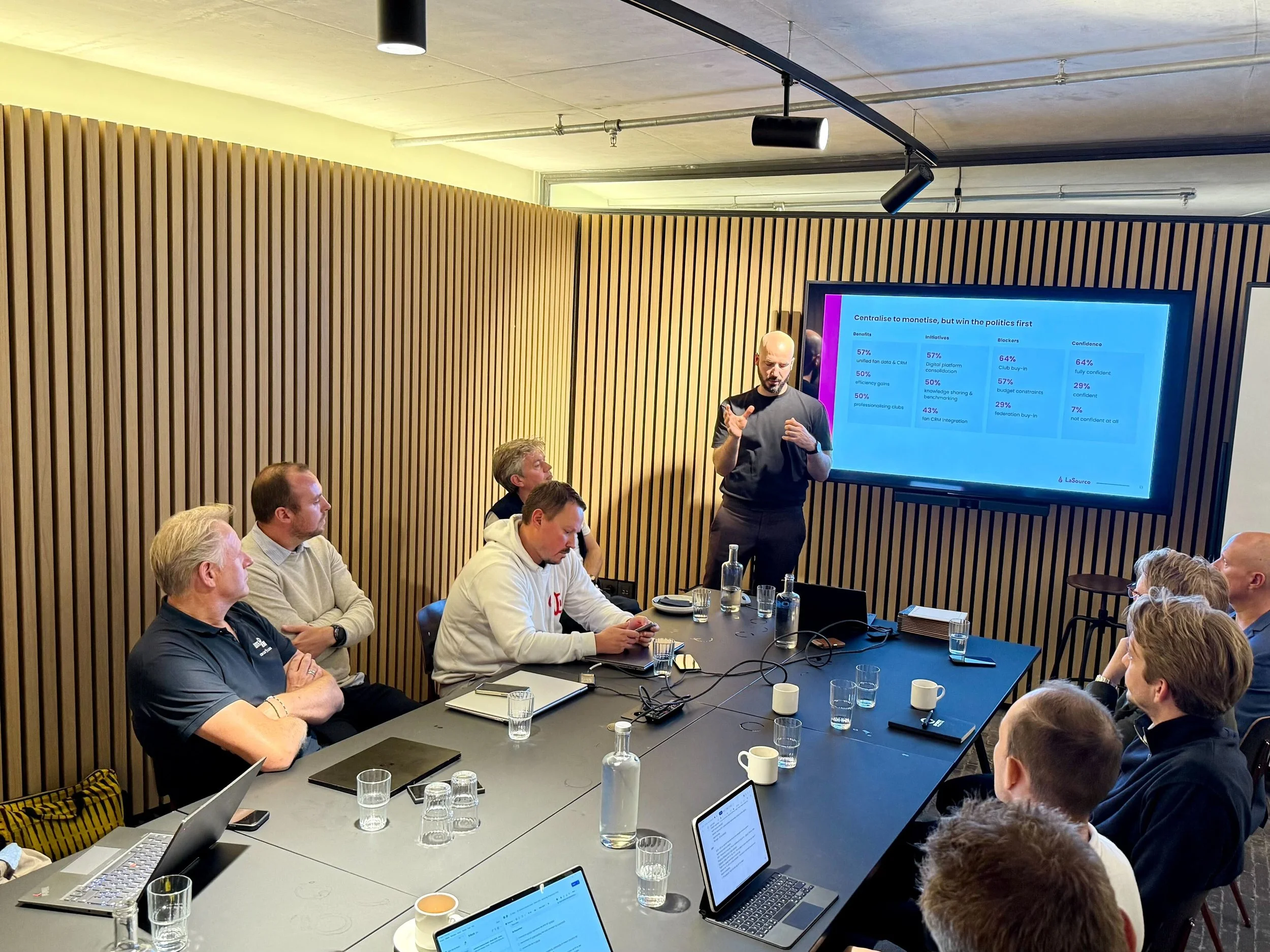
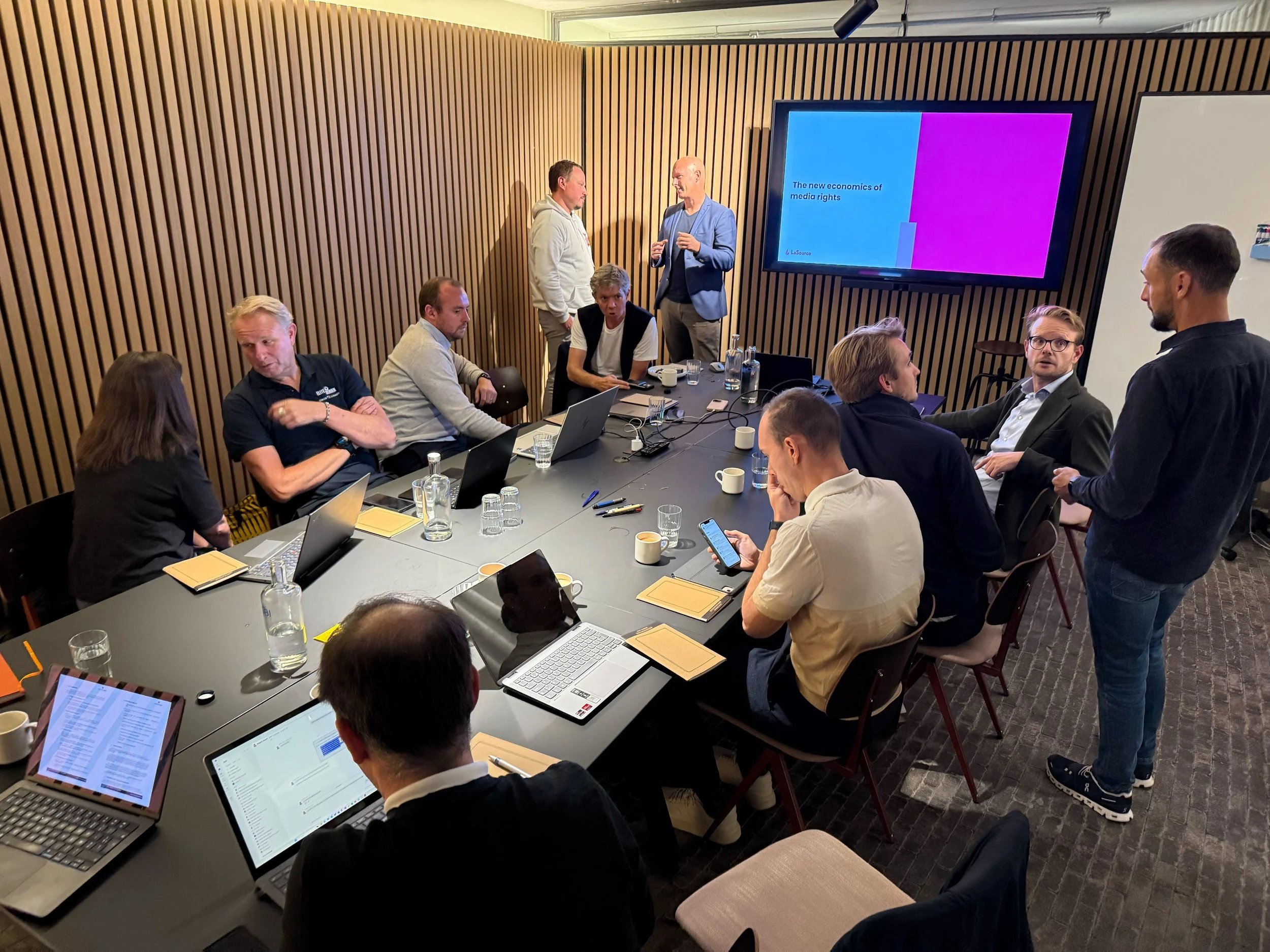
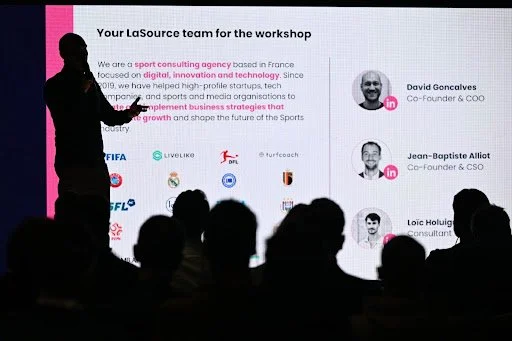
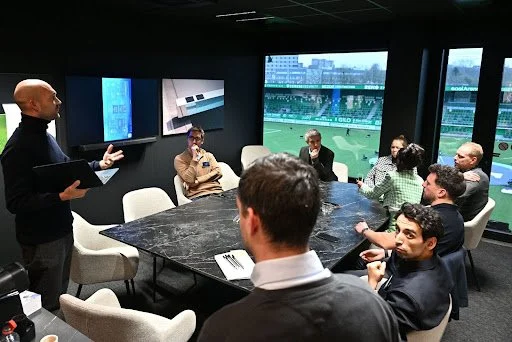
The centralisation theme surfaced repeatedly throughout the year. Our very first LaSource Workshop at Wintercircus in Ghent tackled the topic through four themes: governance, media economics, innovation, and AI. Later, at the Pro League MarCom Event, we hosted a workshop that showcased how leagues can help build holistic digital ecosystems to support each club's economic growth.
Across our work with leagues and federations, the D2C pattern stood out. Often framed as an end goal, it is, in reality, the outcome of something much deeper. Ownership of data, control over distribution, strong content capabilities, and a clearly defined role within a broader media ecosystem all come first.
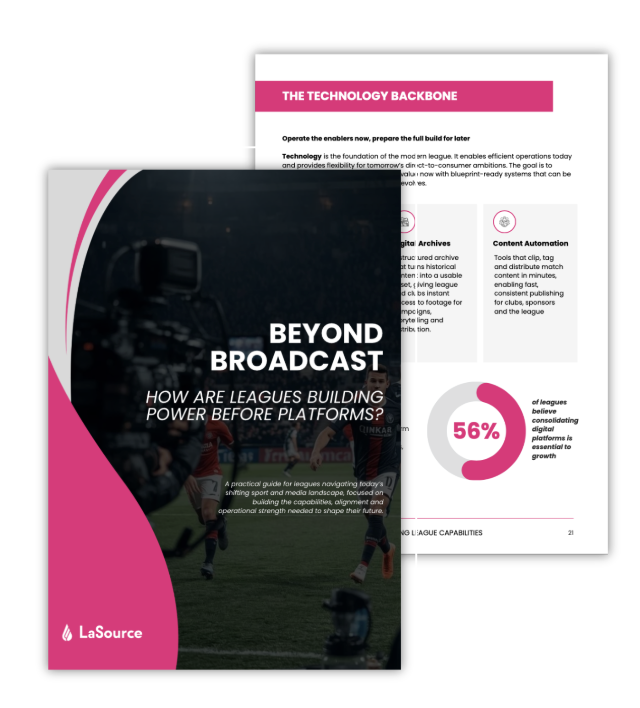
All of this led us to publish the second chapter of our League centralised Report: Beyond Broadcast: How Leagues Build Power Before Platforms. Rather than treating D2C as a binary choice, the report explores how leagues can create real optionality: understanding structural dependencies, building the right capabilities, assessing readiness, and meeting the evolving expectations of broadcasters, sponsors, and fans
The year data, tech and workflows aligned with content
In 2025, content was no longer the differentiator in sport as every league, club, and federation produces content… So the real question has become how that content is created, distributed, and scaled.
We saw this shift through startups looking to build solutions for this. Our work with CAMB.AI, an AI driven localisation company, is a testament to that.
At first glance, AI-powered localisation looks like a technical problem. In reality, scaling content across languages is about trust, integration, and long-term strategy. CAMB.AI enables sports organisations to stream content live in more than 150 languages, but the real value only emerges when that capability is embedded into media workflows and distribution strategies. Our collaboration focused on positioning CAMB not as a tool to “convert” content, but as a language partner that sits inside the operating layer of global sports organisations.
On the rightsholders' side, we’ve seen a shift away from isolated content initiatives toward what many now recognise as a Content Factory approach: a system of shared workflows, clear governance, strong data foundations, and the ability to produce, adapt, and distribute content consistently across platforms, markets, and stakeholders.
Our multi-year partnership with the Ligue Nationale de Basket (LNB) is a clear illustration of this shift in practice.
French basketball was facing a fragmented digital landscape. Platforms, data, and workflows were spread across the league, clubs, and partners, limiting scale and slowing down execution. Rather than starting with new tools, we began with a deep audit of the existing ecosystem, working closely with both league teams and clubs to understand what was actually holding things back.
The Content Factory is about removing friction so that content can flow more easily across the ecosystem and increase awareness of the sports and the organisations behind them. It eventually comes down to earning a share in the ferocious attention economy.
We saw similar dynamics at play in a very different context with the International Federation of American Football (IFAF), as flag football prepares for its Olympic debut at LA28 and will host its World Championships in Düsseldorf in 2026.

Here, the challenge is not fragmentation at the league level, but global diversity: different markets, levels of maturity, and media realities. Our work with IFAF focuses on building a clear global media and content framework that can function across this complexity. Our objective is to give the sport strong, shared foundations: consistent storytelling, scalable production, and readiness for future media and distribution opportunities.
In both cases, the underlying shift is the same. Content strategy in 2025 is really about building systems that last and allowing organisations to thrive.
Contributing to the wider sports ecosystem through our expertise
The sports industry has been slower than others to adapt to current trends. As we see more and more aspirants than ever willing to work and contribute to the industry, educating the future generation of sports business leaders has become paramount to ensuring the industry's continuity and positive development. Experienced executives will continue to be invaluable, but a fresher outlook is much needed, as the industry must evolve with the world we live in. And more and more sports organisations are launching initiatives in that space, from e-learning projects to partnerships with universities and the launch of their own courses.
At LaSource, we have always been keen on sharing our knowledge and expertise of the sports industry, but we were far away from thinking that it could translate into bigger projects
But that is exactly the challenge we wanted to take head-on to drive us to deliver bigger and better.
At two moments during the year, two of LaSource’s team members joined the Football Business Academy at Nova in Lisbon as professors for the Entrepreneurship and Innovation in the Football Industry course, first with Leander Monbaliu, our Partner & Chief Business Officer, and later with Jean-Baptiste Alliot, our Co-Founder & Chief Strategy Officer.
The sessions focused on how the sports ecosystem is changing in practice: how media fragmentation can alienate fans, why piracy is often a product problem rather than a price problem, and how new use cases, such as financial institutions acquiring near-live clips, challenge traditional rights and distribution models. Beyond the examples themselves, the emphasis was on how sports organisations can structure themselves to funnel ideas, evaluate technologies, and turn innovation into something operational.
A larger-scale example of this educational shift is our work with Real Madrid Graduate School, Universidad Europea, and Coursera.
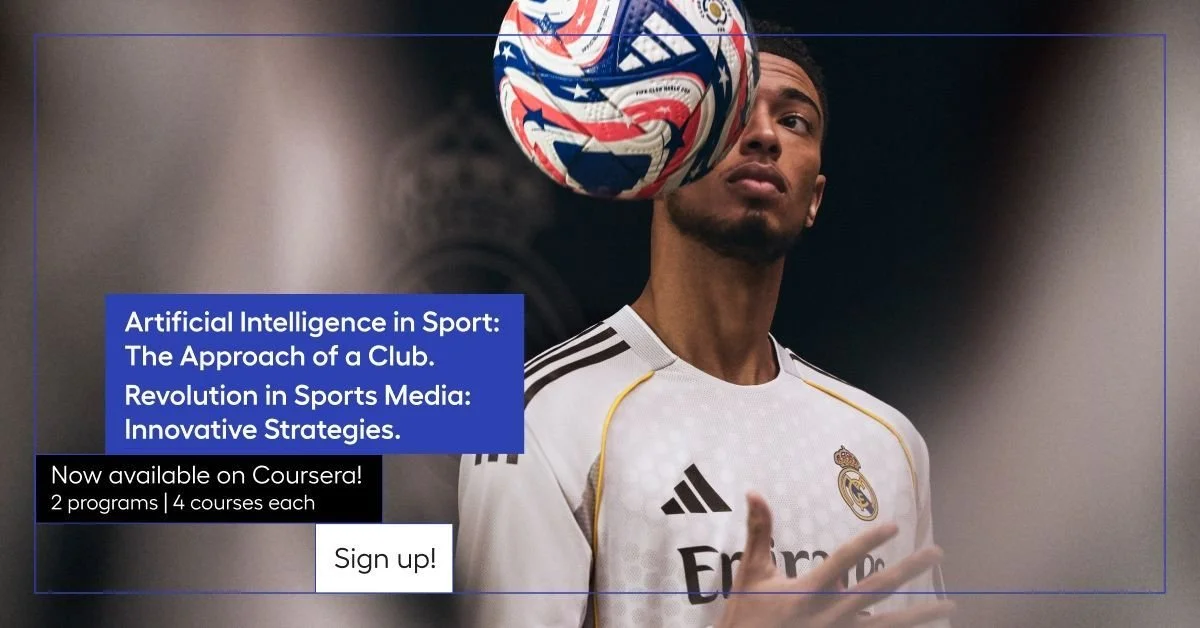
Together, we co-developed a global e-learning programme focused on sports business, technology, and innovation. The objective was not simply to share knowledge, but to translate Real Madrid’s expertise into a scalable, digital-first curriculum that reflects how the modern sports industry actually works. Our role was to design and structure the programme end-to-end, ensuring consistency, relevance, and practical application across all modules.
Delivered bilingually and built for global distribution, the programme reflects how education in sport is evolving in 2025: modular, accessible, and deeply connected to real organisational challenges.
Has AI transitioned from buzzword to an optimal resource?
AI has been everywhere this year. If we had to name one topic that dominated conversations across sport, this would be it. But beyond the buzz, the real questions that surfaced were what does AI actually unlock, where does it create value, and how do organisations use it without drowning in low-quality outputs or short-term shortcuts?
Like every major shift, AI brings as many challenges as opportunities. The risk isn’t adoption itself, but superficial adoption. Using AI without intent, without context, and without a clear understanding of its limits is how “AI slop” creeps in, and credibility erodes.
At LaSource, our approach has been deliberately pragmatic. We’ve spent the year immersing ourselves in the topic across the sports ecosystem: studying how AI is being applied in practice, pressure-testing use cases, rethinking our own workflows, and translating all of that into concrete, usable applications for our clients. The focus has never been on tools for their own sake, but on where AI genuinely improves decision-making, efficiency, and long-term value creation, something we have been enabling together for the DFL alongside Trensition, a Belgian-based trend research company, to sustain the German league’s media product strategy!
What started to really happen this year is the friction around creativity through a new wave of AI tools is removing the gap between idea, prototype, and iteration, without replacing human creativity but making experimentation cheap and fast. Content teams can now test formats, interactions, and narratives at a scale that was simply unrealistic before.
The same logic applies to fan engagement.

With our partner LiveLike, we tested their new AI-powered assistant, Genie, and experienced first-hand what this new operating layer looks like in practice. What previously required hours of production can now be generated in under an hour. From a single prompt, Genie can create dozens of quests, predictions, challenges, polls, or loyalty moments. Speed matters, but what matters more is the shift it enables: digital teams can think differently, experiment more often, and move from planning cycles to continuous iteration.
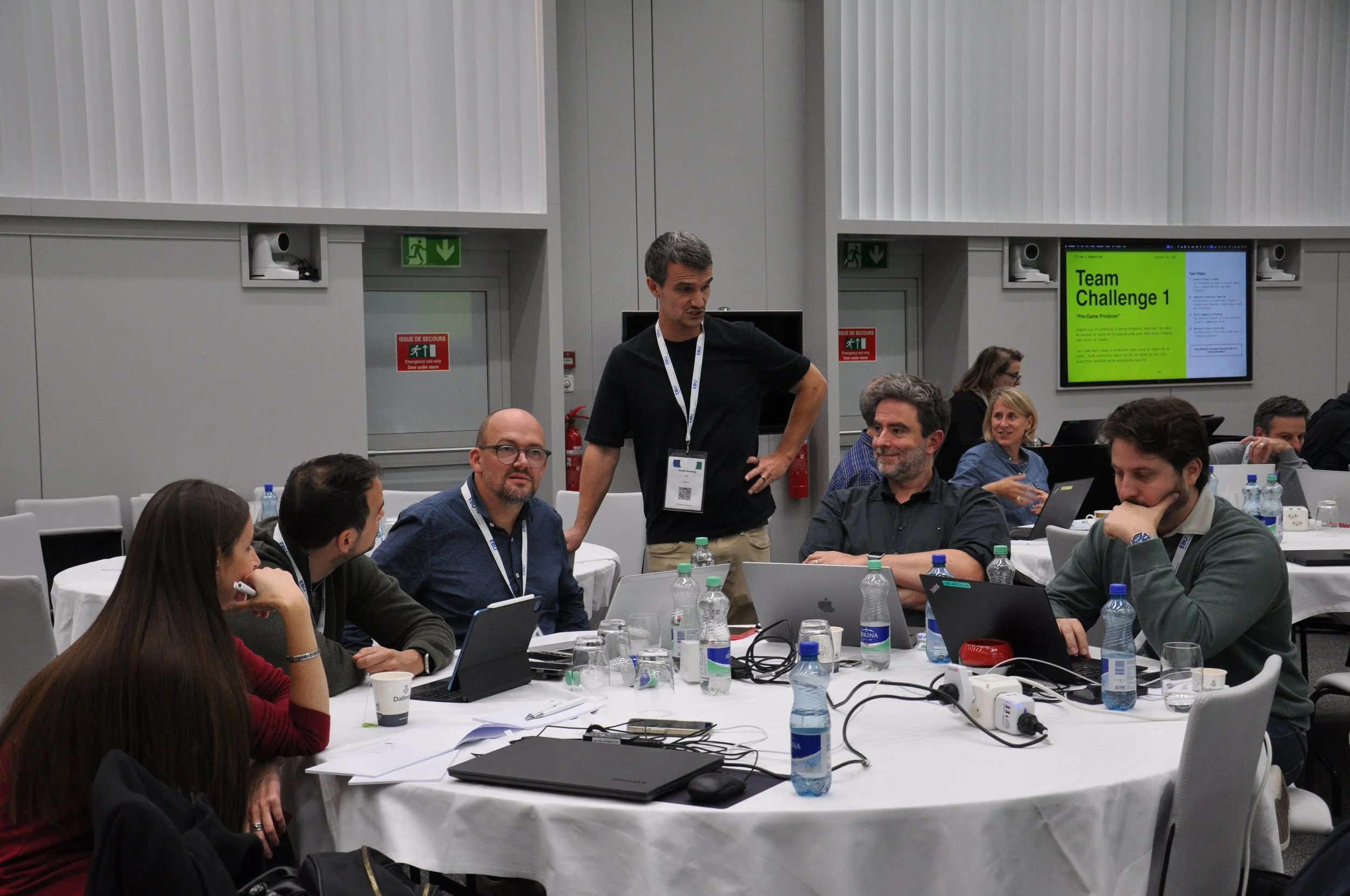
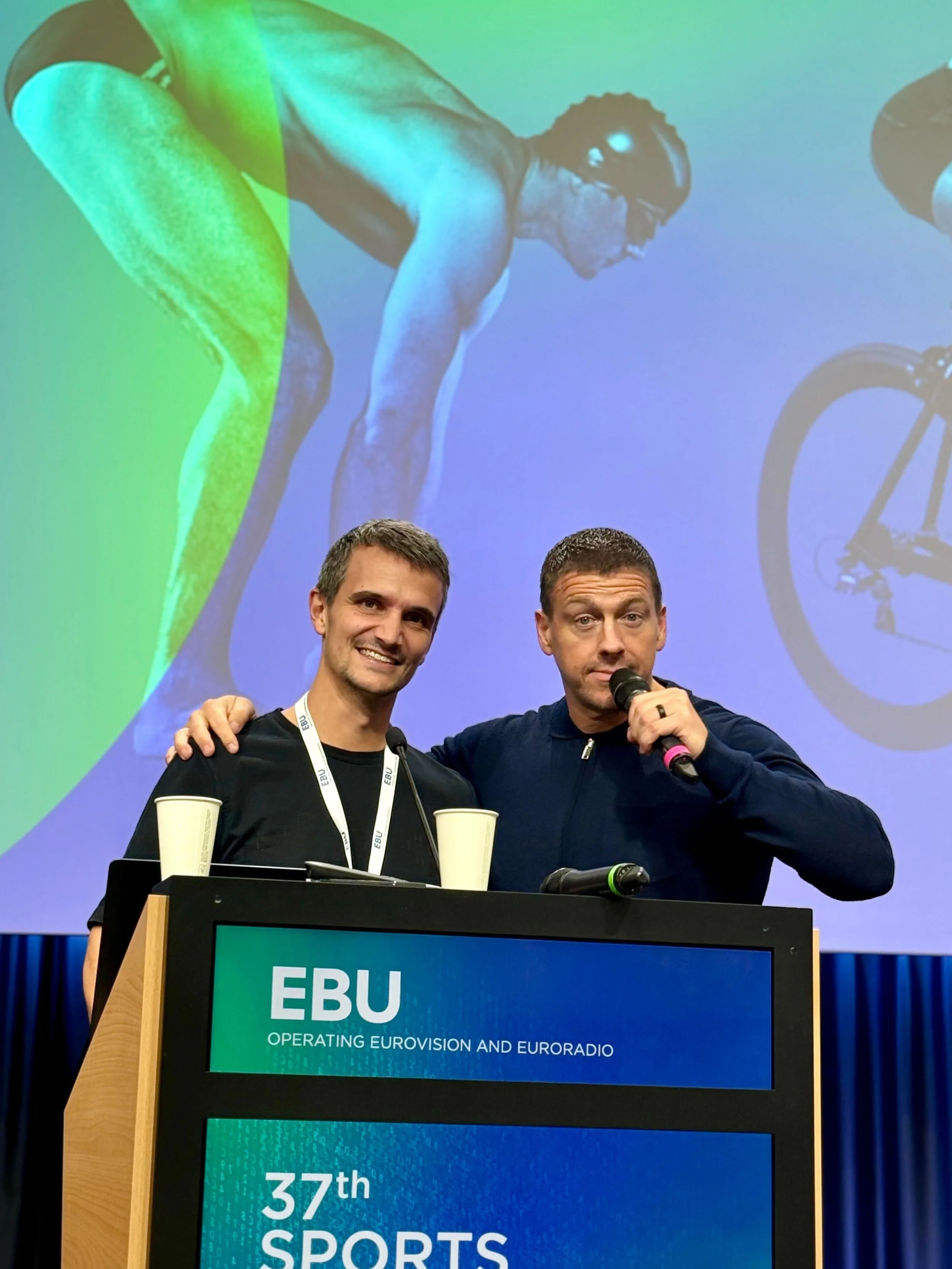
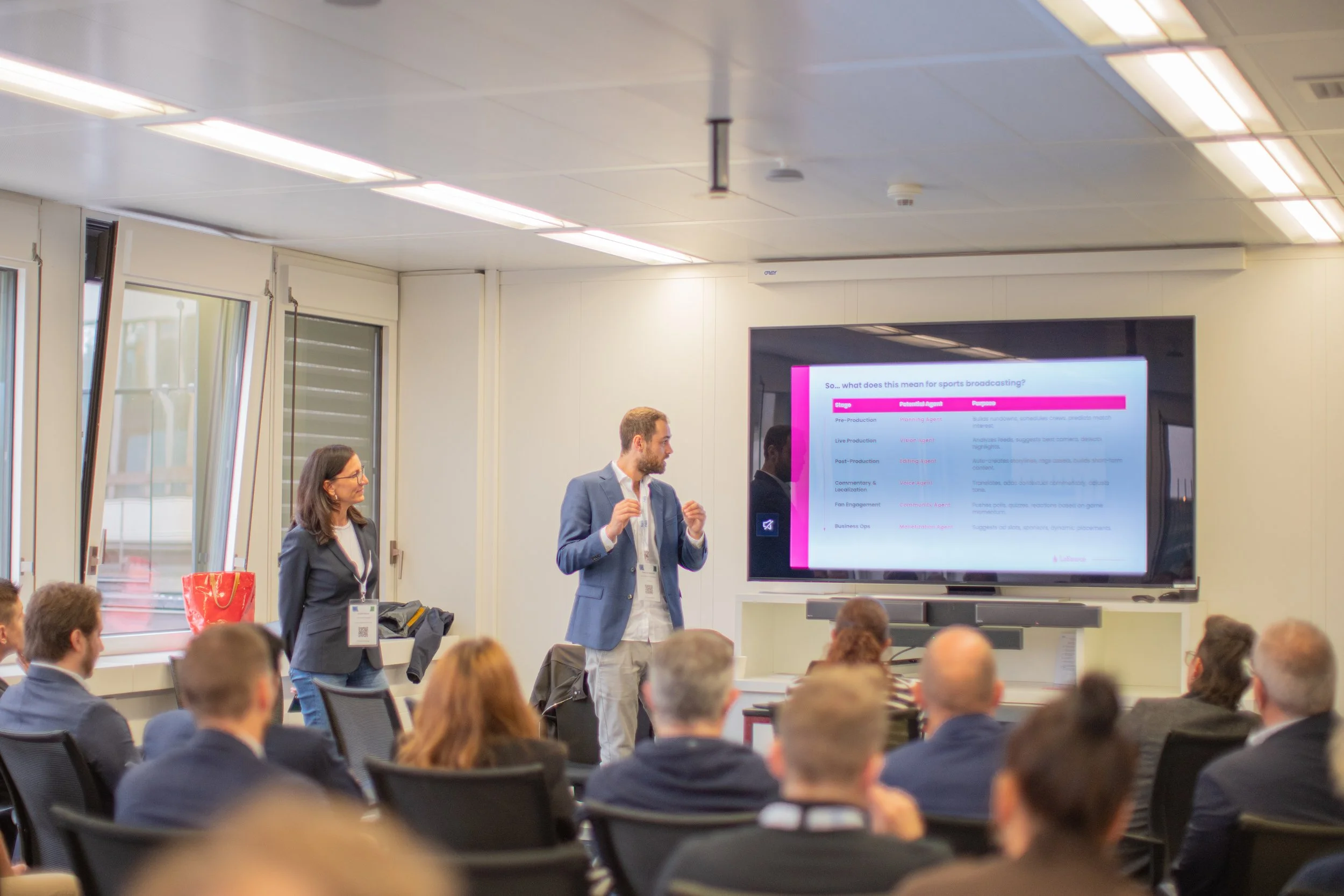
These themes also shaped our contribution at the European Broadcasting Union (EBU) Sports Assembly. Samuel Westberg, our Co-Founder and CEO, and Alexandre Kandelaft, our Head of Sports Tech Consulting, hosted breakout sessions focused on the real impact of AI on sports organisations. The goal was deliberately practical: how to work smarter with AI in daily workflows, how video production is changing, how accessibility is being rewritten, and how agentic AI will redefine sports broadcasting over the coming years.
Building on these discussions, we launched a dedicated AI hub to break down how AI is actually evolving in sport through real use cases and adoption tools
What can we expect from the industry in 2026?
The changes we’ve seen across the sports tech ecosystem in 2025 have shaped our work and how we grew as a team. Having laid the foundations of growth in 2025, we are excited to see how we can continue building a structured, commercially stable and attractive project with our rightsholder clients such as the Swiss Football League, DFL, Ligue Nationale de Basket, IFAF and Coursera. With a new education offering, we aspire to design and construct more sports business modules for the next generation of professionals
Speaking of growth, we welcomed nine new talents across strategy, sales, operations, and content. Each joined with their own experience, skills, and energy.
Growth also became physical as we opened our first LaSource office in Paris. To see our offices right in the heart of the city, with a bigger space designed for collaboration and face-to-face work, was a very big milestone.
But culture is not built only in the offices... Throughout the year, we made time to come together as a team. From our offsite in Cap Ferret, a mid-year pause to reconnect and reset, to moments like our Christmas activities and evenings together, these moments helped us stay connected and grounded.
As the sports tech ecosystem continues to evolve, we are excited to see what 2026 will bring for us, and for the sports tech industry as a whole. If you are building something that has the potential to solve major challenges of the industry and create value, get in touch with us today to explore how we can work together.
LaSource is a sports consulting agency working closely with startups, tech innovators, and major sports organisations to accelerate growth, shape strategy, and unlock new commercial pathways